For an occasional bake sale, start with the number of pastry twists you need per batch and the oven connection your venue can accommodate: a compact plug-in convection oven may suit a modest batch, but its trays are smaller than those of a bakery-oriented model. For repeated larger batches, consider an oven that accepts 600 × 400 mm bakery trays, provided its installation requirements suit the site. A combi oven’s additional controls make more sense when pastry twists are part of frequent, varied bakery production.
Who each oven setup suits
Occasional organiser with limited space
A modest bake-sale batch may suit a compact oven if its trays hold enough twists for the time available. Lincat Catering Equipment specifies a 13A plug and capacity for four GN1/2 trays on its compact LCOS model; check the actual tray loading before relying on it for the event.
Repeat-event baker making larger batches
If several bake cycles would be difficult to manage, bakery-tray compatibility becomes more important. Lincat Catering Equipment specifies supports for 600 × 400 mm trays on its larger ECO9 model, which requires a direct hardwired connection.
Organisation baking varied pastry lines
Frequent production involving different fresh or frozen pastries may justify looking at additional baking controls. UNOX describes commercial convection ovens for bakery products, while RATIONAL describes puff-pastry settings on its iCombi Pro; these are manufacturer descriptions, not a reason to assume every event needs those features.
What matters when choosing an oven
For bake-sale pastry twists, establish tray loading and the venue’s available connections before deciding whether additional baking controls are worth accommodating.
Compact plug-in convection oven
Consider it when: the batch is modest and a suitable plug-in setup is more practical than a new installation.
Trade-off: smaller trays can mean more bake cycles; confirm the connection and usable space on the exact model.
Bakery convection oven
Consider it when: repeated events call for larger batches on bakery-sized trays.
Trade-off: a larger model such as Lincat Catering Equipment’s ECO9 needs more space and a hardwired electrical connection.
Combi oven
Consider it when: pastry twists are one part of frequent, varied bakery production.
Trade-off: additional controls bring a more involved setup and workflow than an occasional pastry-twist batch requires.
| Concern |
What to check |
Who this matters to |
| Batch size and trays |
Check usable tray dimensions and how many twists fit per cycle without crowding. Lincat Catering Equipment specifies GN1/2 trays for its compact LCOS and 600 × 400 mm tray supports for its larger ECO9. |
If I bake for repeat events, I need enough compatible tray space to avoid an impractical number of cycles; around 42% of consumers put batch throughput first. |
| Power and installation |
Check the exact connection type and the venue’s electrical arrangements. Lincat Catering Equipment specifies a 2.5 kW, 13A-plug LCOS and a 7.5 kW, hardwired ECO9. |
At a venue with limited space or power, I need an oven I can accommodate safely; roughly 33% of consumers prioritise a manageable setup. |
| Baking controls |
Check the exact model’s fan, humidity and programme functions only if your pastry range calls for them; plan a recipe trial before the sale. |
When I regularly bake different fresh or frozen pastries, I want a process I can repeat; about 25% of consumers place production control first. |
Mistakes to avoid
-
Choosing by litre capacity alone
Oven volume does not establish whether your trays fit or how many twists can bake without crowding. Lincat Catering Equipment specifies four GN1/2 trays for its compact LCOS, while its larger ECO9 accepts 600 × 400 mm bakery trays.
Plan the required twists per tray and trays per cycle, then check usable dimensions, shelf positions and which trays are supplied.
-
Assuming every convection oven uses a 13A socket
Lincat Catering Equipment specifies a 13A plug for the 2.5 kW LCOS, but a direct hardwired connection for the 7.5 kW ECO9. A venue suitable for one cannot automatically accommodate the other.
Confirm the exact model’s connection and the venue’s supply before ordering. The Health and Safety Executive says people working on electrical equipment or installations must be competent to do so.
-
Treating steam and programmes as essential
Humidity and automated controls may be relevant to a varied, repeat bakery workflow, but their presence does not establish that a straightforward pastry-twist batch needs them.
Match controls to the products and frequency of baking, and trial your pastry recipe rather than assuming conventional-oven timings will transfer unchanged.
-
Overlooking allergen information on sale day
If the event operates as a food business in England, Wales or Northern Ireland, Food Standards Agency allergen-information requirements may affect how the pastry twists are offered. Requirements depend on whether food is loose or packaged and how it is packaged.
Keep ingredient records, establish how the twists will be sold and confirm the applicable requirements with the relevant local authority; seek guidance from Food Standards Scotland where applicable.
Oven brands to consider
Lincat
Commercial catering ovens spanning compact countertop and larger bakery-tray formats.
- Lincat Catering Equipment specifies four GN1/2 trays and a 13A plug for its compact LCOS.
- Its ECO9 accepts 600 × 400 mm trays but requires a 7.5 kW hardwired connection; the two formats are not interchangeable at every venue.
Unox
Commercial convection ovens described by UNOX for pastries and other bakery products.
- The UK range includes several tray-count formats for recurring bakery work.
- Check tray dimensions, electrical connection and any humidity functions on the particular model rather than applying range descriptions to every oven.
Buffalo
Catering ovens in compact and larger convection formats, including bakery models with steam.
- Buffalo UK lists both a 21 L convection oven and a 100 L bakery convection oven with steam.
- Check the exact model’s tray fit, connection and installation requirements before choosing by capacity.
Rational
A combi-oven option for kitchens producing more than an occasional batch of pastry twists.
- RATIONAL describes puff-pastry baking and coordinated humidity, air-speed, temperature and steam controls for its iCombi Pro.
- Those manufacturer-described controls bring a more involved equipment and operating choice than a simple one-off batch calls for.
Electrolux Professional
Professional ovens, including bakery-oriented combi equipment for established production.
- Electrolux Professional UK lists a bakery combi model for 16 trays measuring 600 × 400 mm.
- That format is on a different scale from many occasional bake sales; check model-specific fuel, installation and space requirements.
Built-in ovens for a compatible venue kitchen
These domestic built-in ovens are options to consider if the bake-sale venue has a compatible kitchen installation. Check their actual tray fit and connections; they are not plug-in countertop or dedicated commercial bakery ovens.
 No image available
Bosch HHF113BA0B Series 2 built-in electric oven, black
Consider this built-in electric oven for pastry twists where the venue can accommodate it. Check usable tray space and the electrical installation before planning batch sizes.
View on Joybuy
 No image available
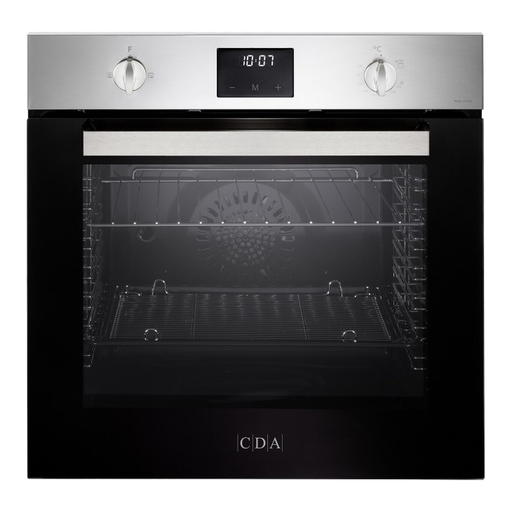
CDA SG121SS built-in 70 L gas fan oven, stainless steel
Consider this gas fan oven only where a suitable built-in gas installation is available. Confirm the venue’s gas compatibility and the usable tray dimensions before relying on it for a batch.
View on Joybuy
 No image available
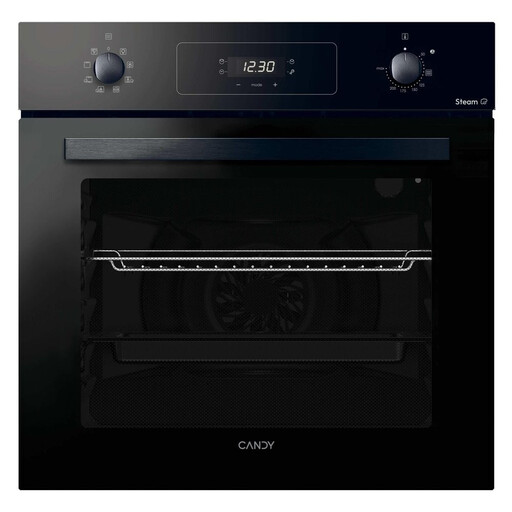
Candy FIDCN605 65 L built-in electric oven, black
This 65 L built-in electric oven is an option for a domestic-style batch at a compatible venue. Confirm the fan setting, usable tray space and exact electrical connection before choosing it.
View on Joybuy
 No image available
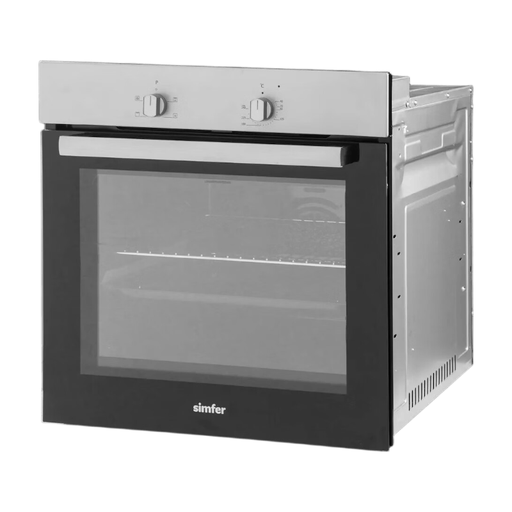
Simfer FO60S built-in electric fan oven, silver
Consider this built-in fan oven for a modest batch where the kitchen installation is compatible. Confirm the fitting dimensions, electrical connection and usable tray space before buying.
View on Joybuy
Frequently asked questions
Do I need a commercial convection oven for one bake sale?
Not necessarily: for a modest batch, a compact fan-assisted oven may be sufficient if its trays hold enough twists and its connection suits the venue. Consider a larger bakery model when repeat production or 600 × 400 mm tray compatibility matters, allowing for its installation requirements.
What should I check before using an oven at a school or community venue?
Check the exact oven’s connection requirements and whether the venue can accommodate and permit its use. For comparison, Lincat Catering Equipment specifies a 13A plug for its compact LCOS and a hardwired connection for its larger ECO9; the Health and Safety Executive says work on electrical equipment or installations must be done by competent people.
Do pastry twists require an oven with steam or humidity controls?
No, those controls are not a universal requirement for pastry twists. They may be worth considering for frequent, varied bakery production, but trial the actual recipe and loading pattern rather than treating a manufacturer’s control features as proof of a particular result.
What allergen information should I prepare for a bake sale?
Keep accurate ingredient and allergen records, then establish how the pastry twists will be offered before deciding what information must accompany them. The Food Standards Agency says food-business operators in England, Wales and Northern Ireland must provide allergen information; whether and how those requirements apply to a particular casual or charitable event should be confirmed with the relevant local authority, or with Food Standards Scotland where applicable.


