Small-batch lunchbox bakers
If you usually make one tray of tartlets or savoury pastries, focus on adjustable heat, a timer and space for your chosen tin without giving up more worktop than you can spare.


For one small batch of lunchbox tartlets, a countertop convection mini oven with a baking tray, adjustable thermostat and timer is a practical starting point—provided your tin fits its usable rack space. Consider a larger two-level oven if you regularly prepare several lunchboxes, or a convection combination microwave if reheating and other microwave functions matter too. In every format, check tin clearance and the space the appliance needs on your worktop rather than relying on litre capacity alone.
If you usually make one tray of tartlets or savoury pastries, focus on adjustable heat, a timer and space for your chosen tin without giving up more worktop than you can spare.
If you prepare several portions or cook another dish alongside the tartlets, usable cooking levels and tray space may matter more than a compact footprint.
If the same appliance also needs to microwave, grill or reheat weekday food, consider a convection combination microwave. Check its baking layout and mode-specific cookware instructions before choosing one for tartlets.
Consider it when: You mainly bake one modest tray and want a dedicated oven with straightforward controls.
Trade-off: A compact cavity may limit the tin size or number of trays you can use.
Consider it when: You regularly prepare several lunchboxes or want to cook tartlets alongside another dish.
Trade-off: More cooking space takes up more worktop space; confirm the exact model has the baking mode you need.
Consider it when: You also need microwave reheating and want those tasks in one appliance.
Trade-off: Its cavity, racks and cookware rules need particular attention for tray-based baking.
| Concern | What to check | Who this matters to |
|---|---|---|
| Pastry baking control | Check that the exact model specifies convection or fan-assisted baking, then compare its temperature controls, timer and space above the tin. | When pastry and topping need different amounts of cooking, I want control over the heat and room to position my tray. Around 37% of consumers would put baking control first. |
| Worktop fit | Measure the appliance, door-opening space and the clearance required by its instructions; consider how you will clean the tray and interior. | If worktop space is tight, I need an oven I can position and use without blocking its ventilation. Worktop fit would come first for around 27% of consumers. |
| Batch capacity | Compare usable rack dimensions and supported cooking levels with the tins and portions you plan to bake. | Preparing several lunchboxes at once makes tray space more useful to me than a capacity figure on its own; roughly 18% of consumers would prioritise batch capacity. |
| Other cooking functions | Confirm the exact combination appliance has convection, then check its rack arrangement and cookware rules for each mode. | If I also reheat weekday meals, I want one appliance to handle that task as well as baking. Around 18% of consumers would place multifunction use first. |
Ovens with similar capacity descriptions can have different rack layouts and cavity shapes. The volume alone will not tell you whether a muffin tray or tart tin clears the door and heating elements.
Measure the outside of your tin, including its rim and handles, and compare it with usable rack width, depth and the manufacturer’s clearance instructions.
De’Longhi lists Bake and Grill functions for the EO12012, while Tefal explicitly lists convection for the Optimo OF445840. A mini-oven label does not establish that it has a fan-assisted mode.
If convection is a requirement, check the functions specified for the exact model before buying.
Tefal instructs users to allow air to flow around its countertop oven. Electrical Safety First also warns that objects on appliances can block ventilation and that extension leads can be overloaded.
Follow the model’s placement and electrical instructions, keep its ventilation clear and avoid overloading an extension lead.
Tartlets containing ingredients that require refrigeration still need chilled storage after baking and packing. East Lancashire Hospitals NHS Trust advises using a cool bag and ice pack to keep packed food cool.
Keep food that needs chilling refrigerated until packing, then use a cool bag with an ice pack and keep the lunchbox away from direct sun and radiators.
The Optimo OF445840 is a compact, dedicated convection mini oven to consider for a small tartlet batch.
The DT200UK is a larger countertop multifunction oven for cooks considering two-level meal preparation.
The EO12012 is a compact electric oven to compare if a basic Bake and Grill appliance, rather than a specified convection model, could meet your needs.
The MW3-SAC23SF (MB) is a combination microwave for households considering convection baking alongside other cooking tasks.
These combination microwaves are relevant if you want convection baking alongside microwave cooking. Neither replaces the need to check your tartlet tin against the usable cavity and the instructions for the selected mode.
 No image available
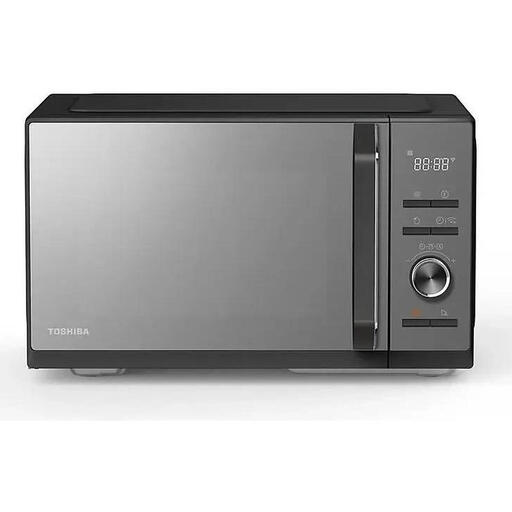
Consider this model if tartlet baking needs to share an appliance with microwave reheating. The 23 L MW3-SAC23SF (MB) has convection, microwave and grill functions; check your tin’s fit and the cookware instructions for the mode you select.
 No image available
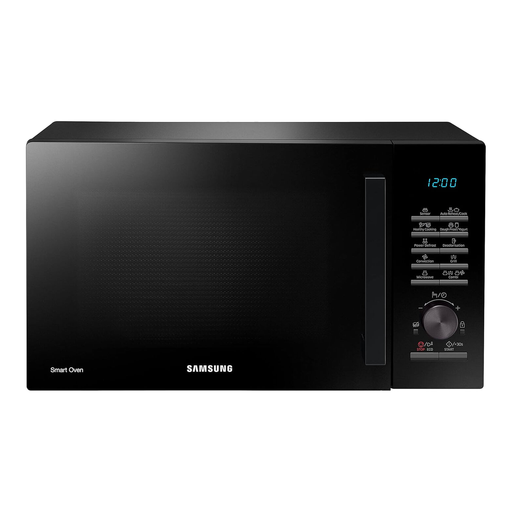
Consider this 28 L combination microwave if you want convection cooking alongside microwave use. Before choosing it for tartlets, confirm its installation requirements, usable tin clearance and convection settings for your recipe.
Measure the outside of your tin or muffin tray, including the rim and handles, and compare it with usable rack width, depth and height. Also allow for the appliance’s exterior dimensions, door opening and placement instructions; litre capacity does not establish that a particular tin will fit.
Yes, a model with a convection mode can be considered for tartlets if the tin fits and is appropriate for the selected mode. The Toshiba MW3-SAC23SF (MB) has convection alongside microwave and grill functions; check its cavity arrangement and cookware instructions before baking.
Check the installation instructions for the exact appliance rather than assuming that countertop and built-in ovens have the same requirements. Electrical Safety First advises that plug-in ovens use a UK three-pin plug and fuse; if a model requires hardwiring, follow its installation instructions and use a qualified installer.
For tartlets containing ingredients that require refrigeration, keep them chilled until packing and use a cool bag with an ice pack. East Lancashire Hospitals NHS Trust also advises keeping packed food away from radiators and direct sunlight.
Let the appliance cool, then clean spills according to its manufacturer’s instructions. Check how its tray and removable parts should be cleaned, and keep the oven’s ventilation clear when putting it back in place.