Regular home bakers replacing a built-in oven
If you make family desserts in a fitted kitchen, check that a replacement can use your recipe’s fan setting and fit the existing housing and electrical setup.


For a treacle sponge recipe that specifies a fan setting, choose an oven with a clearly identified fan or convection mode, temperature control that covers the recipe setting, and room for your pudding dish. A built-in single oven suits regular baking in a fitted kitchen; separate cavities or multi-level cooking matter more when you prepare other dishes alongside the pudding, while a countertop appliance needs especially careful checks for cooking mode and dish clearance. Confirm the exact model’s installation and connection requirements before ordering.
If you make family desserts in a fitted kitchen, check that a replacement can use your recipe’s fan setting and fit the existing housing and electrical setup.
If treacle sponge is part of a larger meal, shelf arrangements or separate cavities may matter more to you than they would for baking one dish at a time.
A countertop convection or combination appliance may be an option when a fitted oven is impractical, provided it has a suitable baking mode and room for your dish.
Choose it when: You bake desserts and everyday meals in a fitted kitchen and need one main cavity.
Trade-off: One cavity gives you less flexibility when the pudding and another dish need different temperatures; housing and electrical requirements still vary by model.
Choose it when: You regularly prepare treacle sponge alongside other dishes and need separate cooking spaces or more usable shelf positions.
Trade-off: Multi-level cooking in one cavity is not the same as separate temperature control, and a double oven may have one smaller cavity, as CDA Appliances notes.
Choose it when: A fitted oven is impractical and a countertop oven or combination microwave has a suitable convection baking function.
Trade-off: The usable interior may restrict your choice of pudding dish; a microwave or air-fry function alone does not establish that it can follow a fan-oven recipe.
| Concern | What to check | Who this matters to |
|---|---|---|
| Fan-bake control | Check for a specified fan or convection baking mode and confirm its temperature settings in °C. Good Housekeeping UK gives 160°C fan for its treacle sponge traybake recipe. | When following a fan-oven recipe, I want to select its stated setting rather than guess from an appliance label. Around 33% of consumers put reliable fan-bake control first. |
| Fit and installation | Compare the manufacturer’s installation drawing with your cabinet, then check the exact electrical or gas connection requirements. | If I am replacing a fitted oven, the new model needs to work with my kitchen space and supply before its cooking features matter; roughly 25% of consumers make fit and installation their primary concern. |
| Cooking alongside other dishes | Check usable shelf positions and the size of each cavity; for a double oven, assess the cavities separately. | When pudding is part of a larger meal, I need to know where the other dishes can cook without assuming two cavities are equally spacious. Around 25% of consumers prioritise this flexibility. |
| Countertop space and dish clearance | Confirm a convection baking function and compare usable interior dimensions with the dish, including its handles. | If a fitted oven is impractical, I need a smaller appliance that can still accommodate my pudding dish; roughly 17% of consumers put the compact format first. |
A microwave, grill or air-fry setting does not by itself establish that an appliance can use the fan temperature specified by your treacle sponge recipe.
Check the manual for a convection, fan or hot-air baking mode and its available temperatures in °C.
An oven described as 60 cm wide still needs a suitable cabinet cut-out, ventilation space and connection. Bosch and Neff list different connection arrangements for the models discussed here.
Measure the housing and compare it with the exact model’s installation instructions before arranging fitting.
CDA Appliances notes that a double oven can have a smaller cavity, which may change where your pudding dish or other cookware fits.
Check each cavity’s dimensions and intended shelf arrangement separately.
Connection and power requirements differ between ovens. Electrical Safety First advises checking the appliance’s requirements and using a qualified electrician for fitting.
Confirm the exact model’s installation instructions and have the kitchen supply assessed where necessary. For gas models, check the specified gas configuration and installation requirements as well.
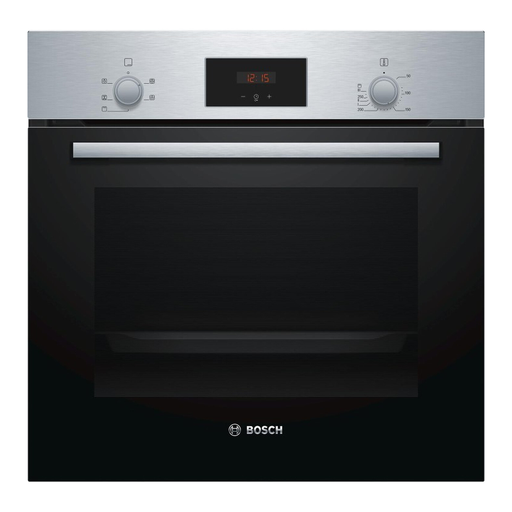
The HHF113BR0B is a built-in single oven for buyers considering a fitted fan-oven replacement.
The built-in B1GCC0AN0B is relevant when you want to consider multi-level fan baking in a fitted kitchen.
The OU5CU40M is a built-under option for cooks considering true fan cooking in that installation format.
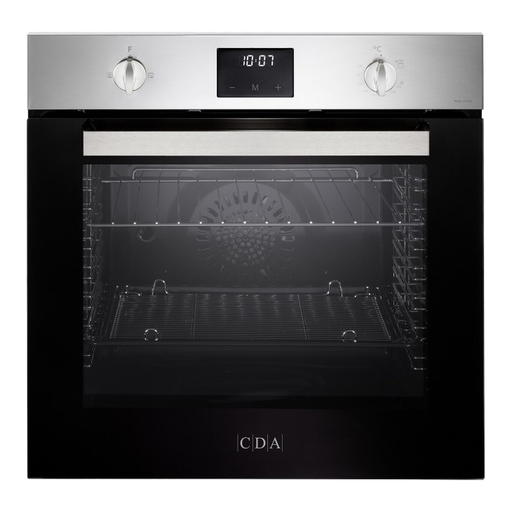
These choices include built-in single ovens for fitted kitchens and countertop combination microwaves for smaller spaces. The CDA model uses gas, so check your kitchen’s gas supply and installation requirements rather than treating it as an electric-oven replacement.
 No image available
Consider this for a fitted kitchen where you want a single oven with Bosch’s 3D Hotair function. Bosch lists external dimensions of 595 × 594 × 548 mm; compare its installation drawing with your cabinet, confirm that the fan setting covers your recipe’s temperature, and verify the electrical connection for the exact appliance.
 No image available
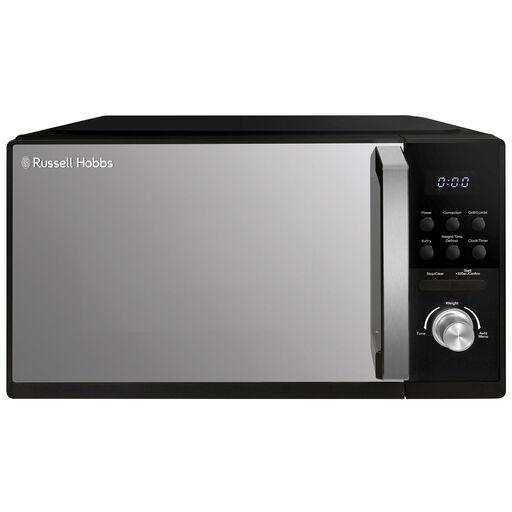
For a countertop alternative, check that its convection setting reaches the temperature in your treacle sponge recipe. Compare your dish, including handles, with the usable interior and follow the appliance’s countertop clearance instructions.
 No image available
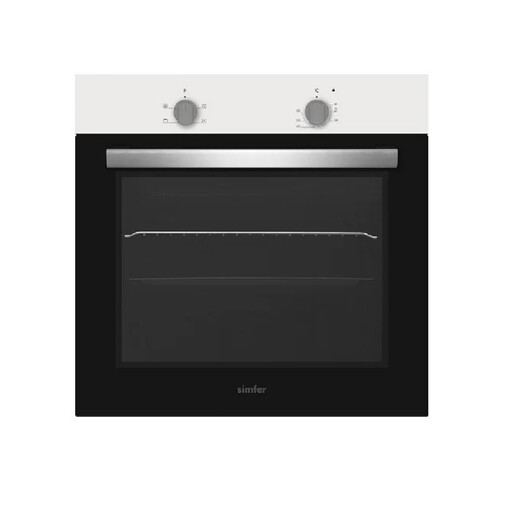
Consider this fitted-kitchen option if you want to bake in a single cavity. Confirm the fan mode’s available temperatures, check the installation cut-out against your cabinet, and measure the pudding dish for clearance.
 No image available
This is a gas-oven route for a fitted kitchen, not a direct substitute for an electric model. Check the fan setting against your recipe, measure the dish and cabinet space, and confirm the required gas configuration and installation with a qualified installer.
 No image available
For countertop baking, use its convection function rather than assuming the microwave setting follows a fan-oven recipe. Confirm the convection temperature range, usable interior dimensions, dish clearance and electrical requirements before choosing it.
Use the setting in your chosen recipe. Good Housekeeping UK specifies 160°C fan, or 180°C conventional, and a 35–40 minute bake for its treacle sponge traybake; a different recipe, dish or oven may call for different instructions.
A convection or fan setting lets you follow a recipe that specifies a fan temperature directly. A conventional oven is also an option when the recipe gives a conventional setting; check the appliance’s actual cooking modes rather than relying on its product title.
It may be suitable if it has a convection baking function that reaches your recipe’s temperature and the pudding dish fits safely inside. Which? explains that combination microwaves can use convection heating for baking, but you still need to check the particular model’s controls and usable interior.
No; connection requirements vary by model. Bosch lists a GB plug for its HHF113BR0B, while Neff specifies electrician connection for its B1GCC0AN0B. Check the exact appliance’s installation instructions and have the kitchen supply assessed by a qualified electrician where needed, as Electrical Safety First advises.
GOV.UK’s Approved Document P covers electrical safety in dwellings in England; the requirements relevant to a particular installation depend on the work involved. Follow the appliance instructions and consult a qualified electrician about the proposed work rather than applying England-specific guidance to installations elsewhere in the UK.