What matters when choosing
Establish a safe position beside the desk, then choose the output and controls that fit how often you use the conservatory.
| Concern |
What to check |
Who this matters to |
| Maintaining warmth |
Compare minimum and maximum settings, thermostat controls and any frost setting; assess the room’s size, glazing and draughts. |
If I spend long periods working in a cold conservatory, I want adjustable warmth beyond my chair without assuming a wattage guarantees a room temperature. Around 40% of consumers put maintaining warmth first. |
| Following a work routine |
Check the exact variant’s timer, temperature adjustment and operating instructions. |
When I use the desk at predictable times, I want controls that fit those sessions rather than relying on maximum output alone; around 30% of consumers prioritise scheduled control. |
| Safe desk-side placement |
Measure the available floor space and lead route, and allow at least one metre from combustible items, as Electrical Safety First advises. |
I need the heater to stand clear of papers and curtains without its lead crossing a walkway. Safe placement is the primary concern for around 30% of consumers. |
Joybuy options for conservatory desk use
This timer-equipped convector is an option to consider if you use the conservatory desk for planned sessions and have space to position the heater safely.
 No image available
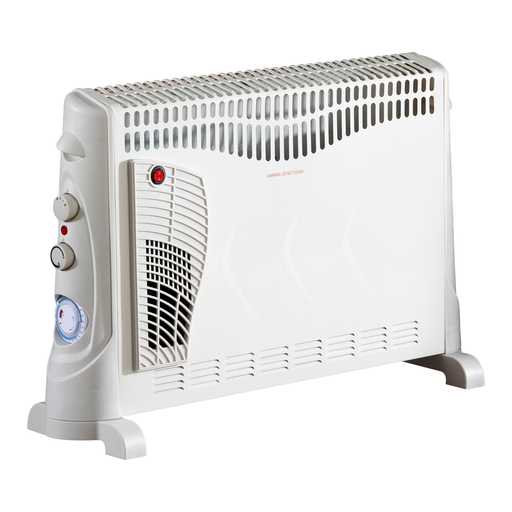
DAEWOO 2000 W Convector Heater with Timer, White
Consider this model for planned desk sessions where a timer and adjustable heating are useful. Its listed settings are 750 W, 1250 W and 2000 W, with an adjustable thermostat and overheat protection.
Keep combustible materials at least one metre away. The listing instructs users to plug the heater directly into a wall socket rather than an extension lead or power strip, and not to leave it unattended while switched on. Confirm the supplied variant, plug details and instructions before buying.
Joybuy
Questions about conservatory desk heaters
Can I put a portable convector beside my conservatory desk?
Yes, if the exact model is intended for indoor use and you can position it according to its instructions. Electrical Safety First advises at least one metre between a portable heater and combustible items such as papers or curtains; also route the lead so it does not create a trip hazard.
Do I need a 2 kW convector for a conservatory?
Not necessarily: consider a 2 kW setting if the room feels cold beyond the immediate desk area, but assess its size, glazing and draughts rather than expecting a particular temperature from the rating. De'Longhi lists both 800 W and 2,000 W settings for its HSX2320, illustrating why the available lower setting matters too.
Can I use an extension lead with a convector heater?
Follow the instructions for the exact heater and avoid overloading socket-outlets or extension leads, as Electrical Safety First advises. The DAEWOO model shown here specifically instructs users to plug it directly into a wall socket, not an extension lead or power strip.
What should I check on the listing before buying?
Check that the model and supplied variant are clear, then confirm its rated power, plug and voltage details, safety information and operating instructions. The Department for Business and Trade’s electrical-equipment guidance concerns Great Britain; if you are buying for Northern Ireland, check the requirements applicable there separately.
Does buying a plug-in heater settle questions about fixed conservatory heating?
No. A portable heater purchase does not establish whether proposed fixed-heating work or alterations meet the conditions relevant to your conservatory. Seek advice from local building control before planning that separate work.


