A convector heater is worth considering for occasional supplementary warmth in a conservatory if you can leave clear space around it. Choose its output with the room’s size, insulation and draughts in mind: a timer helps with repeated use, but a higher wattage alone will not resolve heat loss. Dimplex, for example, limits its 3kW ML3TSTie7 to well-insulated spaces or occasional use.
Who is a convector heater for?
Occasional conservatory users
If you use the room intermittently and want supplementary warmth without a permanent installation, a portable convector with a thermostat is a starting point. Check that its stated room guidance fits your space and that you can keep the required area around it clear.
Regular home-office or evening users
If you use the conservatory at predictable times, a timer may be useful alongside temperature control. Compare the timer’s scheduling options and the manufacturer’s conditions for using the heater in your room.
Owners of larger or colder conservatories
If you are considering more output, establish whether the room is large or losing heat through glazing and draughts. Dimplex describes its 3kW ML3TSTie7 for larger rooms but says it is suitable only for well-insulated spaces or occasional use.
What should you check before buying?
Start with the room and how often you use it, then compare controls and a safe place to put the heater. A wattage rating alone cannot establish how warm a particular conservatory will become.
| Concern |
What to check |
Who this matters to |
| Output and insulation |
Compare room size, glazing and draughts with the exact model’s room guidance. Check its conditions of use before choosing 2kW or 3kW. |
If my conservatory stays cold, I need to know whether heat loss, rather than heater output, is the main difficulty. Around 31% of consumers put room and output fit first. |
| Controls for regular use |
Check whether the thermostat is manual or electronic and whether the timer offers daily or weekly scheduling. |
When I work or sit in the room at regular times, I want controls that fit those sessions. For around 25% of consumers, planned operation is the primary concern. |
| Occasional warmth |
Check the model’s stated room use and leave clear space above and around the heater for airflow. |
I only need to take the chill off while using the conservatory, so supplementary room warmth matters more to me than a standing schedule. Around 25% of consumers chiefly want warmth for occasional use. |
| Portability and safe placement |
Check where the heater can stand, how its cable reaches a suitable socket and what its instructions require each time it is moved. |
If I move the heater between rooms, I need straightforward controls and a safe place to use it each time. Portability and day-to-day operation come first for around 19% of consumers. |
Mistakes to avoid
-
Assuming more wattage will fix a cold room
Higher output may be relevant to a larger conservatory, but it cannot by itself correct substantial heat loss. Dimplex states that its 3kW ML3TSTie7 is suitable only for well-insulated spaces or occasional use.
Assess the room’s size, glazing and draughts, then use the exact model’s room guidance as a starting point rather than a guarantee.
-
Blocking the heater’s airflow
Electrical Safety First advises that convector heaters need clear space above and around them to work effectively. Covering a heater or obstructing its grilles also conflicts with product safety instructions.
Choose a stable position away from curtains and furniture, leave the clearances specified in the manual and never cover the heater.
-
Overloading an extension lead
Electrical Safety First warns that the combined load on an extension lead, adaptor or cable reel must not exceed its marked rating; a wound cable reel can overheat.
Use a suitable wall socket where possible. If an extension device is necessary, follow its rating and instructions, fully unwind a cable reel and do not daisy-chain leads.
-
Relying on a safety cut-out for unattended use
An overheat feature does not remove the risks of poor placement or nearby flammable materials. GOV.UK fire-safety guidance says to unplug electric heaters when going out or going to bed.
Keep the heater away from flammable materials, never use it to dry clothes and follow the model’s safety instructions.
Relevant brands to compare
Dimplex
Dimplex’s named convector models illustrate both basic thermostat control and a higher-output option with scheduling.
- Dimplex lists the ML2T as a 2kW model with a thermostat and frost protection, and the ML3TSTie7 as a 3kW model with a seven-day timer.
- Dimplex says the ML3TSTie7 is suitable only for well-insulated spaces or occasional use; its larger output should not be treated as a remedy for poor insulation.
De’Longhi
The slim HSX2320 is relevant to occasional spot heating where moving or storing the convector matters.
- De’Longhi lists 800W to 2,000W settings, a room thermostat and a 9cm-deep body for the HSX2320.
- De’Longhi describes this model for spot heating in small and medium rooms; that description does not establish its suitability for every conservatory.
Igenix
The IG5200 and IG5250 provide examples of portable 2kW convectors with three heat settings; the IG5250 adds a timer.
- Igenix lists overheat protection for both models and a 24-hour timer for the IG5250.
- Igenix describes the IG5250 for smaller spaces. Check the exact model’s instructions and room-use guidance against your conservatory.
Convector heaters on Joybuy
These portable 2kW convectors offer different approaches to conservatory use: two list timers for planned sessions, while the De’Longhi HSX2320 is a slim option for occasional spot heating. Compare each listing’s controls with your routine, then check the model instructions and your room’s conditions before choosing.
 No image available
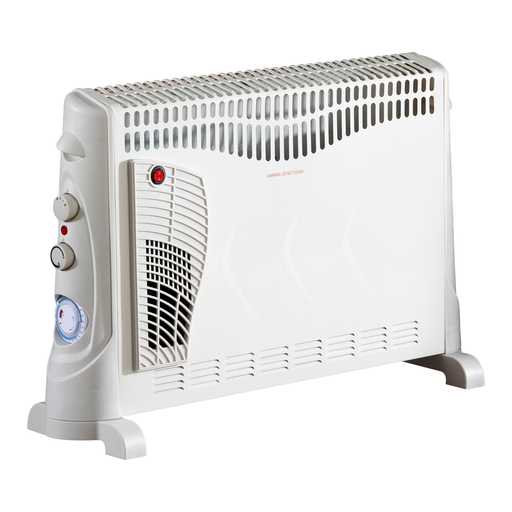
DAEWOO 2000W Convector Heater with Timer
Consider this for planned conservatory sessions if its timer and room-use instructions suit your routine.
The product name lists 750W, 1250W and 2000W heat settings, an adjustable thermostat, a timer and overheat protection. Confirm the exact model variant and timer operation before buying; the 2000W rating alone does not establish suitability for a draughty conservatory.
Joybuy
 No image available
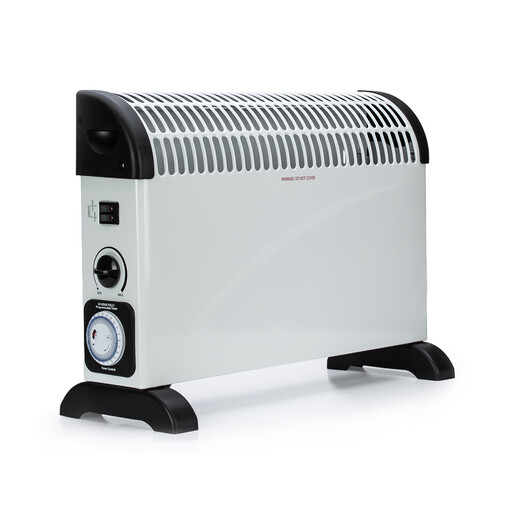
Status 2000W Convector Heater with Timer
Consider this if adjustable heat and a timer are priorities for conservatory sessions.
The product name lists three heat settings, an adjustable thermostat and a timer. Check the timer’s scheduling options if you need it to run at particular times, and compare the heater’s room guidance with your conservatory.
Joybuy
 No image available
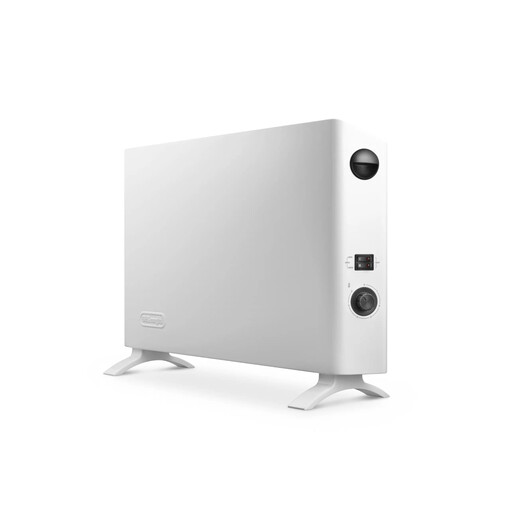
De’Longhi HSX2320 2000W Slim Convector Heater
Consider the HSX2320 for occasional spot heating if your conservatory fits De’Longhi’s guidance for small and medium rooms.
The product name lists three heat settings and a thermostat; De’Longhi specifies a 9cm-deep body for this model. If planned operation matters, check whether the version you are buying has a timer.
Joybuy
Frequently asked questions
Is a convector heater suitable for a conservatory?
It can provide supplementary room warmth if the model’s stated room guidance fits the conservatory and you can keep space around the heater clear. Check insulation and draughts as well as size: Dimplex says its 3kW ML3TSTie7 is suitable only for well-insulated spaces or occasional use.
Is a timer worth having for conservatory heating?
A timer is useful if you use the conservatory at predictable times and want controls for planned sessions. Check the schedule offered by the exact model: Igenix lists a 24-hour timer for its IG5250, while Dimplex lists seven-day scheduling for the ML3TSTie7.
Can I leave a portable convector running overnight or while I am out?
Do not treat a timer or safety cut-out as permission to leave a portable heater running unattended. Electrical Safety First advises against overnight use, and GOV.UK fire-safety guidance says to unplug electric heaters when going out or going to bed; also follow the model’s instructions.
Can a convector heater use an extension lead?
Use a suitable wall socket where possible and follow the heater’s instructions. If an extension device is needed, Electrical Safety First says to check that its current rating covers the combined load, avoid daisy-chaining and fully unwind cable reels before use.


