Choose a portable convector for supplementary warmth in one occupied room if you can leave the space around it clear and its controls suit your routine. Check the room size and heat loss before relying on a stated coverage figure: a heater can make the room more comfortable, but it cannot resolve the cause of cold walls, persistent damp or mould.
Who might choose a convector?
Consumers adding heat to one room
A portable convector may suit you if you want supplementary room warmth without installing a fixed heater. Electrical Safety First notes that convectors need clear space above and around them, so placement matters as much as portability.
Renters concerned about cold walls
Temporary warmth may help while you investigate recurring condensation, damp or mould. If you rent, document persistent problems and raise them with your landlord or managing agent rather than treating the heater as a repair.
Consumers short of floor space
If you move a heater between rooms or use it at regular times, consider its dimensions, carrying features and controls. Even a slim model still needs the clearances specified for safe use.
What matters when buying?
Start with the room and a safe position for the heater, then decide whether adjustable output or scheduled operation would be useful.
| Concern |
What to check |
Who this matters to |
| Room warmth and control |
Measure the room; compare the exact model’s stated coverage, output settings and thermostat. A coverage claim is not a guarantee for a room losing heat through cold walls. |
I want to warm the room I use without relying on a coverage figure that may not reflect its cold walls. Around 31% of consumers would put room warmth and control first. |
| Safe placement |
Check the manufacturer’s clearance instructions and look for overheat protection. For a freestanding model, consider tip-over protection too. |
With furniture close together, I need a position that leaves the heater unobstructed. Safe placement would be the primary concern for around 25% of consumers. |
| Cold walls and moisture |
Look into recurring condensation, damp patches or mould separately from the heater choice; report persistent problems to the landlord or managing agent if you rent. |
I need warmth now, but I do not want it to distract me from a recurring wall problem. Around 25% of consumers would put that distinction first. |
| Space and routine |
Compare dimensions and carrying features, then decide whether a timer suits when the room is occupied. A wall-mounted option requires a different installation decision. |
I use the room at regular times and need the heater to fit without blocking movement. For around 19% of consumers, space and routine would be the main priority. |
Mistakes to avoid
-
Expecting a heater to fix damp or mould
A convector warms room air but does not identify or repair the cause of a cold, damp wall. GOV.UK guidance notes that damp and mould can affect the airways and lungs.
Investigate persistent moisture and, if you rent, document and report it to your landlord or managing agent while using heat only for supplementary comfort.
-
Choosing by wattage or room-area claim alone
Stated coverage applies to the particular model and may not reflect the heat loss of a room with cold external walls.
Measure the room and check the model’s coverage claim and output controls before deciding whether it suits your existing heating arrangement.
-
Placing the heater too close to furnishings
Electrical Safety First says portable heaters need clear space around them. Safety cut-outs do not make blocked airflow or nearby curtains safe.
Follow the model’s clearance instructions, keep it away from furniture and bedding, and never cover it or use it to dry clothes, as GOV.UK fire-safety guidance advises.
-
Treating portable and wall-mounted models as interchangeable
A portable heater takes floor space wherever it is used; a permanently connected wall convector involves a separate installation decision.
Choose portability only where you can position the heater safely. Before considering a fixed model, check property permission and the installation requirements.
A permanently connected model may also require arranging electrical work rather than simply moving a heater into place.
Brands to consider
De'Longhi
De'Longhi offers portable convectors and oil-filled radiators for supplementary room heating.
- Its HSX2320 convector has an 800W–2000W output range, a thermostat and carry handles; De'Longhi specifies a 90mm body depth without castors.
- Those dimensions and controls describe the HSX2320, not every model or its suitability for a particular cold-wall room.
Dimplex
Dimplex has portable convectors with both basic and digital controls.
- Dimplex specifies a 24-hour timer and adjustable 10°C–35°C setting for its 2kW HeatLite Smart model.
- Its stated coverage of up to 20m² is model-specific. Dimplex describes its ML-series portable convectors as background heating, ideally alongside principal heating, for well-insulated spaces or occasional use.
Russell Hobbs
Russell Hobbs offers freestanding convectors with output and timer controls.
- The RHCVH4002 has stated 0.75/1.25/2kW settings, an adjustable thermostat, an integrated timer and overheat protection.
- Russell Hobbs describes that model as suitable for rooms up to 20m²; check the room’s conditions rather than treating the figure as assured coverage.
Stiebel Eltron
Stiebel Eltron’s wall-mounted convectors are an option to consider when keeping floor space clear matters more than portability.
- A fixed position can avoid moving a portable heater between uses.
- A permanently connected model calls for suitable installation and, where relevant, property permission; it does not remedy the cause of a cold wall.
Portable convectors on Joybuy
These portable convectors are choices for supplementary heat in one room. Compare their controls and check that the heater you choose will fit with its required clearances; none is a substitute for investigating persistent damp or mould.
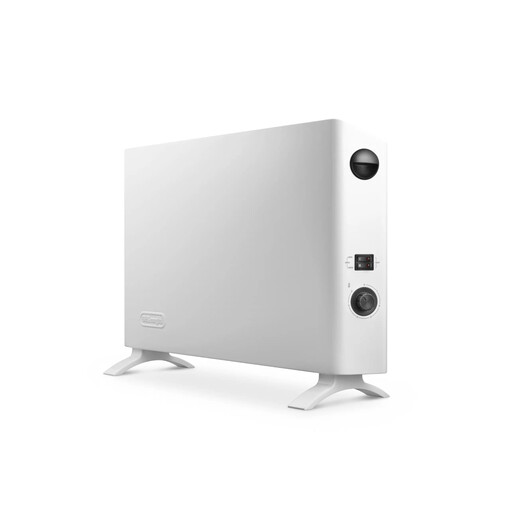 Image unavailable
De'Longhi HSX2320 2000W Convector Heater, White
Consider this portable model if storage depth and adjustable heat matter. Its stated features include three heat settings and a thermostat; De'Longhi specifies an 800W–2000W output range and a 90mm body depth without castors. Allow for the required clearance when it is in use.
View on Joybuy
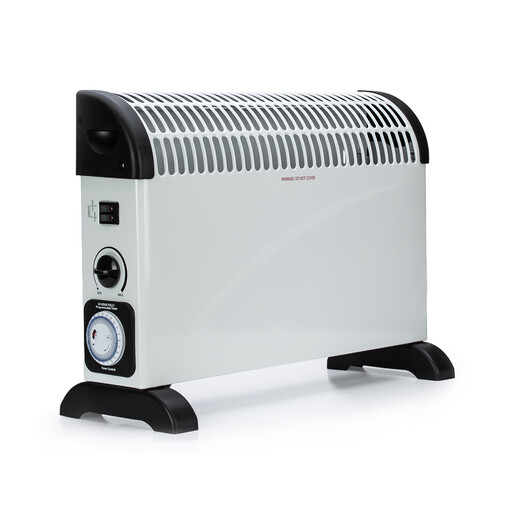 Image unavailable
Status 2000W Convector Heater with Timer, White
Consider this model if you want a portable heater with an adjustable thermostat and three heat settings. If scheduled heating is important, check how its stated timer operates; also check its dimensions against the clear space available.
View on Joybuy
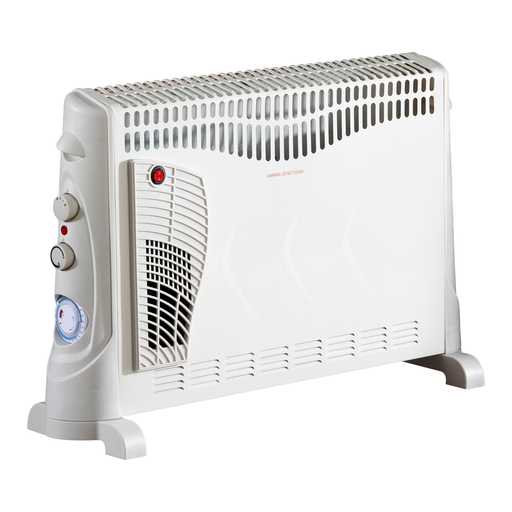 Image unavailable
DAEWOO 2000W Convector Heater, White
Consider this portable model if selectable output and a timer suit your routine. The stated settings are 750W, 1250W and 2000W, with an adjustable thermostat and overheat protection. Confirm the exact variant and its features before buying, as well as the space needed for safe placement.
View on Joybuy
Common questions
Will a convector heater fix cold walls or mould?
No. A convector can add temporary room warmth, but it does not identify or repair the cause of a cold wall, persistent condensation, damp or mould. Investigate recurring problems and report them to your landlord or managing agent if you rent.
Can I leave a portable convector on overnight or while I am out?
Do not rely on a portable heater for unattended or overnight heating. Electrical Safety First advises against using portable heaters overnight; switch the heater off and unplug it when going out or going to bed.
Which safety features matter in a small room?
Look for overheat protection and consider tip-over protection for a freestanding convector. Neither replaces safe placement: follow the model’s clearance instructions, keep its grilles unobstructed and never cover it.
Is an oil-filled radiator more suitable for several hours of heat?
An oil-filled radiator is worth considering if you want steady heat over several hours and can accept a slower warm-up. De'Longhi positions its oil-filled radiators for longer periods of constant room heat; a convector may better fit occasional room-air heating where quicker warm-up matters.


