What matters when choosing?
Start with whether the lounge needs occasional top-up heat or warmth at regular times, then check room suitability, controls and a safe position. Do not use wattage alone as a room-size rule: insulation and heat loss also affect how the space feels.
| Concern |
What to check |
Who this matters to |
| Room-wide warmth |
Compare the exact model’s room guidance with the lounge’s size and insulation; check its output settings. |
If we sit in different parts of an enclosed lounge, we want warmth across the room rather than at one seat. Around 29% of consumers would put room-wide warmth first. |
| Scheduled use |
Check the thermostat and whether any timer follows a daily or weekly schedule that suits the household. |
When lounge use follows a routine, I want heating to match the times people are there. For around 24% of consumers, that control would be the primary concern. |
| Shared-space safety |
Check overheat protection, a tip-over cut-out where relevant, and whether the heater can stand clear of furnishings near a wall socket. |
With people crossing the room, I need a position where the heater is unlikely to be knocked or obstructed. Safe placement would come first for around 29% of consumers. |
| Occasional warm-up |
Decide whether gradual convection suits the wait; if considering fan assistance, check that model’s controls and noise information. |
Before an occasional gathering, I may want to take the chill off quickly but still be able to talk comfortably. Around 18% of consumers would prioritise this warm-up trade-off. |
Portable convectors on Joybuy
These portable 2,000W convectors are choices to consider for supplementary lounge heating. Compare their controls with your routine, then check the exact model’s room guidance and whether you have a clear, safe place to use it.
 No image available
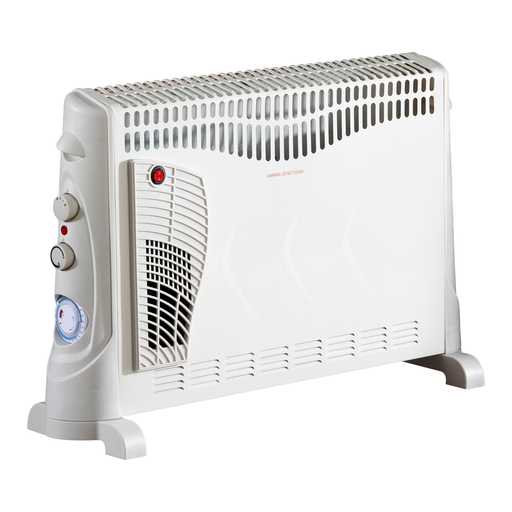
DAEWOO 2000W convector heater with thermostat and timer, white
Consider this portable heater if you want adjustable supplementary heat and a timer for lounge use.
The product name lists 750W, 1250W and 2000W heat settings, an adjustable thermostat and overheat protection. Confirm the supplied variant and its timer operation before relying on those controls, and check the exact model’s room guidance.
If it could be knocked in a walkway, check whether the supplied variant has a tip-over cut-out. Keep it clear of furnishings and plug it directly into a wall socket.
View on Joybuy
 No image available
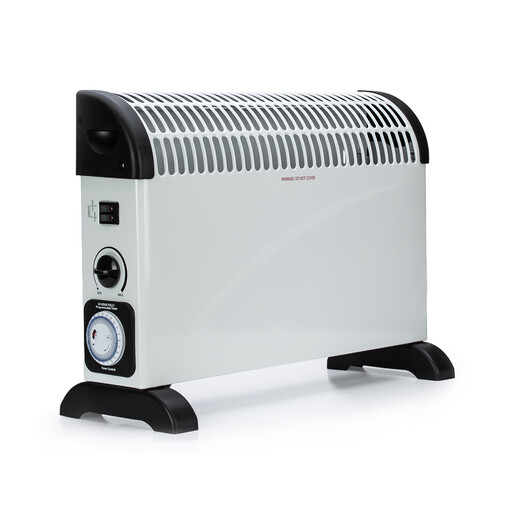
Status 2000W convector heater with thermostat and timer, white
This is a portable option to consider when you want adjustable supplementary warmth in the lounge.
The product name lists three heat settings, an adjustable thermostat and a timer. If scheduling matters, confirm what the timer can do; also check the exact model’s room guidance against your lounge.
Check for a tip-over cut-out if accidental knocks are a concern, and plan a clear position near a wall socket.
View on Joybuy
 No image available
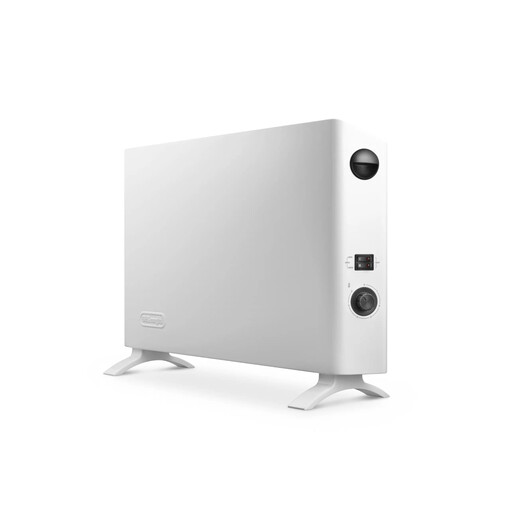
De'Longhi HSX2320 2000W slim convector heater, white
Consider the HSX2320 for portable top-up heating if a mechanical thermostat suits how you use the lounge.
The product name lists three heat settings and a thermostat; De'Longhi’s HSX2320 information specifies a minimum 800W setting. Check the room guidance for this exact model against the lounge’s size and insulation.
If timed heating or a tip-over cut-out matters in your shared room, confirm those features before choosing it. Leave clear space around the heater and use a wall socket directly.
View on Joybuy
Frequently asked questions
Is a convector suitable for a shared lounge?
A convector can suit an enclosed shared lounge when the aim is background warmth across the room rather than immediate heat directed at one person. Electrical Safety First notes that convection heaters warm rooms more slowly; Dimplex describes its cited portable models as suitable only for well-insulated spaces or occasional use.
Can I leave a portable convector on when everyone leaves?
No: switch off and unplug a portable heater when the lounge is unattended. Electrical Safety First also advises against using portable heaters overnight.
Can I plug a portable convector into an extension lead?
Use a wall socket directly rather than an extension lead or power strip. Warwickshire Fire and Rescue Service gives this advice for portable heaters to reduce overheating and electrical-fire risk.
Which safety features matter in a busy lounge?
Check for overheat protection and, where a freestanding heater could be knocked, a tip-over cut-out on the exact model. Neither replaces a stable position, clear air grilles and space from furniture and fabrics.
Will a timer and thermostat reduce electricity use?
A timer can limit heating to planned lounge hours, while a thermostat can stop heating when its set temperature is reached. These controls do not change the heater’s rated input while it runs at full power, so consider both wattage and likely use time rather than relying on an energy-saving label.


