Who each option suits

Small-portion shared-kitchen cooks

If you chop chicken for a sandwich, wrap, salad or single meal, a compact machine may be easier to wash and put away between users. Kenwood’s mini-chopper range illustrates this smaller-appliance route; check the capacity and cleaning instructions of the model you choose.

Batch-prep home cooks

If you regularly prepare larger amounts or also want to slice, grate, purée or mix ingredients, consider a processor with a suitable bowl and the attachments you will actually use. Ninja describes these functions for its BN650UK; its features should not be assumed to apply to other models.

Food-service kitchen operators

If the chicken is prepared for customers rather than private household use, assess the appliance as part of your cleaning and contamination-control process. Food Standards Agency guidance addresses cleaning facilities for food-business operations; an appliance feature alone does not settle those requirements.

What matters when choosing

Compact chopper

Choose it when: you prepare occasional small portions and need to clear the shared worktop afterwards.

Trade-off: confirm that its permitted quantity and functions cover your usual preparation rather than assuming it can handle larger batches.

Full-size food processor

Choose it when: repeated batches or additional tasks such as slicing and grating justify a larger appliance.

Trade-off: the bowl and extra attachments need storage space and a workable cleaning routine between users.

Concern What to check Who this matters to
Cleaning and separation Check how the bowl, lid and blade come apart for cleaning, and which parts the manufacturer says can go in a dishwasher. Keep ready-to-eat chicken preparation separate from raw-food preparation. When several people use the same equipment, I want to clean food-contact parts before the next person needs them; roughly 42% of consumers put cleaning and separation first.
Batch size and texture Compare your usual portion with the model’s permitted quantity, and look for controls that let you stop and check the chop. If I prepare several portions or other ingredients in one session, I need a bowl and functions that suit those jobs; around 33% of consumers prioritise batch preparation and versatility.
Shared-space storage Measure the available cupboard or worktop space and check how the bowl, blade and accessories are stored. With limited space that everyone shares, I need to put the machine and its parts away after use; roughly 25% of consumers make compact storage their primary concern.

Buying pitfalls

  • Choosing by motor wattage alone

    A wattage figure does not tell you whether the bowl suits your portion or whether the food-contact parts are practical to clean in a shared kitchen.

    Start with permitted quantity, cleaning instructions and storage; then compare motor specifications and functions for the exact model.

  • Treating dishwasher-safe parts as a complete cleaning plan

    Food can remain on lids, blades, seals or work surfaces even when a bowl can go in the dishwasher. Food Standards Agency guidance for food businesses emphasises suitable cleaning facilities and contamination control.

    Agree who cleans the appliance after use, follow the instructions for every food-contact part and separate cooked-chicken preparation from raw-meat preparation.

    Cleaning and drying the additional parts takes time between users.

  • Buying a large processor for occasional small portions

    A multi-function processor may be useful for regular meal preparation, but its bowl and attachments still need somewhere to be assembled, washed and stored.

    Compare your normal portion with the model’s instructions, then measure the space available for the complete appliance.

  • Assuming household appliance features settle food-business requirements

    Preparing food for customers raises questions about the wider operation, not just whether an appliance is easy to clean. The Food Standards Agency sets out separate food-business registration and hygiene guidance.

    If your shared-kitchen activity is a food business, check the applicable process with the relevant local authority and confirm that the chosen appliance is permitted for your intended use.

Brands to consider

Kenwood

Kenwood offers mini-chopper models worth comparing when smaller portions and storage between uses are priorities.

  • Kenwood lists all-in-one storage, two speeds and dishwasher-safe parts for the Duo Prep CHP80.000BK.
  • Those features are model-specific. Check the chosen model’s bowl capacity, included tools and cleaning instructions.

Ninja

The BN650UK illustrates the full-size route for cooks who want chicken chopping alongside other preparation tasks.

  • Ninja lists a 2.1L processor bowl and chopping, slicing, grating, puréeing and mixing functions for the BN650UK.
  • Allow space to store its attachments and time to clean the parts you use; check the configuration of the exact model.

Magimix

Magimix offers processor sizes to consider when the appliance will be used for regular preparation beyond chicken chopping.

  • Magimix positions its Mini Plus for smaller kitchens and also lists larger processor models.
  • Check the exact model’s recommended quantities and any manufacturer guarantee terms for your purchase channel.

Joybuy product choices

These choices include choppers for smaller or varied portions and a multi-function processor for broader household preparation. Compare the bowl and cleaning arrangements with your shared-kitchen routine, and check the exact model’s instructions before processing cooked chicken.
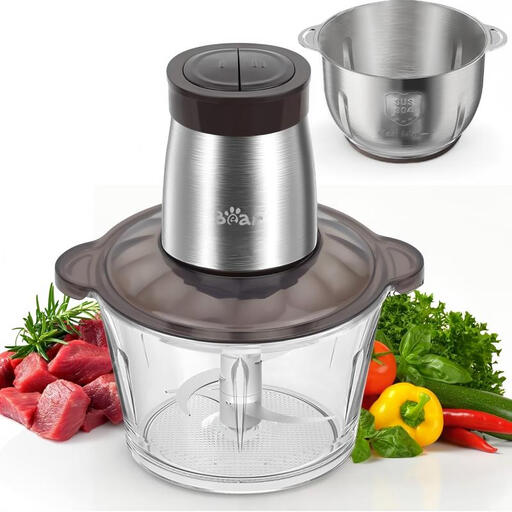
Bear double-cup food chopper with glass and stainless-steel bowls

Bear 300W double-cup chopper, 2L glass and 1.8L stainless-steel bowls

Consider the two separate bowls if shared-kitchen users want to organise different preparation tasks. The title specifies two speeds and four stainless-steel blades. Check the instructions for cooked-chicken quantity, temperature and continuous running time before use.

Joybuy
Bear QSJ-D03Q1 chopper with two glass bowls

Bear QSJ-D03Q1 300W chopper, 2L and 0.6L glass bowls

The two stated bowl sizes are worth comparing if your portions vary between meals. Confirm the permitted cooked-chicken quantity and temperature for each bowl in the model instructions.

Joybuy
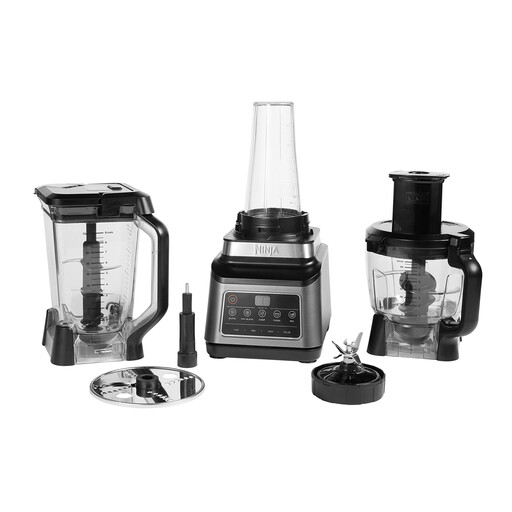
Ninja BN800UK 3-in-1 food processor with bowl, jug and cup

Ninja BN800UK 3-in-1 food processor, 1.8L bowl, 2.1L jug and 700ml cup

Consider this 1200W model if chicken chopping is one of several household preparation tasks. Its title lists five automatic programmes and dishwasher-safe parts; account for the bowl, jug and cup when planning cleaning and storage. The supplied usage guidance describes household rather than commercial use, so do not select it for food-service operations.

Joybuy
White Kenwood CH180B mini chopper

Kenwood CH180B 300W mini chopper, 350ml

The 350ml bowl makes this a model to assess for modest portions and limited shared storage. Its title lists two speeds and a dishwasher-safe bowl. Check that the exact model’s instructions permit your intended cooked-chicken task and quantity, and follow its stated continuous-running limit.

Joybuy
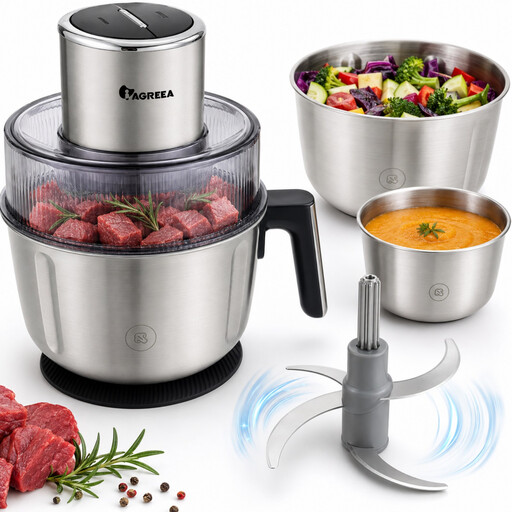
IAGREEA MS-25JM08 food chopper with three nesting bowls

IAGREEA MS-25JM08 350W chopper, 2.5L, 2.2L and 1.8L nesting bowls

The three stated bowl sizes are worth considering if users prepare different quantities but need to store the bowls together. The title specifies stainless-steel bowls and two speeds. Check cleaning requirements and the model’s cooked-chicken quantity, temperature and operating instructions before use.

Joybuy

Frequently asked questions

Can I put hot cooked chicken straight into a chopper?

Only do so if the exact appliance instructions permit food at that temperature. Check its temperature and quantity limits, and handle cooling and storage of cooked chicken in line with food-safety guidance; the Food Standards Agency identifies cooling and chilling as relevant food-safety practices.

What needs cleaning after chopping cooked chicken?

Clean every part and surface that contacted the chicken, including the bowl, lid, blade assembly and any utensils used. Follow the appliance instructions for washing and drying before another person uses or stores it; Food Standards Agency guidance for food businesses also addresses suitable facilities for cleaning utensils and equipment.

Is a dishwasher-safe bowl enough for shared-kitchen use?

No. A dishwasher-safe claim applies only to the parts specified by the manufacturer; it does not replace cleaning the other food-contact parts or separating ready-to-eat chicken preparation from raw-food preparation. Kenwood lists dishwasher-safe parts for its Duo Prep CHP80.000BK, so check the instructions for the model you buy.

Does a shared kitchen need food-business registration?

Sharing a kitchen alone does not establish whether an activity is a food business. If you are starting or taking over a food business, the Food Standards Agency advises registering with the local authority at least 28 days before trading or food operations start; ask the relevant local authority how this applies to your activity.

How can I keep chopped chicken from becoming too fine?

If the model offers suitable manual control, process a little at a time and stop to inspect the texture. Keep within the manufacturer’s quantity and operating instructions rather than assuming a larger bowl will produce the texture you want.