
24/7 Customer Support

Free returns

Same-day & Next-day Delivery

Quality Guaranteed

Unlock Your Welcome Offers: FREE Delivery | Up to 80% OFF | Free 30-day JoyPlus trial
Download the APP
A great meal brings people together, but the lingering smells of fried onions, fish or spices can overstay their welcome. A persistent layer of grease on your cabinets and the sudden shriek of a smoke alarm are other common kitchen frustrations. A capable cooker hood, also known as a kitchen extractor fan, is the key to maintaining a fresh, clean and pleasant cooking environment.
Navigating the market can be confusing, with various types, sizes and features to consider. This guide is designed to provide clear, practical advice to help you select a cooker hood that fits your kitchen, cooking style and budget, whether you're undertaking a full renovation or simply upgrading an old appliance.
Before looking at specific models, understanding a few core concepts will help you narrow down your options effectively.
The first major decision is how your cooker hood will handle the air it extracts.
recirculating cooker hood is a more flexible solution. It draws air through a series of filters—a grease filter to trap oil particles and a charcoal or carbon filter to neutralise odours—before releasing the cleaned air back into the kitchen. This is the go-to choice for flats or kitchens in listed buildings where external ducting isn't feasible.Many modern units, including some of our recommendations, offer both options, giving you the choice to install it as a ducted or recirculating fan.
For optimal performance, your cooker hood should be at least as wide as your hob. The most common sizes in the UK are the 60cm cooker hood for standard four-ring hobs and the 90cm cooker hood for larger five-ring or range-style cookers.
The extraction rate, measured in cubic metres per hour (m?/h), indicates how much air the fan can process. A higher number means more power, which is suitable for larger kitchens or for those who frequently engage in high-heat cooking like wok frying.
Appliance technology has advanced, and today's cooker hoods offer more than just basic extraction.
energy efficient cooker hood, typically rated 'A' or higher, can help reduce your electricity bills over its lifetime. Look for the energy label when comparing models.quiet cooker hood is essential. Noise levels are measured in decibels (dB); a lower number signifies a quieter operation, allowing for conversation and comfort while the fan is running.smart extractor fan can be controlled via a smartphone app or even voice commands. This allows you to adjust fan speed, turn on lights or set timers remotely, adding a layer of convenience to your kitchen routine.Here are a few models that stand out for their design, functionality and suitability for different UK homes.
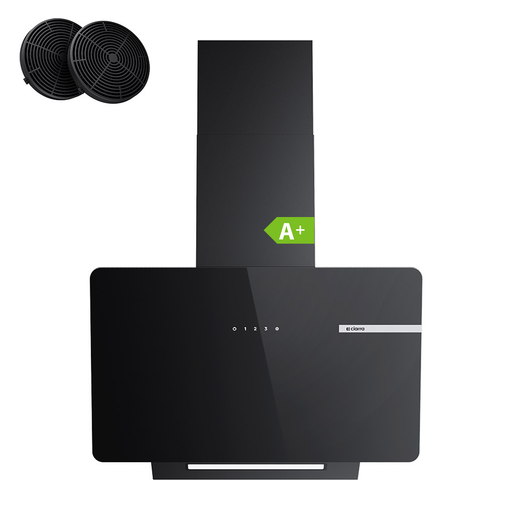
Why It Stands Out: This wall mounted extractor hood combines a sleek, modern aesthetic with practical functionality. Its angled black cooker hood design not only looks contemporary but also provides more headroom over the hob. It offers dual ventilation, meaning it can be installed to vent externally or as a recirculating cooker hood using the included filters.
Pros:
Who is it for? This is an excellent choice for those with a standard 60cm hob in a modern kitchen. Its dual-mode ventilation makes it particularly suitable for flats or any home where ducting might be a challenge.
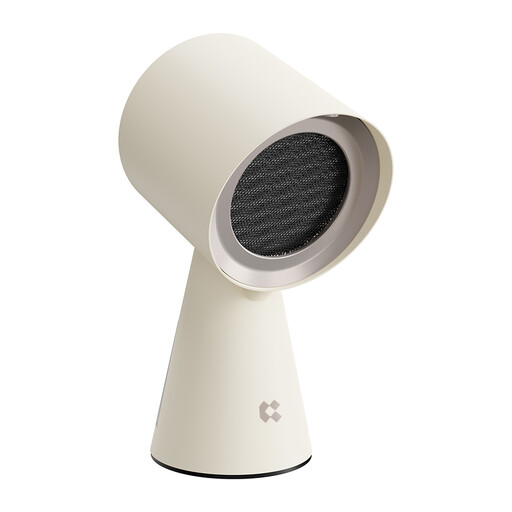
Why It Stands Out: The portable extractor fan is a unique solution for spaces where a conventional hood cannot be installed. It requires no mounting or ducting; simply place it on the countertop near your hob, plug it in, and it's ready to filter the air.
Pros:
Who is it for? Ideal for renters, students in halls or anyone with a kitchenette that lacks built-in ventilation. It's also a practical companion for portable induction hobs used in garden rooms, campervans or as an extra cooking station.
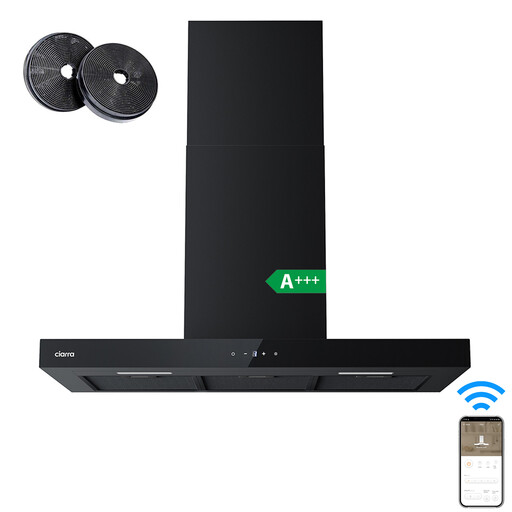
Why It Stands Out: This 90cm cooker hood is built for performance and modern convenience. Its standout feature is the Wi-Fi and app control, allowing you to manage settings from your smartphone. It also boasts a top-tier A+++ energy efficiency class and a powerful 650 m?/h extraction rate with a booster function for intense cooking sessions.
Pros:
smart extractor fan, it offers remote control for ultimate convenience.energy efficient cooker hood options available.Who is it for? This model is designed for homeowners with larger kitchens and 90cm hobs who prioritise performance, energy savings and smart home integration. It's a strong contender for those who cook frequently and need powerful, yet quiet, extraction.
These recommendations cover a range of common needs, but every kitchen is unique. If you're looking for a different size, style or a specific feature not highlighted here, there are many other models to consider.
Explore our full range of Modern Cookers to find the perfect match for your kitchen.
For metal grease filters, it's good practice to clean them every 2-4 weeks, depending on how often you cook. Most are dishwasher-safe, but always check the manufacturer's instructions. For a recirculating cooker hood, the carbon filters are not washable and typically need to be replaced every 3-6 months to remain effective at odour removal.
A portable extractor fan requires no installation. For wall-mounted models, DIY installation is possible if you have the right tools and skills, especially for a simple recirculating setup. However, for ducted installations that require cutting into a wall or for any hard-wired electrical connections, we recommend hiring a qualified professional to ensure the work is done safely and correctly.
A simple way to estimate your needs is to calculate your kitchen's volume in cubic metres (length x width x height) and multiply that number by 10. This gives you a target extraction rate in m?/h for achieving roughly 10 air changes per hour. For example, a kitchen that is 4m long, 3m wide and 2.5m high has a volume of 30m?. It would benefit from a hood with an extraction rate of at least 300 m?/h.