
24/7 Customer Support

Free returns

Same-day & Next-day Delivery

Quality Guaranteed

Unlock Your Welcome Offers: FREE Delivery | Up to 80% OFF | Free 30-day JoyPlus trial
Download the APP
A great meal can bring a household together, but the lingering smells of fried onions, fish and spices can be an unwelcome guest. A quality cooker hood is not just an appliance; it's the key to a fresh, clean kitchen. However, navigating the market can be confusing. Many shoppers are drawn in by impressive-sounding specifications, only to find their new kitchen extractor fan is either too loud, too weak or a hassle to maintain.
As the Joybuy Product Recommendation Officer, my role is to help you sidestep these common issues. Before you buy, be aware of these frequent pitfalls:
recirculating cooker hood requires carbon filters that need regular replacement, adding a recurring cost. Cheaper models may use non-standard filters that are difficult to find and expensive to replace.chimney cooker hood might look fantastic in a showroom, but in a compact kitchen with low ceilings, it can feel overwhelming and steal valuable cabinet space. The style must match the room's practical needs.To make a sensible choice, focus on the specifications that truly matter for performance and daily use. Here are the three non-negotiable factors to check.
The primary job of a kitchen extractor fan is to remove steam, grease and odours. The power to do this is its extraction rate. A simple way to estimate the power you need is to calculate your kitchen's volume (Length x Width x Height in metres) and multiply it by 10. This gives you a rough target for the m?/h rating.
However, power comes with a trade-off: noise. A cooker hood's noise level is measured in decibels (dB). A quiet conversation is around 60 dB. An extractor running at over 65 dB can make it difficult to talk or listen to the radio. Look for a model that provides the extraction power you need without exceeding a comfortable noise level for your household.
Your kitchen's layout will determine which ventilation type is suitable.
The size and style of your cooker hood should align with your hob and kitchen design.
under cabinet hood.Based on these practical criteria, we've matched a few models from our collection to different user needs.
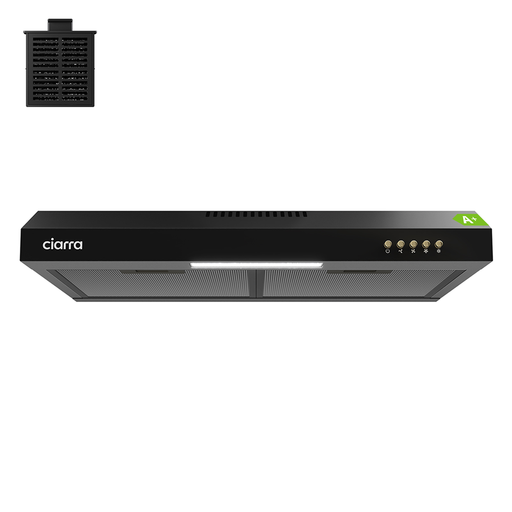
Why This Fits Their Persona: Ideal for flats, rental properties or any kitchen where preserving cabinet space is a priority. Its compact, under-cabinet design provides effective ventilation without dominating the visual landscape, maintaining a clean and uncluttered look.
This model directly counters the pitfall of choosing a bulky style for a small space. As a slimline under cabinet hood, it integrates discreetly, freeing up valuable overhead storage that a chimney hood would occupy.
Supports both ducted and recirculation modes for flexible installation. Features simple push-button controls and washable metal grease filters for straightforward maintenance.
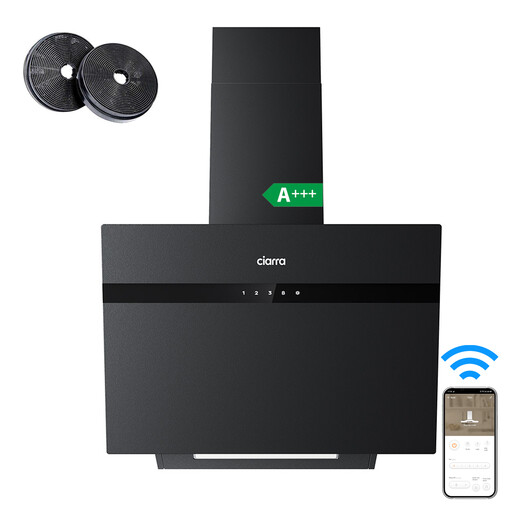
Why This Fits Their Persona: For those who see the kitchen as a design centrepiece. This angled cooker hood combines a striking matte black cooker hood aesthetic with modern technology like App/Wi-Fi control, making it a functional statement piece in any contemporary, open-plan home.
It sidesteps the "style over substance" trap by pairing its looks with performance. It has a powerful 650 m?/h extraction rate, but a moderate noise level of 58 dB and an exceptional A+++ energy rating, ensuring it runs efficiently and quietly.
The head-free angled design improves comfort and visibility while cooking. Smart controls via Wi-Fi offer a layer of convenience not found in standard models.
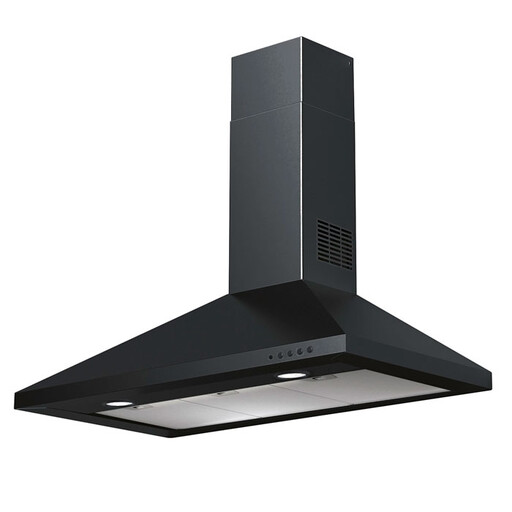
Why This Fits Their Persona: Built for large kitchens with 90cm range cookers or hobs. This is for the person who frequently cooks large meals, stir-fries or strong-smelling foods and needs maximum extraction power to keep the air clear in a busy, open-plan family home.
This model avoids the "underpowered" trap. Its very high maximum extraction rate of 850 m?/h ensures it can handle the intense steam and smoke from a large hob, a scenario where a standard 60cm hood would struggle.
The extra-wide 90cm extractor hood design provides full coverage. A 4-speed motor with a Boost function offers precise control, from quiet simmering to intense frying.
We have compiled a complete, real-time list of products that fully satisfy these strict selection criteria and UK safety regulations.
For optimal performance, the metal grease filters should be cleaned regularly. For most households, this means once a month. Many are dishwasher-safe, which simplifies the process. If you have a recirculating cooker hood, the internal carbon filters cannot be washed and must be replaced. This is typically required every 3 to 6 months or when you notice odours are no longer being effectively removed.
For a simple like-for-like replacement of a recirculating hood, a competent DIYer may be able to perform the installation. However, for any new installation, especially one involving ducted extraction or electrical wiring, it is strongly recommended to hire a qualified professional. This ensures the appliance is fitted safely, securely and in compliance with all UK building and electrical regulations.