
24/7 Customer Support

Free returns

Same-day & Next-day Delivery

Quality Guaranteed

Unlock Your Welcome Offers: FREE Delivery | Up to 80% OFF | Free 30-day JoyPlus trial
Download the APP
A suitable cooker hood can help manage cooking steam, smoke, grease and odours, but choosing one is not simply a matter of picking the widest or most powerful-looking model. UK kitchens vary considerably, from compact rental flats to open-plan rooms with range-style cookers.
The main buying risks are often hidden in the specification sheet. A hood may advertise a high maximum airflow that is only available in boost mode, while everyday extraction is lower. A stylish model may also require a duct route that your kitchen cannot accommodate. Recirculating models can be convenient, but their charcoal filters require regular replacement and do not remove moisture from the room.
Before choosing a wall-mounted extractor fan, built-in cooker hood or slimline cooker hood, check the following points.
The hood should generally be at least as wide as the cooking surface so that steam and grease are captured more effectively. Common options include:
Measure the available wall or cabinet space rather than relying on the advertised size alone. A 60cm model may measure slightly below or above 600mm, depending on its construction.
Airflow is normally stated in m³/h. A higher figure can be useful for frying, searing and intensive cooking, but it should be considered alongside duct diameter, bends and the length of the extraction route. A poorly planned duct system can reduce real-world performance.
A ducted cooker hood sends air outside through a suitable vent. This generally helps remove moisture as well as odours, but it needs an external outlet and appropriate installation. A recirculating cooker hood passes air through grease and charcoal filters before returning it to the kitchen. It avoids major building work, which can be helpful for renters, but it does not remove humidity and its carbon filters need attention.
Always follow the installation instructions and have electrical connections or fixed installation work completed by a suitably qualified person where required. Maintain the manufacturer’s recommended clearance above the hob and do not block air outlets.
Noise is measured in dB(A). A difference of several decibels can be noticeable in an open-plan kitchen, particularly when the hood operates for extended periods. Look for noise figures at different speeds rather than only the maximum or minimum value.
A washable grease filter helps reduce ongoing consumable costs. Aluminium filters should be removed and cleaned regularly; the supplied instructions for several models recommend cleaning every two to four weeks depending on use. If using recirculation, check whether charcoal filters are included, sold separately or replaced at set intervals.
Energy labels also provide useful context. An A+ energy-efficient cooker hood can use less electricity over time than a lower-rated model, although actual costs depend on usage, extraction speed and lighting habits. Integrated LEDs can improve visibility over the hob without needing a separate light.
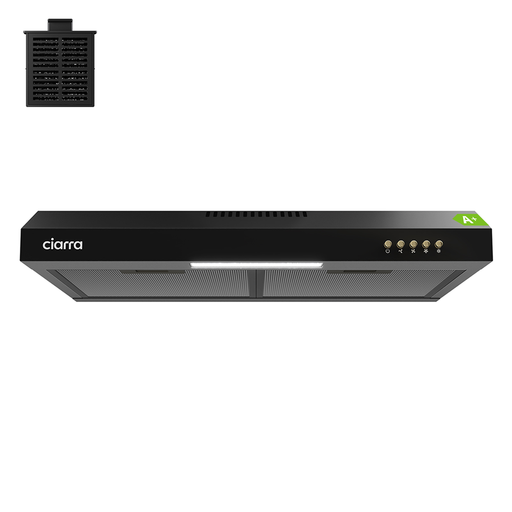
Why This Fits Their Persona: A practical choice for a compact kitchen, rental property or first home where cabinet space is limited.
Its 596mm slimline format is easier to plan around than a large chimney hood, while it supports both ducting and recirculation.
A+ rating, 11kWh annual energy consumption, two washable aluminium filters and three push-button speeds.
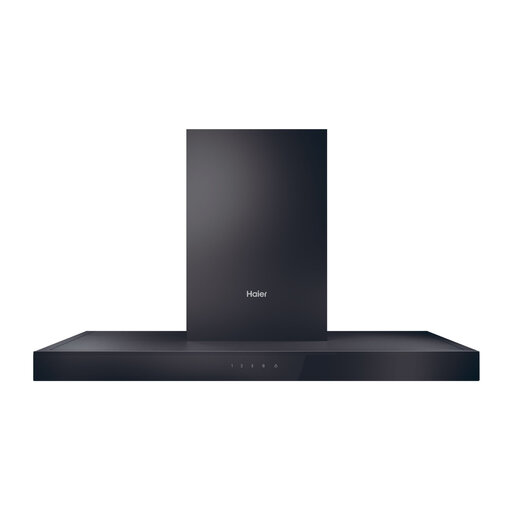
Why This Fits Their Persona: Suits homeowners renovating a larger kitchen who want broad hob coverage, touch controls and flexible installation.
The specification separates standard extraction of 448m³/h from its 806m³/h boost figure, making performance easier to assess realistically.
90cm black T-shape design, four speeds, programmable timer, LED lighting, A+ rating and carbon filter included.
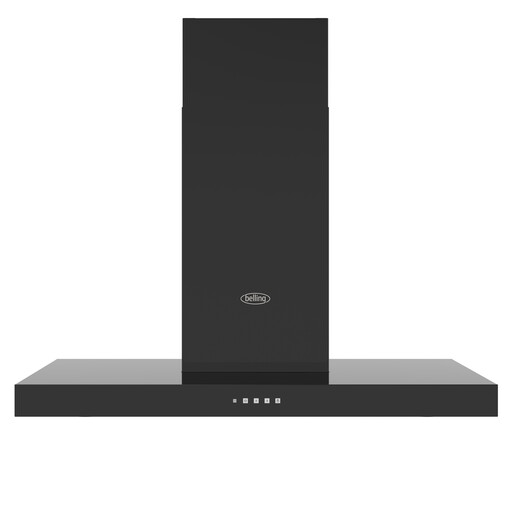
Why This Fits Their Persona: Designed for larger cooking areas and range-style cookers where a wider canopy can cover more of the hob.
Its 100cm width is clearly stated, with both ducted and recirculating options so buyers can check compatibility before installation.
Three touch-controlled speeds, LED lighting, aluminium grease filters and adjustable chimney sections.
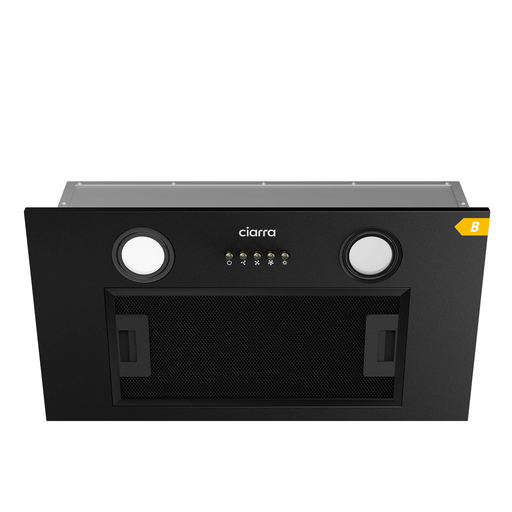
Why This Fits Their Persona: A discreet option for wall-cabinet layouts, compact hobs and kitchens where a visible canopy would take up too much space.
The 520mm built-in format is specified clearly, and the dual ventilation option helps buyers plan for either an external duct or recirculation.
Washable metal grease cassette, three speeds, integrated hob lighting and 24-month warranty.
We have compiled a complete, real-time list of products that fully satisfy these strict selection criteria and UK safety regulations.
A ducted cooker hood can remove moisture and cooking air outside, but it requires a suitable external route. Recirculation is often simpler for flats, rentals and kitchens without an existing vent, although it relies on charcoal filters and does not remove humidity.
For regular home cooking, clean a washable grease filter roughly every two to four weeks, adjusting the schedule for frequent frying or grilling. Charcoal filters used in recirculation normally need replacement rather than washing, following the manufacturer’s guidance.