
24/7 Customer Support

Free returns

Same-day & Next-day Delivery

Quality Guaranteed

Unlock Your Welcome Offers: FREE Delivery | Up to 80% OFF | Free 30-day JoyPlus trial
Download the APP
A good cooker hood, or kitchen extractor fan, is the unsung hero of the modern kitchen. It works quietly in the background, whisking away steam, smoke and cooking odours, leaving your home fresh and clean. But choosing the right one can feel like navigating a minefield of technical jargon and marketing promises. Many homeowners end up with a model that is either too loud, too weak or simply wrong for their space.
As the Joybuy Product Recommendation Officer, my role is to help you sidestep these issues. Before you spend your hard-earned money, let’s look at the three most common pitfalls that catch UK buyers out.
By understanding these key factors, you can make a much more informed decision.
To avoid the traps above, focus on these three non-negotiable specifications. Getting these right is the key to finding a cooker hood that serves you well for years.
This is the most critical decision and depends entirely on your property.
Many models offer both options, giving you flexibility, but you must know which method your kitchen can accommodate before you buy.
Instead of just looking for the highest extraction rate, find the right balance for your kitchen size and your tolerance for noise.
The size of your cooker hood should, at a minimum, match the width of your hob to ensure effective capture of steam and fumes.
Based on these practical criteria, here are a few recommendations matched to different user needs.
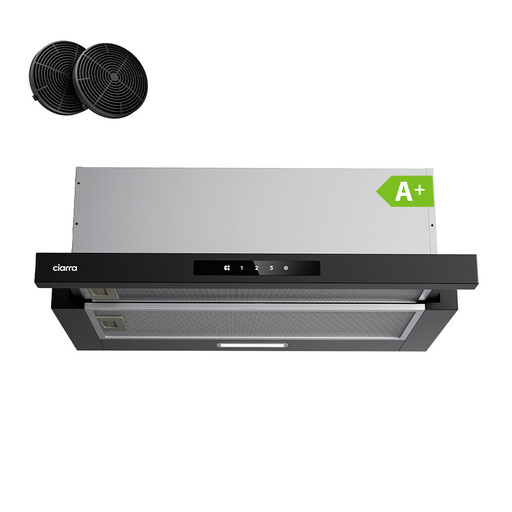
Why This Fits Their Persona: This telescopic cooker hood is perfect for those with limited space or who prefer a minimalist look. It integrates seamlessly into a cabinet, sliding out only when needed, preserving clean lines in a modern kitchen.
It directly solves the "one size fits all" fallacy by providing a powerful but discreet solution for smaller kitchens. Its high extraction rate for its size avoids the trap of underpowered integrated hoods.
Features a strong 600m?/h max airflow in a compact 60cm form. The A+ energy rating and washable aluminium filters also address long-term running costs and maintenance.
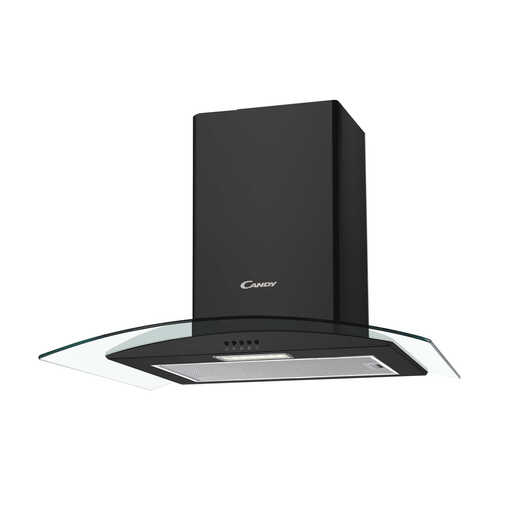
Why This Fits Their Persona: For those who see the kitchen as the heart of the home, this black cooker hood with a curved glass canopy is a design feature. It complements modern appliances and adds a touch of elegance to an open-plan space.
This model avoids the "power vs. noise" trap by offering a solid 456 m?/h extraction rate while keeping the maximum noise level to a very reasonable 56 dB, making it ideal for social kitchens.
Its main advantage is the combination of striking aesthetics with quiet performance. The dishwasher-safe aluminium filter also makes maintenance straightforward.
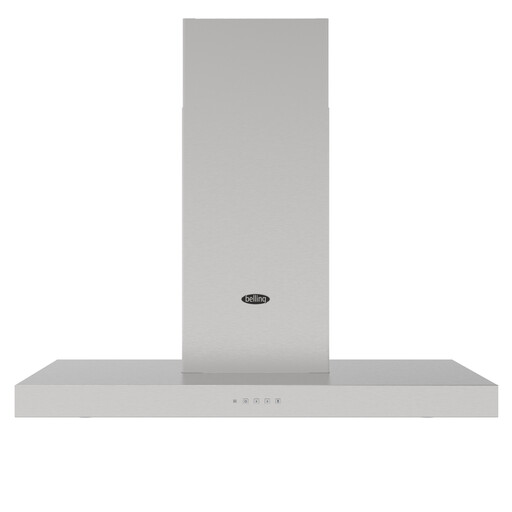
Why This Fits Their Persona: This classic 90cm cooker hood is a workhorse, built to provide ample coverage for the larger hobs and range cookers often found in busy family kitchens. Its robust stainless steel construction is durable and easy to clean.
It avoids the trap of undersizing the hood for a large cooker. Its simple push-button controls and washable aluminium grease filters also sidestep the hidden costs and complexities of high-tech but hard-to-maintain models.
Offers wide 90cm coverage and flexible installation (ducted or recirculation). The three washable grease filters provide excellent capture for heavy-duty cooking.
We have compiled a complete, real-time list of products that fully satisfy these strict selection criteria and UK safety regulations.
For hoods with washable aluminium grease filters, it is advisable to clean them every 2 to 4 weeks, depending on how heavily you cook. Most are dishwasher-safe, which simplifies the process. If you are using a recirculating cooker hood, the internal carbon filters cannot be cleaned and must be replaced. This is typically required every 3 to 6 months.
Safety is paramount here. While it varies by model, a general guideline is to install the hood a minimum of 65cm above an electric hob and 75cm above a gas hob. However, you must always read and follow the specific manufacturer's installation instructions for your chosen model to ensure safe and effective operation.
Modern cooker hoods are generally not expensive to run. Look for the Energy Efficiency Class on the product specifications, where 'A' ratings are the most efficient. Models with LED lighting consume significantly less electricity than those with older halogen bulbs. The annual energy consumption (listed in kWh/a) can give you a good idea of running costs, but for most households, it will only add a small amount to your yearly electricity bill.