
24/7 Customer Support

Free returns

Same-day & Next-day Delivery

Quality Guaranteed

Unlock Your Welcome Offers: FREE Delivery | Up to 80% OFF | Free 30-day JoyPlus trial
Download the APP
Choosing cooker hoods is not simply a matter of matching the finish to your kitchen doors. The wrong width, unsuitable ventilation mode or overlooked running cost can leave you with lingering cooking odours, excess moisture and a noisy appliance that is rarely used.
This guide explains the practical specifications to check before buying, followed by Our Top Recommendations for 2026 for different UK household needs.
A cooker hood should generally cover the cooking area adequately. A 60cm cooker hood is designed for many standard hobs, while a 90cm cooker hood, 100cm cooker hood or 110cm cooker hood is more appropriate for wider hobs and range cookers.
A hood that is narrower than the hob may not capture steam and grease effectively, particularly when using the outer burners. Measure the appliance rather than relying on the kitchen cabinet width alone.
Manufacturers may highlight the highest airflow figure, but this is usually achieved at the most powerful setting or boost mode. Everyday operation may use a lower speed, with a different noise level and extraction rate.
Check the available speeds, boost function and noise figures together. A hood with several settings gives you more control for simmering, boiling or high-temperature frying.
A ducted cooker hood sends filtered air outside through ducting. A recirculating cooker hood passes air through grease and carbon filters before returning it to the kitchen. Recirculation can suit flats, internal walls and properties where external ducting is impractical, but carbon filters need periodic replacement.
Do not confuse washable metal grease filters with odour-removing carbon filters. They perform different jobs and may involve different ongoing costs.
Measure the hob, wall space and available chimney height. Common choices include:
Installation height is equally important. Several models listed here specify a minimum clearance of 650mm above the hob, but the appliance instructions take priority. Gas and electric hob requirements can differ, so confirm the measurement before fixing the hood.
Airflow is commonly shown in cubic metres per hour, written as m³/h. Higher figures can be useful for intensive cooking, but performance also depends on duct length, bends, outlet size and installation quality.
Noise is measured in decibels, or dB. A cooker hood rated at 45–46dB on its lower setting may be more comfortable in an open-plan kitchen than one that only publishes a maximum figure. Touch controls are easy to wipe clean, while push buttons offer straightforward physical operation.
Washable aluminium or metal grease filters should be removed and cleaned regularly. Some are dishwasher-safe, but check the product instructions. If using recirculation, verify whether carbon filters are supplied or need to be purchased separately.
LED lighting can improve visibility over the hob without adding much to the appliance’s electricity use. Energy labels and annual consumption figures provide a useful comparison, although actual running costs depend on usage and your tariff.
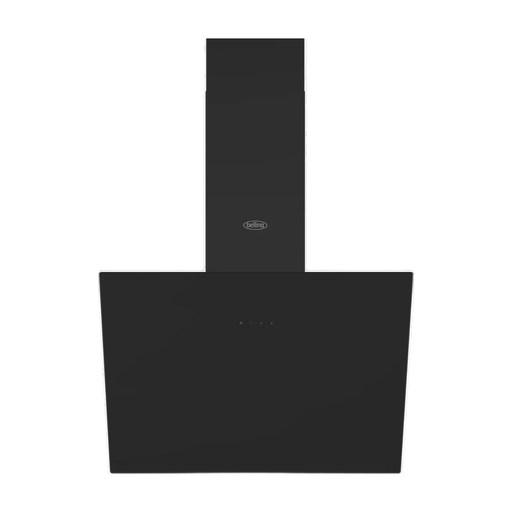
Why This Fits Their Persona: A practical choice for a standard-width hob and a modern kitchen where black gloss styling is preferred.
It states both ducted and recirculation operation, helping buyers avoid assuming that external venting is essential.
Up to 640m³/h extraction, timed boost to 710m³/h, three speeds, LED lighting and dishwasher-safe aluminium filters.
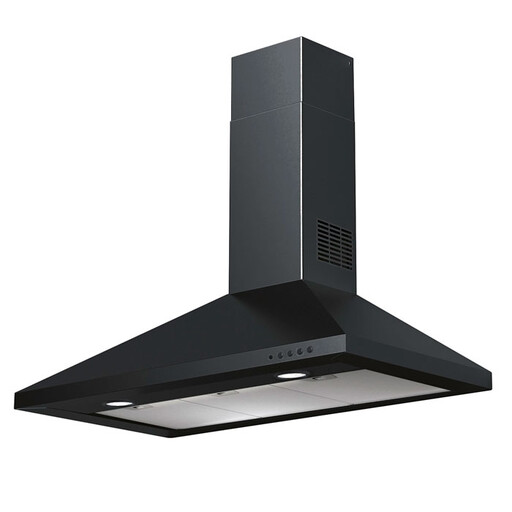
Why This Fits Their Persona: Suits homeowners upgrading a larger contemporary kitchen and wanting broader coverage with electronic controls.
The specification lists four motor speeds, boost operation and a maximum noise figure to help set realistic expectations.
90cm width, up to 850m³/h extraction, touch controls, two LED lamps and washable metal grease filters.
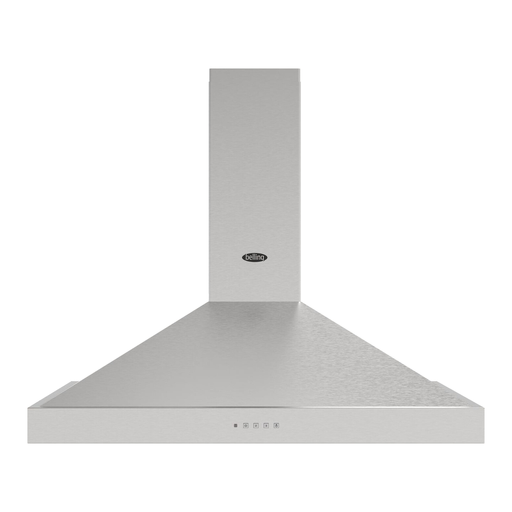
Why This Fits Their Persona: The 110cm canopy is intended for larger hobs and range cookers where a compact hood may leave cooking zones uncovered.
Its stated dimensions and adjustable 80–114cm chimney section make it easier to check wall and ceiling compatibility before purchase.
109.8cm width, extraction up to 600m³/h, three speeds, two LED spotlights and dishwasher-safe filters.
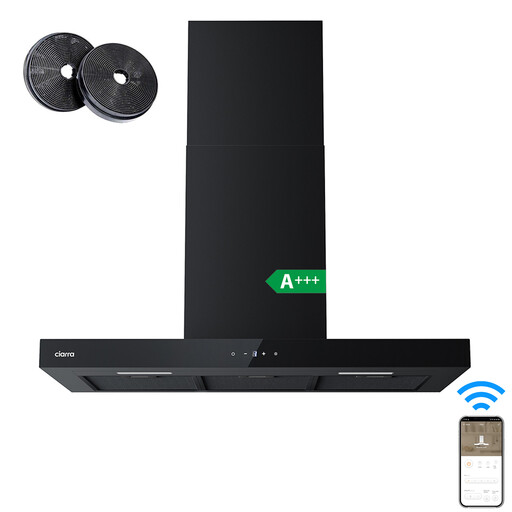
Why This Fits Their Persona: A useful match for flats or internal kitchen walls where recirculation is preferable, with app control for connected-home convenience.
The listing clearly identifies carbon filters for recirculation and also states the external ducting option, rather than hiding installation requirements.
90cm width, up to 650m³/h airflow, four-speed control with booster, Wi-Fi/app operation and a stated 59dB maximum noise level.
A kitchen extractor fan does not have to dominate the room. An integrated model such as the Belling CANOPY 603INT STA sits beneath a cabinet and supports 120mm or 150mm ducting, making it suitable for streamlined kitchen designs. An angled 60cm model, such as the Ciarra CBCS6765B, can provide more headroom in compact kitchens.
For visible statement styling, chimney models offer adjustable sections and finishes including stainless steel, black glass and gloss black. Check the depth as well as width, especially where a hob is positioned near a walkway.
We have compiled a complete, real-time list of products that fully satisfy these strict selection criteria and UK safety regulations.
Neither option suits every property. Ducted extraction sends air outdoors and avoids routine carbon-filter replacement, but requires a suitable wall or ceiling route. Recirculation is easier where external venting is unavailable, although carbon filters must be maintained and replaced.
Service life depends on build quality, installation, cooking frequency and maintenance. Regularly cleaning grease filters, keeping vents clear and replacing carbon filters can help preserve airflow. Check the warranty and availability of replacement filters before ordering.
Running costs vary by energy rating, motor power, speed and usage time. Compare the stated annual energy consumption where available, and use the lowest effective speed for everyday cooking rather than relying on boost continuously.