
24/7 Customer Support

Free returns

Same-day & Next-day Delivery

Quality Guaranteed

Unlock Your Welcome Offers: FREE Delivery | Up to 80% OFF | Free 30-day JoyPlus trial
Download the APP
Steam on the windows, lingering frying odours and greasy deposits on nearby cupboards are signs that your kitchen ventilation may not be coping. Choosing a cooker hood is not simply about finding a model that matches your hob width. Airflow, installation method, noise, filter care and the available duct route all affect how useful it will be day to day.
This guide from the Joybuy Product Recommendation Officer highlights common buying traps and practical specifications to check before you order.
A maximum airflow figure is usually measured under specific conditions. Real-world performance can be affected by duct length, bends, outlet diameter, filters and whether the hood is used in recirculation mode. A powerful motor may also produce more noise at its highest setting.
Compare airflow and noise figures together, rather than selecting the largest number on the product page.
A ducted cooker hood sends air outside through a suitable pipe, while a recirculating cooker hood passes air through grease and carbon filters before returning it to the room. Recirculation can suit flats, rented homes and kitchens without an external wall connection, but carbon filters normally need periodic replacement.
Check whether carbon filters are included, optional or unavailable before buying. Also confirm that the installation kit matches your kitchen layout.
A 60cm cooker hood is designed around a common hob width, but the actual depth, chimney height and cabinet opening can differ considerably. An integrated cooker hood may require a custom cabinet panel, while a telescopic cooker hood needs enough clearance for its pull-out section.
Measure the available space carefully, including the distance above the hob and the position of electrical sockets or ducting.
The hood should generally be at least as wide as the cooking area beneath it. A 60cm model suits many standard four-zone hobs, whereas a 90cm or 100cm chimney cooker hood may be more appropriate for a wide hob or range cooker.
For compact kitchens, an under-cabinet cooker hood, visor hood or telescopic design can provide ventilation without taking over the wall units. A wall-mounted cooker hood offers more visible coverage but needs suitable wall space and secure fixing.
Airflow is shown in cubic metres per hour, written as m³/h. Lower settings may be sufficient for boiling and simmering, while frying, grilling and wok cooking can require a higher setting or boost function.
Noise is measured in decibels, or dB. Since the scale is logarithmic, small numerical differences can be noticeable. If your kitchen opens onto a living room, compare the stated maximum noise level and consider whether the hood offers useful extraction at its middle setting.
Washable aluminium or metal grease filters help capture airborne grease and can usually be cleaned by hand or in a dishwasher, depending on the manufacturer’s instructions. Clean them regularly—often every two to four weeks for frequent cooking—to reduce build-up and maintain airflow.
A cooker hood with LED lighting can improve visibility over the hob and generally uses less electricity than older lighting types. Energy labels are useful for comparing consumption, but they should be considered alongside extraction capacity, lighting efficiency and expected usage.
For electrical work and fixed installation, follow the supplied instructions and UK requirements. Gas hob clearances must follow the hood and hob manufacturers’ stated measurements. Where required, use a qualified installer.
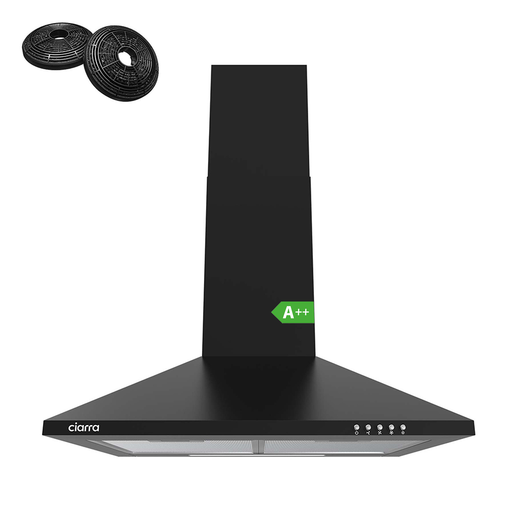
Why This Fits Their Persona: Its 60cm width suits many standard UK cooking zones, while the black finish gives tenants or first-time buyers a straightforward wall-mounted option.
It supports both ducting and recirculation, so buyers can check their ventilation route before committing. The washable aluminium filters avoid a disposable grease-filter routine.
Three speeds, integrated task lighting, 367m³/h maximum airflow, A++ energy class and a stated maximum noise level of 63dB.
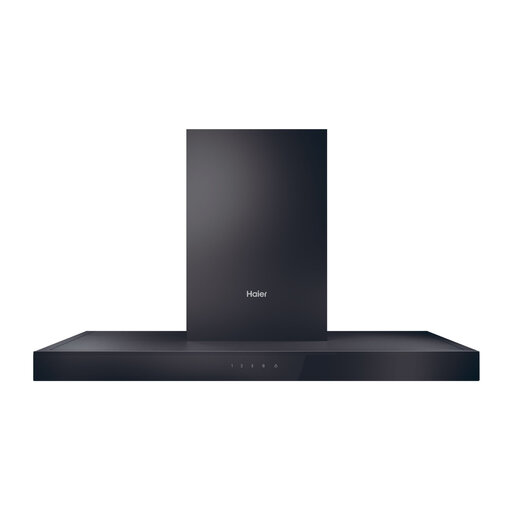
Why This Fits Their Persona: The 90cm wall-mounted format suits larger hobs, open-plan kitchens and households that want touch controls and a wider visual capture area.
The specification states both standard and boost extraction figures, rather than presenting only a peak number. A timer and four speed settings help avoid running maximum power unnecessarily.
806m³/h boost extraction, 57dB minimum stated noise, LED lighting, A+ energy class and ducted or recirculating installation.
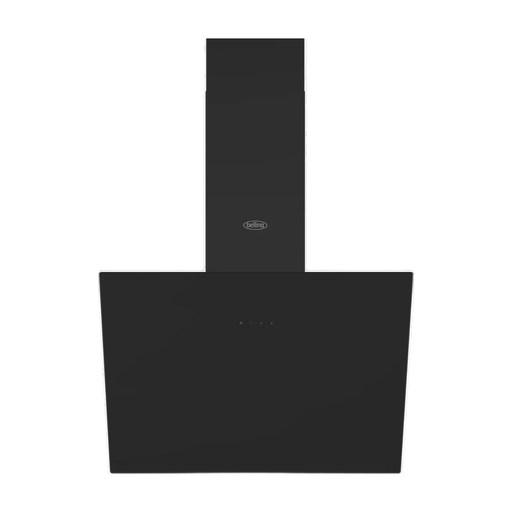
Why This Fits Their Persona: Frequent frying, grilling or high-heat cooking can benefit from a 60cm chimney hood with a dedicated boost function.
The listing identifies the boost output separately from normal operation. Dishwasher-safe aluminium filters also make regular grease maintenance more manageable.
Up to 640m³/h extraction with 710m³/h timed boost, three speeds, touch controls, LED lighting and dual ventilation options.
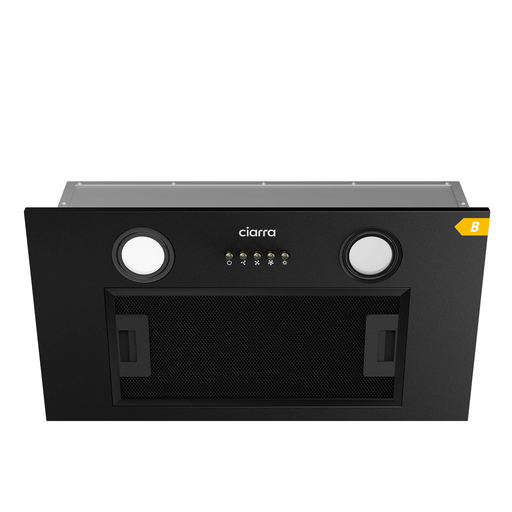
Why This Fits Their Persona: A built-in format helps preserve cupboard space and suits compact kitchens where a visible chimney hood would feel intrusive.
Its 520mm width is stated clearly, helping buyers check the cabinet opening first. The product also specifies that carbon filters are sold separately for recirculation.
Ducted or recirculating operation, washable metal filter, push-button controls, integrated lighting and 206m³/h maximum airflow.
We have compiled a complete, real-time list of products that fully satisfy these strict selection criteria and UK safety regulations.
They suit many standard 60cm hobs, but check the hood’s actual width, depth and recommended installation height. A larger hood may be more suitable for a range cooker or extensive frying.
Ducted extraction removes air outdoors and can be suitable where a compliant external route exists. Recirculation is easier where ducting is unavailable, but requires correctly fitted carbon filters and regular maintenance.
For regular cooking, inspect grease filters every two to four weeks. Heavy frying may require more frequent cleaning. Always disconnect the appliance before maintenance and follow the manufacturer’s cleaning instructions.