
24/7 Customer Support

Free returns

Same-day & Next-day Delivery

Quality Guaranteed

Unlock Your Welcome Offers: FREE Delivery | Up to 80% OFF | Free 30-day JoyPlus trial
Download the APP
A cooker hood can make a noticeable difference to steam, smoke, grease and cooking odours, but choosing one is not simply a matter of picking a finish that matches your oven. The wrong model may be too narrow for the hob, too noisy for an open-plan room or unsuitable for your existing ventilation route.
The most common buying mistakes are easy to avoid:
A 60cm cooker hood is generally suited to a standard 60cm hob, provided the hood is positioned correctly and the manufacturer’s instructions are followed. Larger hobs, range cookers and wide cooking zones may need a 90cm cooker hood or a wider model.
Extraction is usually shown in cubic metres per hour, written as m³/h. Higher figures can be helpful for frequent frying, searing or multi-pan cooking, but compare them alongside the noise rating and the actual kitchen layout. A compact kitchen may not need the same capacity as a large open-plan space, while a long duct run with several bends can reduce real-world airflow.
For a wide cooking area, the Haier 90cm T-Shape Chimney lists up to 806m³/h on boost, while several 60cm models provide between approximately 300m³/h and 650m³/h. These figures should be treated as product specifications rather than a guarantee of results in every installation.
A ducted cooker hood sends air outside through a suitable duct. This can be an effective approach for removing moisture and cooking fumes, but the route, outlet diameter and replacement-air requirements must be considered.
A recirculating cooker hood passes air through grease and carbon filters before returning it to the room. It can suit flats, rented homes and kitchens without an external wall connection, but carbon filters may be optional and need periodic replacement.
Always check:
Installation and electrical connection should be completed by a qualified person where required. The recommended clearance above a gas or electric hob varies by appliance, so use the hood and hob manuals rather than relying on a generic measurement.
Noise is measured in dB(A). A difference of a few decibels can be noticeable in an open-plan kitchen, but maximum noise normally relates to the highest speed. Look for separate speed-level figures where available.
Washable aluminium grease filters reduce ongoing replacement costs and help prevent grease entering the motor housing. They should be cleaned regularly, commonly every two to four weeks depending on use. If using recirculation, carbon filters also require inspection and replacement according to the product instructions.
Energy labels help compare electricity use. Models listed as A+, A++ or A+++ may have lower stated annual consumption than lower-rated alternatives, although actual cost depends on usage, electricity tariffs and how often boost mode is selected.
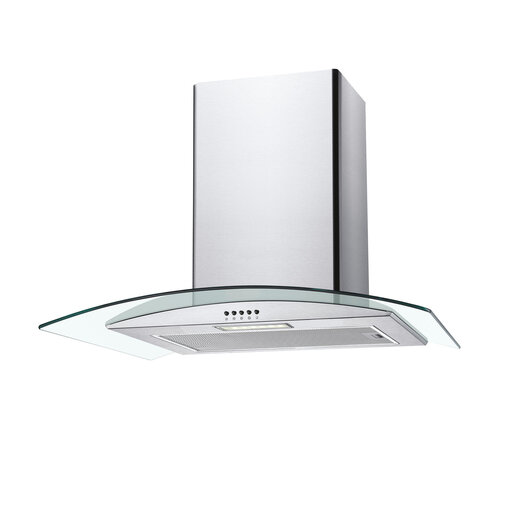
Why This Suits This Persona: A practical wall-mounted option for standard 60cm cooking areas, first homes and straightforward kitchen upgrades.
Its stated 456m³/h maximum extraction, three speeds and washable aluminium filters give clearer information than relying on appearance alone. Carbon filters are required for recirculation and are not included.
595mm width, LED lighting and approximately 56dB(A) maximum noise rating.
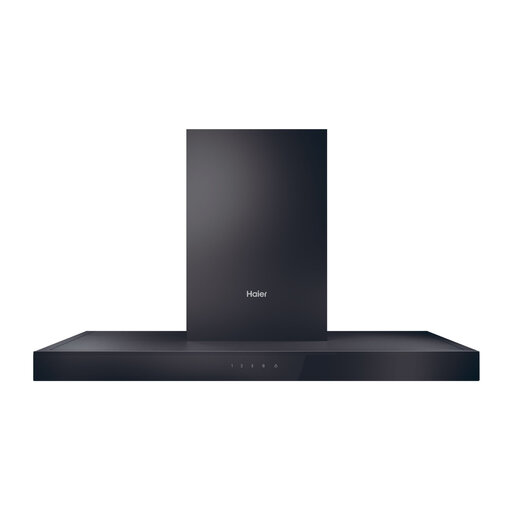
Why This Suits This Persona: Suitable for homeowners planning a larger kitchen scheme, particularly where a broad hob or range-style cooker needs wider coverage.
The specification separates standard extraction from boost performance and states a 57–69dB(A) noise range, helping buyers assess performance and sound together.
90cm width, four speed settings, timer, A+ energy class and included carbon filter.
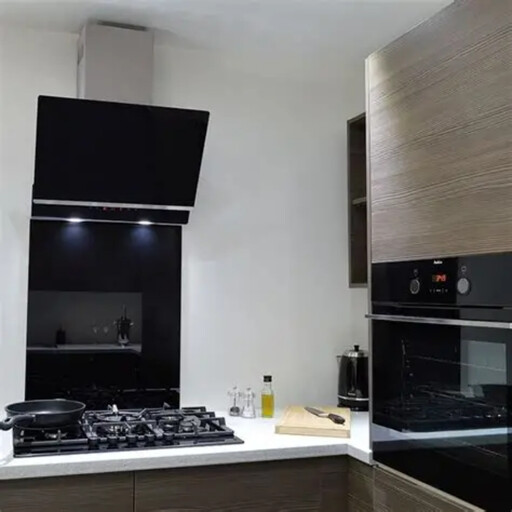
Why This Suits This Persona: A useful match for frequent frying and high-heat cooking where headroom, boost power and flexible installation matter.
Its 615m³/h maximum airflow is accompanied by three speeds plus boost, while the 66dB maximum rating makes the sound trade-off visible.
Angled canopy, touch controls, two LED lamps and dishwasher-safe aluminium filters.

Why This Suits This Persona: Appropriate for households that value app-based controls, timer functions and maintenance reminders alongside standard extractor hood controls.
The smart functions supplement, rather than replace, three fan speeds, washable grease filters and extraction or recirculation installation.
Wi-Fi and app control, LED lighting, A energy class and dual ventilation modes.
We have compiled a complete, real-time list of products that fully satisfy these strict selection criteria and UK safety regulations.
No. A hood can operate in recirculation mode when external ducting is impractical, provided the correct carbon filters are fitted. Ducted extraction sends air outside and may be preferable for removing moisture, but the installation must suit the property and comply with relevant instructions.
Lifespan depends on build quality, frequency of use, filter cleaning and installation. Regularly wash grease filters, keep airways clear and replace carbon filters when required. A motor working through blocked filters may experience unnecessary strain.
Running cost depends on the hood’s energy rating, power consumption and daily usage. Using a lower speed for simmering and reserving boost for short periods can reduce electricity use. LED lighting generally consumes less electricity than older bulb types, but the product’s energy label remains the useful comparison point.