
24/7 Customer Support

Free returns

Same-day & Next-day Delivery

Quality Guaranteed

Unlock Your Welcome Offers: FREE Delivery | Up to 80% OFF | Free 30-day JoyPlus trial
Download the APP
A cooker hood can help manage steam, grease and cooking odours, but choosing one is not simply a matter of picking a finish that matches your cupboards. The wrong model may be too wide for the available space, too weak for frequent frying or awkward to maintain once installed.
As the Joybuy Product Recommendation Officer, I focus on practical details rather than broad marketing promises. These are the main pitfalls to avoid before buying cooker hoods for a UK kitchen.
A headline extraction figure usually refers to the highest fan setting, often under ideal conditions. Actual airflow can be affected by duct length, bends, outlet diameter and whether the hood is used in recirculation mode.
A model with a high maximum figure may also produce more noise at full power. Check the stated airflow and decibel rating at each setting where available, rather than relying on a single performance claim.
A 60cm cooker hood is designed for a standard-width cooking zone, but the surrounding cabinet, chimney section and wall clearance also need checking. A built-in cooker hood may require a precise cabinet opening, while a wall-mounted cooker hood needs enough vertical and horizontal wall space.
Check the product dimensions, recommended distance above the hob and the manufacturer’s installation instructions. Gas and electric hobs can have different clearance requirements, so do not assume that one measurement applies to both.
A washable grease filter can be removed and cleaned regularly, helping avoid frequent replacement purchases. However, a recirculating cooker hood also needs a suitable carbon filter to reduce odours. Carbon filters are consumable items and may need replacing according to usage and the product instructions.
Ducted extraction can remove air outside, but it needs a suitable route, ducting and external outlet. Recirculation is more practical for some flats, rented properties and kitchens without an outside wall, but it does not remove moisture from the room in the same way as external extraction.
Measure the hob and the available installation area first. Common choices include:
A 60cm model generally suits a 60cm hob, while a 90cm or 100cm hood may be more appropriate for wider cookers or range-style installations. The hood should adequately cover the cooking area rather than leaving the outer burners exposed.
A ducted cooker hood sends air through a duct to the outside. Confirm the required outlet diameter and whether the exhaust pipe is included. Keep ducting as short and straight as reasonably possible to reduce airflow loss.
A recirculating cooker hood passes air through grease and carbon filters before returning it to the kitchen. This avoids external ducting but requires regular filter maintenance. If you cook with strong spices, fry frequently or use several pans at once, compare the available airflow settings carefully.
Noise is measured in decibels, but figures must be compared at similar fan speeds. For example, the Ciarra Slimline 60cm model lists 51dB at its first setting and 61dB at maximum, while the Ciarra 90cm Wi-Fi model lists a maximum of 59dB.
Energy labels provide a useful comparison of rated consumption. An energy-efficient cooker hood with LED lighting may use less electricity over time, but the total running cost also depends on cooking frequency and fan speed. Practical controls matter too: push-button controls are straightforward, while touch or app controls may suit users who want additional settings.
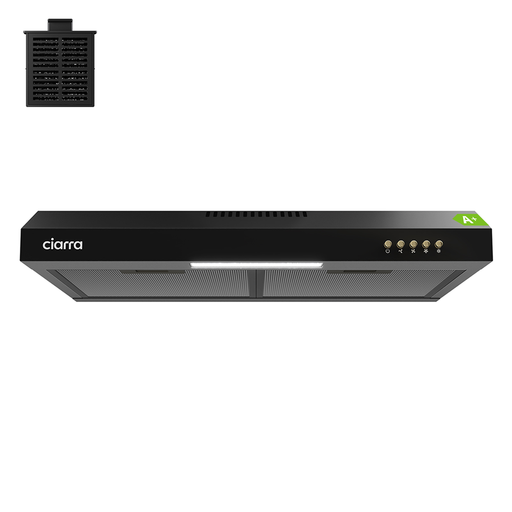
Why This Fits Their Persona: Its 596mm width and 85mm height suit compact kitchens, rental properties and low-cabinet layouts.
It provides both ducting and recirculation options, so buyers can check their ventilation route before committing.
A+ energy rating, two washable aluminium filters, LED lighting and a maximum listed noise level of 61dB.
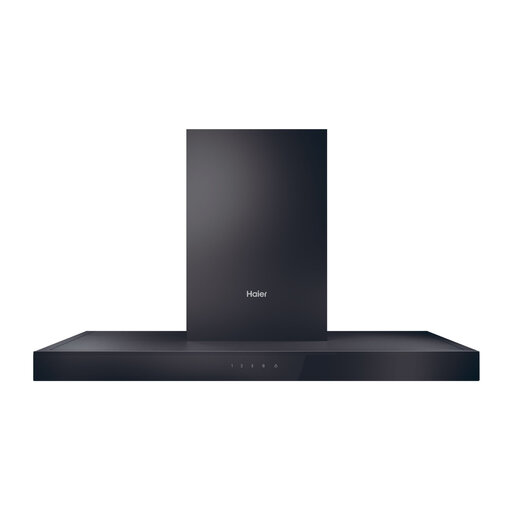
Why This Fits Their Persona: The 900mm wall-mounted format suits larger hobs, open-plan kitchens and households wanting app, timer and boost controls.
Its specification lists standard and boost airflow separately, helping buyers distinguish routine extraction from maximum output.
A+ energy rating, four speed settings, programmable timer, 806m³/h boost figure and carbon filter included for recirculation.
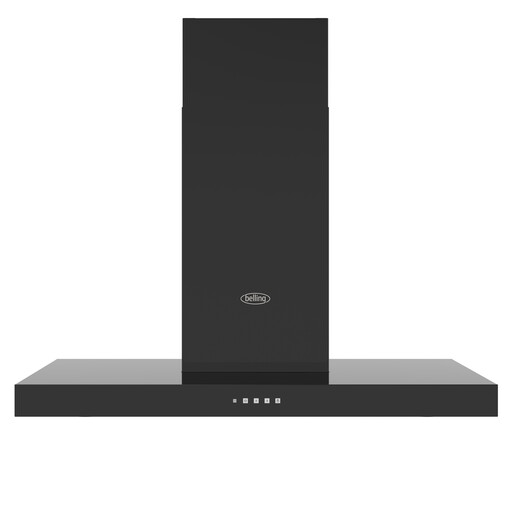
Why This Fits Their Persona: Its 100cm width is suited to larger range-style cookers and frequent multi-pan cooking.
The wider canopy is easier to match with a broad cooking surface than a standard 60cm hood that may leave outer burners uncovered.
Three speeds plus boost, LED lighting, aluminium grease filters and ducted or recirculating installation.
We have compiled a complete, real-time list of products that fully satisfy these strict selection criteria and UK safety regulations.
Before ordering, confirm:
Switch the hood on shortly before cooking and leave it running briefly afterwards where appropriate. Clean a washable grease filter every two to four weeks, depending on cooking frequency. Disconnect the power supply before cleaning or maintenance, and never operate the appliance without its grease filter correctly fitted.
Running cost depends on the hood’s rated energy consumption, fan speed, lighting and usage frequency. LED lighting and a higher energy rating can reduce electricity use, but a powerful boost setting generally uses more energy than a low setting. Compare the annual kWh figure on the energy label rather than judging from the marketing description alone.
They serve different installation needs. Ducted extraction sends air outdoors and can remove moisture from the kitchen, but requires suitable ducting and an external outlet. Recirculation avoids structural work and can suit flats or rented homes, but relies on carbon filters and returns air to the room. Choose according to the property layout and your cooking habits.
Lifespan depends on build quality, installation, cleaning and frequency of use. Regularly cleaning the grease filter, replacing carbon filters when required and keeping ducting clear can support reliable operation. Always follow the specific maintenance schedule in the product manual.