
24/7 Customer Support

Free returns

Same-day & Next-day Delivery

Quality Guaranteed

Unlock Your Welcome Offers: FREE Delivery | Up to 80% OFF | Free 30-day JoyPlus trial
Download the APP
Selecting the right PC case is more than just finding a box for your components; it's about laying the foundation for your entire build. For PC enthusiasts, high-performance gamers and content creators, the chassis dictates everything from cooling potential and hardware compatibility to the final aesthetic of your setup. A poorly chosen case can lead to thermal throttling, frustrating build experiences and limitations on future upgrades.
This guide is designed to help you navigate the options. We will break down the key factors to consider when choosing a Cooler Master PC case and highlight a few standout models that cater to different needs, whether you're building a powerful gaming PC chassis, a quiet workstation or a custom-cooled showpiece.
Before diving into specific models, let's cover a few essential considerations to ensure your chosen case meets the demands of your components.
The size of your case determines what you can fit inside. A mid tower PC case is often the sweet spot for most gaming and general-use builds, offering a good balance of space and footprint. However, if you're planning a more ambitious system with extensive storage or a custom water-cooling loop, a full tower PC case provides the necessary volume.
Crucially, check for motherboard support. If you're using a high-end motherboard, you may need an E-ATX PC case to accommodate its larger dimensions. Similarly, verify the maximum clearance for your graphics card and CPU cooler, as modern components are larger than ever.
Effective thermal management is non-negotiable for a high-performance system. A high airflow PC case, typically featuring a mesh front panel, is designed to maximise the intake of cool air, making it an excellent choice for traditional air-cooled setups.
Alternatively, if you're venturing into liquid cooling, look for a dedicated water cooling PC case. These models offer ample mounting points for radiators of various sizes (e.g., 240mm, 360mm or even 480mm) on the front, top and rear panels, giving you the flexibility to build a highly efficient custom loop.
Your PC case is a centrepiece of your workspace or gaming station. A tempered glass PC case offers a premium look and allows you to showcase your internal components and RGB lighting. For those who prioritise a clean and modern aesthetic, a white PC case can create a striking, minimalist look. For the ultimate in customisation and visual flair, an open frame PC case provides a unique, deconstructed appearance that puts your hardware on full display.
Finally, consider the front I/O panel. A PC case with USB-C connectivity is increasingly important for fast data transfers with modern external drives and peripherals.
Here are our recommendations for Cooler Master PC cases that excel in performance, compatibility and design.
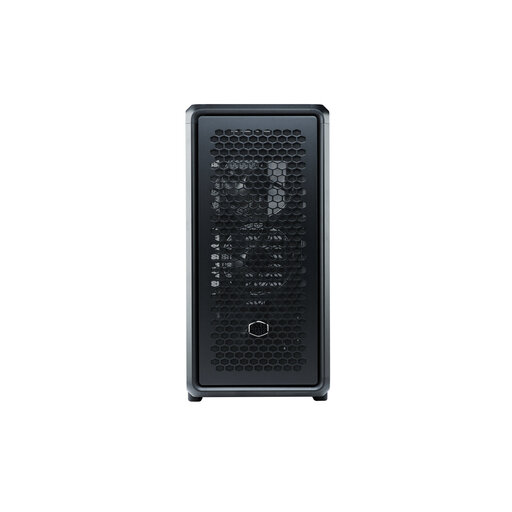
Why It Stands Out: The MasterFrame 600 is an open frame PC case designed for builders who crave ultimate customisation. Its FreeForm 2.0 exoskeleton design provides unparalleled flexibility for component layout, making it ideal for both a test bench and a showcase build. It comes ready for serious cooling, with support for up to triple 360mm radiators and four pre-installed Mobius PWM fans.
Pros:
Who is it for? The PC building enthusiast, custom loop creator or anyone who wants their computer to be a work of art. Its open design is perfect for showcasing high-end hardware and intricate cooling solutions.
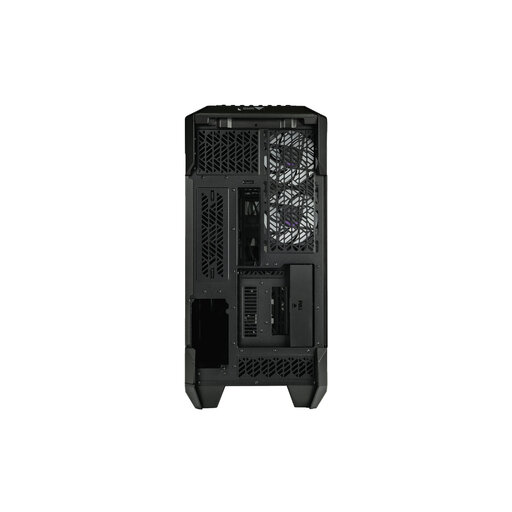
Why It Stands Out: The HAF 700 EVO is a true full tower PC case built for extreme performance. With over 100 litres of internal volume, it can accommodate the largest components on the market, including XL-ATX motherboards and multiple 480mm radiators. This makes it an ideal workstation PC case or a foundation for a no-compromise enthusiast computer case. The triple tempered glass panels and modular design offer both stunning visuals and practical flexibility.
Pros:
Who is it for? The power user, content creator or gamer building a top-tier system with oversized components, complex water cooling and a need for maximum expandability.
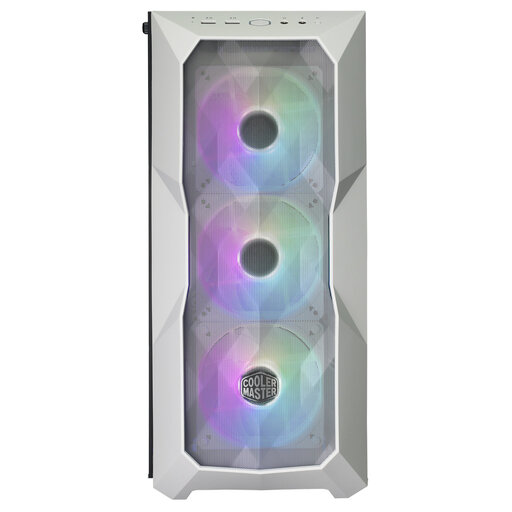
Why It Stands Out: The TD500 Mesh V2 offers a superb combination of thermal performance and modern aesthetics. As a high airflow PC case, its mesh front panel ensures your components stay cool under load. The clean white PC case finish and full tempered glass side panel make it perfect for showcasing a stylish build. Despite being a mid tower PC case, it still offers impressive compatibility, including support for E-ATX motherboards and 360mm radiators.
Pros:
Who is it for? The mainstream gamer or builder who wants a gaming PC chassis that delivers great cooling performance and a clean, contemporary look without needing the massive footprint of a full tower.
If these recommendations aren't quite what you're looking for or if you'd like to compare them with other models, there are many more choices available.
Explore our complete collection of PC Case Components to find the perfect chassis for your next build.
1. Are Cooler Master cases good for airflow? Yes, many Cooler Master cases are highly regarded for their thermal performance. Models in the HAF (High Air Flow) series and those with mesh front panels, like the TD500 Mesh, are specifically engineered to maximise airflow and keep components cool, even during intense gaming or rendering workloads.
2. Can a mid tower case fit an E-ATX motherboard? Some mid tower cases can, but it is not a standard feature. It is essential to check the manufacturer's specifications. For example, the Cooler Master TD500 Mesh V2 is a mid tower that supports E-ATX motherboards up to 12” x 10.7”, offering extra flexibility for high-end builds in a more compact form factor. Always verify dimensions before purchasing.
3. What is the difference between a full tower and a mid tower PC case? The primary differences are size, hardware compatibility and cooling capacity. A mid tower PC case is the most common size, suitable for standard ATX motherboards and typical gaming setups. A full tower PC case is significantly larger, offering space for E-ATX or XL-ATX motherboards, more storage drives and more extensive water-cooling systems with multiple large radiators. Full towers are generally chosen for enthusiast or workstation builds.