Hotel buyers planning a no-added-sugar drinks station
Compare the nutrition of the prepared drink, the dilution instructions and the ingredient list. The words ‘no added sugar’ alone do not tell you how much sugar is listed per glass.


Choose a no-added-sugar cordial for a hotel breakfast buffet only after checking its sugars per prepared serving, sweeteners and allergens: Tesco Groceries lists Robinsons Lemon No Added Sugar at 0 g sugars per 250 ml diluted serving, but other no-added-sugar cordials still list sugars. If guests need an option without sweeteners, consider a cordial labelled accordingly and check its diluted sugar values; keep current allergen information accessible at the buffet.
Compare the nutrition of the prepared drink, the dilution instructions and the ingredient list. The words ‘no added sugar’ alone do not tell you how much sugar is listed per glass.
Check the exact cordial rather than treating all diet-labelled drinks alike. A product without sweeteners can still contain sugar, while some no-added-sugar products list sulphites.
Check the suitability statement on the current bottle. Do not assume that a statement for one flavour applies to every cordial in the range.
Decide whether the buffet needs a no-added-sugar drink, an option without sweeteners, or both. Then compare each candidate as guests will actually drink it.
Choose when: You want to offer a drink with low listed sugars at its stated dilution.
Keep in mind: Check the sweeteners and allergens; ‘no added sugar’ does not mean sweetener-free.
Choose when: A citrus or other fruit flavour matters alongside the prepared-drink nutrition.
Keep in mind: Belvoir Lemon & Lime No Added Sugar uses a sweetener and still lists sugars after dilution, according to Waitrose & Partners.
Choose when: Guests specifically want to avoid sweeteners and the product’s prepared-drink nutrition suits the offer.
Keep in mind: Waitrose & Partners lists Belvoir Ginger Cordial without sweeteners, but with 3.8 g sugars per 100 ml diluted drink.
| Priority | What to check | Your needs |
|---|---|---|
| Prepared-drink nutrition | Read sugars and kcal at the maker’s stated dilution. Compare the same prepared volume, not a concentrate value with a diluted value. | I want to know what the glass served at breakfast contains, rather than relying on the wording on the bottle. |
| Sweeteners | Read the exact ingredient list and any warning statements. Tesco Groceries lists aspartame and saccharin in Robinsons Lemon No Added Sugar; Waitrose & Partners lists steviol glycosides in Belvoir Lemon & Lime No Added Sugar. | For guests avoiding particular sweeteners, I need a clearly identified option instead of assuming every ‘diet’ cordial uses the same ingredients. |
| Allergen information | Check the current product and recipe for allergens, including sulphites. Food Standards Agency guidance says food businesses must inform consumers about the 14 mandated allergens when used as ingredients in non-prepacked food. | Before using a self-service dispenser, I need guests to be able to find accurate allergen information and staff to know which product is in it. |
| Dilution and storage | Follow each bottle’s mixing and post-opening instructions. Work out prepared servings from its stated recipe, rather than bottle volume alone. | I need a consistent drink across breakfast service and a plan for using opened bottles within their own instructions. |
Waitrose & Partners lists 0.4 g sugars per 100 ml diluted Belvoir Lemon & Lime No Added Sugar cordial. The wording on the front of a bottle does not replace its prepared-drink nutrition panel.
Check sugars, kcal, sweeteners and serving basis for the exact flavour you intend to serve.
Cordials have different mixing instructions, so figures for the concentrate and figures for a diluted glass answer different questions.
Prepare each dispenser to its bottle’s instructions and compare nutrition on a consistent prepared-drink basis.
Tesco Groceries lists sodium metabisulphite in Robinsons Lemon No Added Sugar, while Sainsbury's lists it in its Lime Cordial No Added Sugar. Guests need accurate information about the drink being served.
Keep a current product sheet or allergen record accessible at the buffet and update it when the cordial or recipe changes.
The prepared amount depends on the product’s dilution instructions, and opened-bottle handling can differ between products.
Calculate servings using each bottle’s recipe, then check its storage and use-after-opening instructions when planning breakfast service.
An opened bottle that cannot be used within its stated period adds waste to the service plan.
These examples show why the label of the exact cordial matters more than a general assumption about its brand.
Its Lemon No Added Sugar Squash is one example of a concentrated no-added-sugar breakfast drink.
Its listed cordials illustrate both a sweetened no-added-sugar route and a separate option without sweeteners.
Its Lime Cordial No Added Sugar is another product-specific option to assess for a breakfast dispenser.
Its Sicilian Lemon and Mexican Lime Cordial is a fruit-flavoured alternative to assess on its own label, rather than treating it as a no-added-sugar option.
These no-added-sugar squash options offer different flavours and bottle formats for a hotel breakfast buffet. Check each bottle’s preparation instructions and current ingredient information before putting it into service.
 No image available
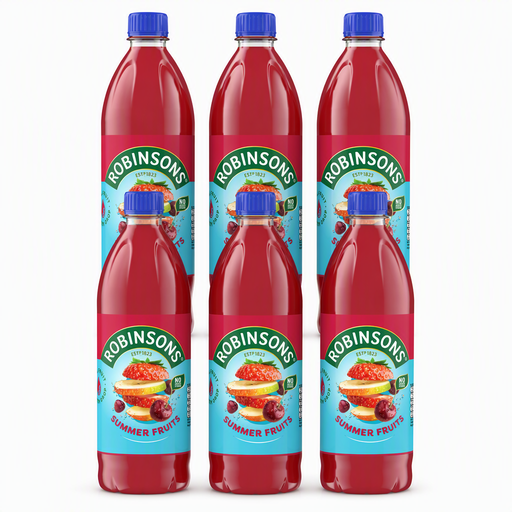
The six-bottle format may suit a buffet serving repeated batches of summer-fruit squash. Check the dilution instructions, sweeteners, allergens and opened-bottle guidance for this variant before planning servings.
 No image available
Consider this orange option if a single 1 L bottle fits the dispenser plan. Confirm its stated dilution and current sweetener and allergen declarations before using prepared-drink figures on a buffet notice.
 No image available
The 1.5 L blackcurrant concentrate is a larger-bottle option for buffet planning. Check its mixing instructions and prepared-drink nutrition before comparing sugars per served glass, and keep its current allergen details available.
 No image available
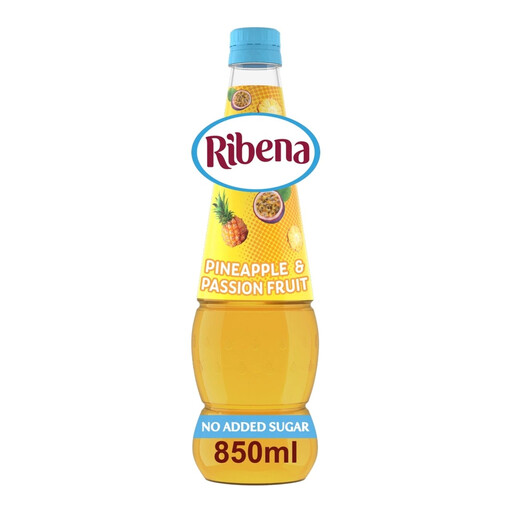
This 850 ml bottle offers a pineapple and passion-fruit flavour for a no-added-sugar drinks station. Check the dilution, prepared-drink nutrition, sweeteners and allergens for this exact product before serving it.
No. Tesco Groceries lists 0 g sugars per 250 ml diluted Robinsons Lemon No Added Sugar, whereas Waitrose & Partners lists 0.4 g per 100 ml diluted Belvoir Lemon & Lime No Added Sugar. Read the prepared-drink nutrition for the exact bottle.
Choose an option that states it has no sweeteners, then assess its sugars after dilution. Waitrose & Partners lists Belvoir Ginger Cordial without sweeteners, but with 3.8 g sugars per 100 ml diluted 1:10; a no-added-sugar cordial is not automatically an alternative without sweeteners.
For non-prepacked service, keep accurate information about mandated allergens used as ingredients accessible before guests choose a drink. Food Standards Agency guidance addresses this requirement for food businesses, while Food Standards Scotland says information for non-prepacked foods must be available before purchase. A current product sheet beside the dispenser, backed by staff who can answer questions, is a practical approach.
Yes, they can: Tesco Groceries lists sodium metabisulphite in Robinsons Lemon No Added Sugar, and Sainsbury's lists it in its Lime Cordial No Added Sugar. Check the current product declaration and make applicable allergen information accessible to guests.
Follow the storage and use-after-opening instructions on the exact bottle. Do not apply one cordial’s instructions to every flavour or brand, and account for the stated period when planning how many bottles to open.