Families preparing lunch at home
A concentrate can be mixed for a shared lunch or poured into a reusable drink bottle. Check its dilution instructions, sugar declaration and storage directions before making it part of the holiday routine.


Choose a glass-bottle cordial for a family lunch at home when its flavour and table presentation matter and you can measure the concentrate as directed. If avoiding added sugar matters more for repeated lunches, a no-added-sugar squash is the more relevant option, though its bottle may not meet a preference for glass. Prepare either concentrate with water in a clean reusable bottle rather than sending the concentrate as a ready-to-drink lunch beverage.
A concentrate can be mixed for a shared lunch or poured into a reusable drink bottle. Check its dilution instructions, sugar declaration and storage directions before making it part of the holiday routine.
A fruit, floral or botanical cordial may suit a lunch served at the table. The bottle presentation does not establish how much sugar the prepared drink contains, so compare labels at their stated dilution.
If avoiding added sugar takes precedence over glass packaging, look for that claim on the exact squash you intend to buy. Check its ingredients and prepare it according to its own label.
Choose it for: A lunch at home where a particular fruit or botanical flavour and table presentation matter.
Allow for: Measuring and diluting the concentrate, checking sugars in the prepared drink and following its after-opening directions.
Choose it for: Repeated lunches when avoiding added sugar matters more than glass-bottle presentation.
Allow for: Checking the exact recipe, bottle material and dilution directions; a no-added-sugar claim answers none of those questions by itself.
| Priority | What to check | Your needs |
|---|---|---|
| Sugars | Compare sugars per 100ml of prepared drink at each label’s dilution. Ocado lists Robinsons Lime & Mint at 4.1g; Waitrose & Partners lists Rocks Blackcurrant and Bottlegreen Elderflower at 4.4g each. | I want to judge the drink I will actually serve, rather than assume glass packaging or a fruit-led recipe means no added sugar. |
| Dilution | Follow the ratio on the exact bottle. The cited retailer listings give 1:6 for Robinsons Lime & Mint, 1:8 for Rocks Blackcurrant and 1:15 for Bottlegreen Elderflower. | For a lunch bottle, I need to be able to mix the concentrate with water as directed before it is served. |
| Packaging | Confirm the material of the exact product and decide whether the concentrate will stay at home. Robinsons describes its Fruit Cordials glass bottle as designed for the dinner table. | Glass presentation matters to me for a meal at home; for a lunch away from home, I need to check what container the setting permits. |
| Storage and ingredients | Read the exact allergen declaration and after-opening instructions. Waitrose & Partners says to refrigerate Rocks Blackcurrant and use it within three weeks, and to refrigerate Bottlegreen Elderflower and use it within one month. Safefood advises washing reusable bottles after each use and drying them fully. | I need a recipe that suits the household and a bottle-cleaning and storage routine I can follow throughout the holidays. |
Glass describes the packaging, not the recipe. Ocado lists 4.1g sugars per 100ml of prepared Robinsons Lime & Mint; Waitrose & Partners lists 4.4g per 100ml for prepared Rocks Blackcurrant and Bottlegreen Elderflower.
Compare prepared-drink nutrition on the exact labels. If avoiding added sugar is the deciding factor, check for a no-added-sugar squash rather than choosing by bottle material.
Concentrates mixed at different ratios do not make directly comparable quantities of prepared drink from the same bottle volume.
Use each product’s own dilution instructions when planning lunch servings or comparing its prepared-drink nutrition.
After-opening instructions differ by product. Waitrose & Partners gives Rocks Blackcurrant a refrigerated three-week use period and Bottlegreen Elderflower a refrigerated one-month period.
Choose a bottle you can use within its labelled period. Safefood advises washing reusable drink bottles after each use, paying attention to the mouth spout, and drying them completely before storage.
An opened cordial left beyond its stated use period may have to be discarded.
These examples show why the exact product matters: a brand’s cordial and no-added-sugar squash can answer different lunch-drink needs.
Robinsons describes its Fruit Cordials as glass-bottle drinks for the dinner table; its range also includes No Added Sugar Orange Squash.
Elderflower Cordial offers a floral flavour for drinks prepared at home.
Blackcurrant Squash is a concentrated fruit-flavoured option; Ocado lists sugar among its ingredients.
Lime Cordial is a glass-bottle option for a citrus-flavoured drink prepared at home.
These concentrates represent the no-added-sugar squash route for preparing lunch drinks. Choose by flavour and the exact label; this selection does not establish that a product comes in a glass bottle.
 No image available
An orange-flavoured concentrate to dilute for a family lunch. Check the exact package if glass matters, and follow the label’s mixing directions.
The product information flags sulphites and sweeteners and says it is not suitable for children under 36 months; check the current label before serving.
 No image available
A blackcurrant-flavoured squash for lunches where avoiding added sugar matters more than glass presentation. Its product information describes a recycled-plastic bottle, so it does not meet a glass-bottle preference.
The product information flags sodium bisulphite and sweeteners and says it is not recommended for children under 3. Follow the current label’s dilution instructions.
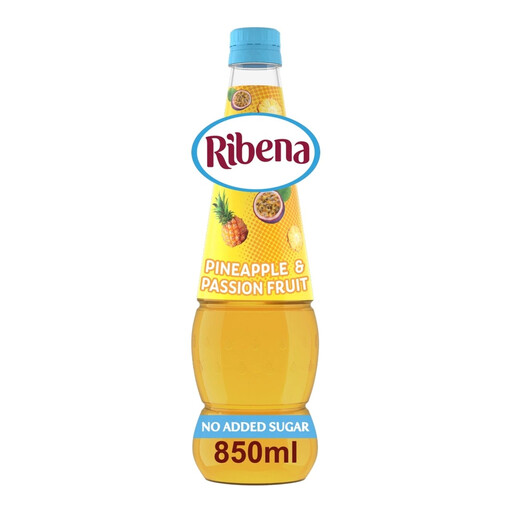 No image available
A pineapple-and-passion-fruit option to dilute for a lunch drink. Check its bottle material if glass is important, and use the mixing directions on the exact product.
The product information flags sulphites and a source of phenylalanine; check the current label against household dietary requirements.
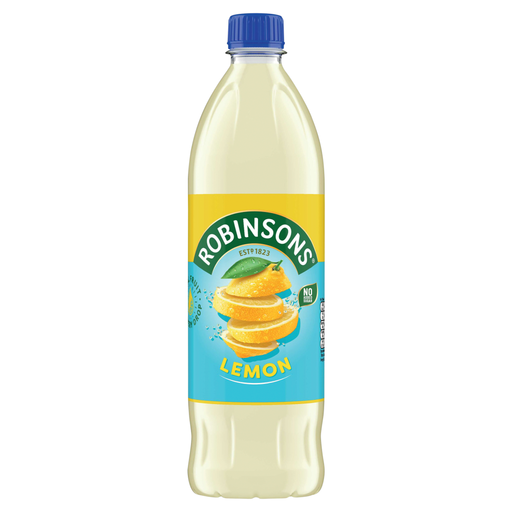 No image available
A lemon-flavoured concentrate for a diluted lunch drink. Confirm the bottle material if glass is a requirement, and follow the label’s dilution directions.
The product information flags a source of phenylalanine; check the current label for dietary requirements.
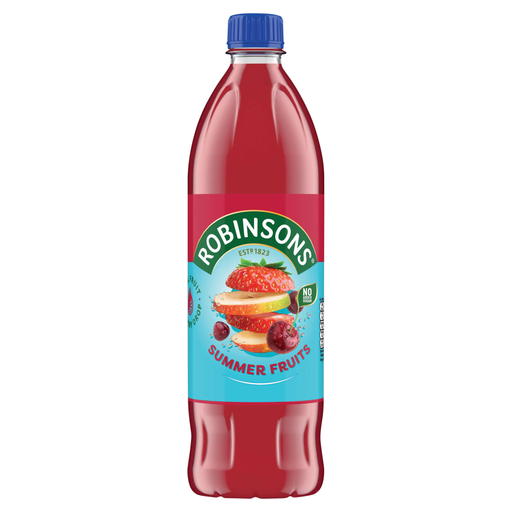 No image available
A summer-fruits concentrate for a diluted family lunch drink. Check the bottle material if glass matters, along with the exact dilution and after-opening directions.
The product information flags sulphites and sweeteners and advises extra dilution when serving toddlers; follow the current label.
Prepare the cordial with water according to its label and put the diluted drink in a suitable reusable bottle instead of treating the concentrate as a ready-to-drink serving. If lunch is at a holiday club or organised activity, check its container rules before sending glass. Safefood advises cleaning reusable bottles after each use and drying them fully before storage.
No. Ocado lists 4.1g sugars per 100ml of prepared Robinsons Lime & Mint; Waitrose & Partners lists 4.4g per 100ml of prepared Rocks Blackcurrant and Bottlegreen Elderflower. Compare each exact product’s nutrition declaration at its stated dilution rather than judging sugar content by packaging.
Follow the directions on the bottle purchased. Waitrose & Partners advises refrigeration and use within three weeks for Rocks Blackcurrant, and refrigeration and use within one month for Bottlegreen Elderflower; Ocado advises refrigeration and use within three weeks for Belvoir Lime.
Read the declaration on the exact flavour and current bottle before serving it. For example, Ocado lists sulphur dioxide/sulphites for Robinsons Lime & Mint Fruit Cordial; another flavour or brand needs its own label check.