Groups wanting alcohol-free fizz
A cordial labelled for use with sparkling water lets guests make individual soft drinks at different strengths. Keep any use in adult drinks separate rather than assuming everyone wants the same serve.


Choose cordial with separate sparkling water if guests want to adjust the strength of each glass. Choose a ready-to-drink sparkling drink if pouring without mixing matters more, and check each bottle’s ingredients, sugars per 100ml and storage instructions before serving it to a group.
The useful distinction for a cottage stay is whether guests will mix their own drinks or pour a sparkling drink straight from the bottle or can.
A cordial labelled for use with sparkling water lets guests make individual soft drinks at different strengths. Keep any use in adult drinks separate rather than assuming everyone wants the same serve.
A ready-to-drink sparkling option can be chilled and poured without measuring cordial for each guest. Concentrate makes more sense when adjusting each glass is part of the plan.
Check the exact bottle’s ingredients, allergen information, nutrition panel and storage directions. A flavour name or a range-wide claim is not a substitute for the product label.
Settle the mixing question first, then check the instructions and label on the particular drink you intend to serve.
| Priority | What to check | Your needs |
|---|---|---|
| Adjustable strength | Check that the cordial is intended for sparkling water and follow its suggested dilution as a starting point. Belvoir Farm labels its Elderflower Cordial for 1:10 dilution; Waitrose & Partners suggests one part No.1 Elderflower Cordial to four parts water. | I’d like guests to make their own glasses stronger or weaker from the same cordial and sparkling-water supply. |
| Quick serving | Check whether the drink is ready to drink rather than a concentrate. Bottlegreen describes its Elderflower Sparkling Pressé as lightly sparkling and ready to drink. | For drinks before a meal, I’d rather chill and pour than measure cordial for everyone. |
| Ingredients and allergens | Read the current ingredients list and highlighted allergens on the exact bottle. GOV.UK’s food-labelling guidance says allergens must be listed and highlighted in the ingredients. | I need to check what each guest can have before putting a shared drink on the table. |
| Sugars and storage | Compare sugars per 100ml and the directions for an opened container. Belvoir Farm lists 4.2g sugars per 100ml for its Sparkling No Added Sugar Elderflower and says to refrigerate it after opening and use it within three days. | If only a few glasses will be served, I want to know what the label says and whether the opened drink can be used during the stay. |
A ready-to-drink sparkling pressé is already mixed; it does not serve the same purpose as a cordial that guests dilute to their preferred strength.
Choose a cordial explicitly suitable for sparkling water if guests will mix their own glasses. Choose pressé when immediate serving is the priority.
Two elderflower drinks can have different ingredient and allergen declarations, regardless of how similar their names sound.
Read the current label for each exact product before serving guests, particularly when someone has an allergy or intolerance.
Belvoir Farm’s Sparkling No Added Sugar Elderflower lists 4.2g sugars per 100ml. The front-of-pack wording does not replace the nutrition panel.
Compare the sugars declaration on the particular drink, using the same per-100ml basis when looking at alternatives.
The cited instructions differ: Belvoir Farm says to refrigerate its Elderflower Cordial and use it within three weeks, while Waitrose & Partners says to keep its No.1 Elderflower Cordial below 5°C and consume it within one month. Belvoir Farm gives a three-day refrigerated period for its Sparkling No Added Sugar Elderflower.
Check the instructions on each bottle and plan opened drinks around the length of the stay.
These examples show which product descriptions are worth comparing; a brand name alone does not establish the ingredients or serving instructions of every drink in its range.
Belvoir Farm has both cordial for dilution and ready-to-drink sparkling elderflower products, so check which format the bottle contains.
Bottlegreen provides a direct choice between elderflower cordial for mixing and a ready-to-drink sparkling elderflower pressé.
Robinsons has separate Fruit Cordials and Family Favourites ranges; claims made for one range should not be applied to the other.
Waitrose No.1 Elderflower Cordial offers a stated starting ratio for guests mixing drinks at a cottage.
M&S Food describes its Fragrant British Elderflower Cordial as suitable for dilution with still or sparkling water.
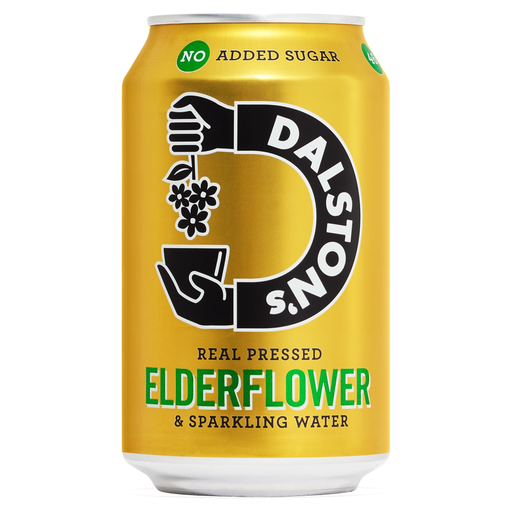
This fizzy elderflower option fits the pour-and-serve side of the cottage decision; it is not presented as a cordial concentrate for adjusting each glass.
 No image available
A 330ml fizzy elderflower drink for a guest who would rather have a sparkling option without mixing cordial. Check the current label if ingredients or sugars matter to your group.
Yes, if the particular cordial is labelled for it. Bottlegreen Elderflower Cordial, Waitrose No.1 Elderflower Cordial and M&S Fragrant British Elderflower Cordial are described as suitable for sparkling water; follow the bottle’s suggested dilution where given, then adjust to taste.
No. Cordial is intended for dilution, whereas Bottlegreen describes its Elderflower Sparkling Pressé as a lightly sparkling, ready-to-drink soft drink. Choose between them according to whether guests want to adjust each glass or pour without mixing.
No. Belvoir Farm’s Sparkling No Added Sugar Elderflower lists 4.2g sugars per 100ml. Read the nutrition panel on the exact drink rather than treating its name as a sugars declaration.
Read the current ingredients and allergen information on every exact bottle you plan to serve. GOV.UK’s food-labelling guidance says allergens must be listed and highlighted in the ingredients, so a flavour name alone is not enough for this check.
Follow the instructions for that bottle. Belvoir Farm says to refrigerate its Elderflower Cordial after opening and use it within three weeks; Waitrose & Partners says to refrigerate its No.1 Elderflower Cordial below 5°C and consume it within one month. Belvoir Farm gives three days refrigerated for its Sparkling No Added Sugar Elderflower.