
24/7 Customer Support

Free returns

Same-day & Next-day Delivery

Quality Guaranteed

Unlock Your Welcome Offers: FREE Delivery | Up to 80% OFF | Free 30-day JoyPlus trial
Download the APP
Achieving a flawless, showroom-quality finish on your vehicle's paintwork is a satisfying goal for any car enthusiast. However, swirl marks, light scratches and oxidation can leave your car looking dull and tired. While professional detailing is an option, a high-quality cordless car polisher gives you the power to restore that deep gloss and protection yourself, without being tethered by a power cord.
Navigating the market for the right electric polishing machine can be confusing. With varying power levels, orbit types and battery systems, it's important to choose a tool that matches your skill level and project needs. This guide is designed to help you understand the key features to look for and to highlight a couple of standout options available for your next DIY car detailing project.
Before you make a decision, consider these practical points to ensure you select a tool that delivers the results you're looking for.
The mechanism of the polisher is a critical factor. Most tools for DIY use are a random orbit polisher, also known as a dual-action (DA) polisher. This type of machine moves the polishing pad in an oscillating, elliptical pattern. This action generates less heat and is much more forgiving than a rotary polisher, significantly reducing the risk of burning or damaging your paintwork. For beginners and most enthusiasts, a random orbit polisher is the recommended choice for tasks from paint correction to applying wax.
A variable speed polisher offers the versatility needed for a complete detailing job. Different tasks require different speeds:
Look for a tool with an easily accessible speed dial that allows you to make precise adjustments on the fly, ensuring you have the right amount of power for each stage of the process.
The freedom of a cordless tool depends entirely on its battery. If you already own tools from a specific brand, choosing a polisher from the same battery platform (like the Stanley V20 system) can be a cost-effective choice. Also, pay attention to the tool's weight and balance. A well-designed rechargeable buffer with comfortable grips and even weight distribution will reduce fatigue during longer polishing sessions.
Here are a couple of cordless polishers that cater to different user needs, from the dedicated DIYer to the beginner looking for an all-in-one solution.
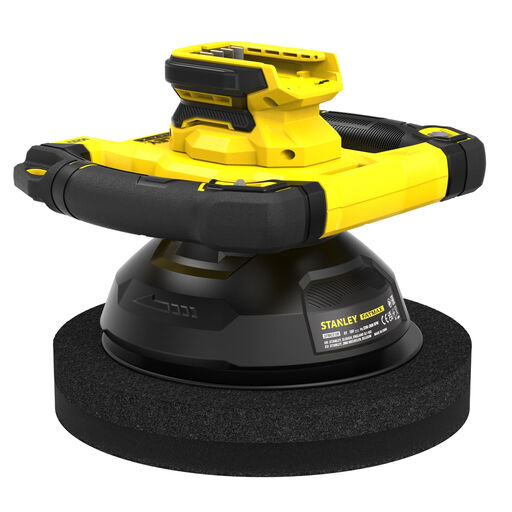
Why It Stands Out The Stanley FatMax V20 polisher is a robust and reliable tool designed for those who take their car care seriously. Its key strength lies in its powerful motor and integration into the versatile 18V V20 battery system. The random orbit action provides a safe and effective way to achieve a swirl-free finish, while the large 254mm foam backing pad allows you to cover large surfaces like bonnets and roofs quickly and consistently.
Pros
Who is it for? This polisher is an excellent choice for DIY enthusiasts and semi-professional detailers who already own or plan to invest in the Stanley V20 ecosystem. Its durable build and focus on performance make it suitable for regular, demanding use. Note that this is a "tool only" offering, so a battery and charger must be purchased separately if you don't already have them.
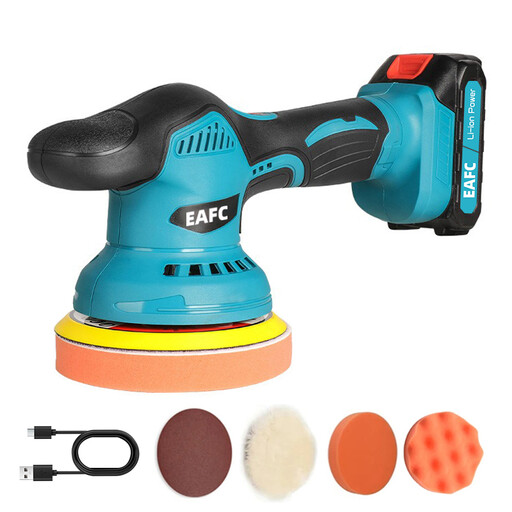
Why It Stands Out This EAFC model is a complete, ready-to-go kit that offers remarkable versatility for a very affordable price point. It's not just a car buffer; it's a multi-purpose tool that comes with everything you need to get started, including a battery, charger and a variety of pads. Its lightweight construction and wide speed range make it approachable for beginners and useful for a range of household tasks beyond the garage.
Pros
Who is it for? This is an ideal option for beginners in DIY car detailing or homeowners looking for a versatile polishing tool without a large initial investment. If you want a complete package that allows you to start working straight out of the box, this machine is a strong contender.
While these two models represent great choices for different needs, the world of car detailing tools is vast. If you're looking for a different size, power configuration or a polisher with specific features not mentioned here, there are many other options to explore.
Discover a wider selection by browsing our full range of car wash tools.
Yes, absolutely. A random orbit polisher (also called a dual-action polisher) is highly recommended for beginners. Its oscillating motion is much more forgiving than a professional rotary tool and significantly reduces the risk of damaging the paint. It's always a good idea to start on the lowest speed setting and practice on an inconspicuous area or a spare panel first.
Battery life varies depending on the battery's capacity (measured in Amp-hours or Ah), the speed you are using and the amount of pressure you apply. On average, you can expect between 30 to 60 minutes of continuous run time from a fully charged battery. For larger vehicles or more intensive paint correction jobs, having a second, fully charged battery on hand is highly recommended to avoid interruption.
The terms are often used interchangeably in casual conversation. Traditionally, a "polisher" was a more aggressive tool used with abrasive compounds to correct paint defects like scratches. A "buffer" was typically a less powerful tool used to apply wax or sealant. However, most modern tools, like the ones featured here, are variable speed polishers that can perform both functions effectively simply by changing the pad and adjusting the speed.