
24/7 Customer Support

Free returns

Same-day & Next-day Delivery

Quality Guaranteed

Unlock Your Welcome Offers: FREE Delivery | Up to 80% OFF | Free 30-day JoyPlus trial
Download the APP
A cordless handheld car vacuum cleaner can make it easier to remove crumbs, grit, pet hair and dust before they build up inside your vehicle. However, compact models vary considerably in suction claims, battery performance, filtration and accessory quality.
For UK drivers, the right choice depends less on the largest number printed on the box and more on how the vacuum fits your cleaning routine. A commuter may need a lightweight rechargeable car vacuum for quick footwell cleaning, while a family or pet owner may require longer runtime, a motorised brush and a larger dust container.
Many mini car vacuums advertise suction in Pa, or pascals. This indicates pressure, but it does not describe every aspect of cleaning performance. Airflow, nozzle design, filter condition and battery mode also affect how well a vacuum picks up debris.
A high figure may be measured in MAX mode, which can reduce battery runtime significantly. Compare the operating modes, stated runtimes and included tools rather than choosing solely by the headline suction number.
“Up to” runtime normally refers to a lower-power setting with a non-motorised attachment. High suction, powered brushes and blocked filters can reduce operating time. A cordless car vacuum offering 30 minutes may provide considerably less time on its strongest setting.
For occasional cleaning, a 10–15-minute MAX mode may be sufficient. If you want to clean several seats, mats and the boot in one session, consider a model with a larger battery or longer low-power runtime.
A small dust cup keeps a portable vacuum compact, but it may need frequent emptying. Fine dust can also restrict airflow if the filter is not cleaned regularly. Look for a washable filter, clearly stated dust-bin capacity and a design that allows you to empty debris without touching it.
Do not use a handheld vacuum for liquids unless the manufacturer specifically states that it is designed for wet cleaning. Several compact models are intended for dry debris only.
A car vacuum cleaner with strong suction should also have attachments suited to vehicle interiors. A crevice nozzle helps reach seat rails and gaps around the centre console, while a brush tool can loosen dust from upholstery and dashboard surfaces.
For pet owners, a dedicated pet or motorised brush may be more useful than a higher Pa number. A car vacuum with blower functionality can also clear dust from vents, keyboards and narrow spaces, although blown debris still needs to be collected afterwards.
A rechargeable car vacuum with USB Type-C charging is convenient for use at home, in an office or with a suitable in-car adapter. Check the charging time, battery capacity and whether the supplied cable or charger is included.
For regular UK use, choose a model that can be stored with a reasonable charge and follow the supplied charging instructions. Avoid using damaged cables, and allow washable filters to dry fully before reinstalling them.
A lightweight portable car vacuum is easier to use around seats and awkward footwells. Models weighing approximately 300–500g may suit quick clean-ups, while larger units can offer more suction or a bigger bin at the cost of additional weight.
A transparent dust cup helps you see when emptying is needed. If you also want a compact vacuum for home and office use, check whether the body fits your storage space, car door pocket or cup holder.
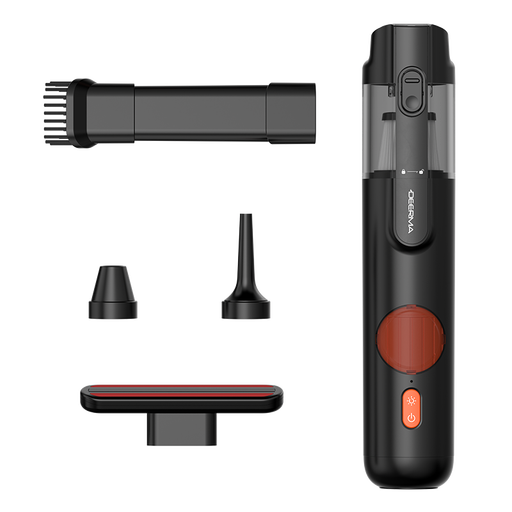
Why This Fits Their Persona: At 434g, this compact cordless model suits drivers wanting a simple car interior vacuum for crumbs, dust and light debris, with enough versatility for small household tasks.
Its stated 30-minute runtime, Type-C charging and one-touch dust disposal make the key convenience details clear rather than relying only on a suction headline.
The specification lists 7,500Pa suction, a 0.4kg-class body, a green dust-revealing light and six functions, including vacuuming and blowing.
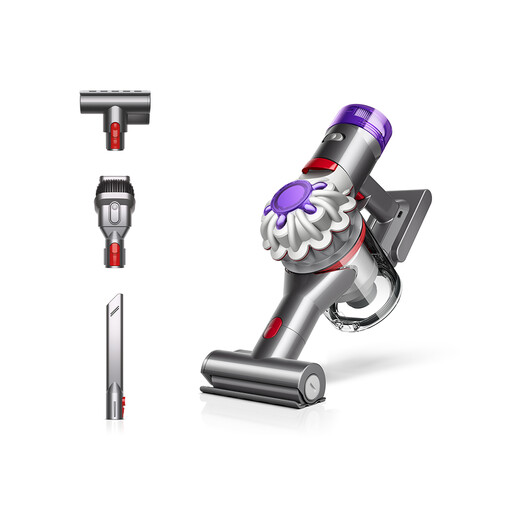
Why This Fits Their Persona: This model is suited to owners of cars, motorhomes, boats or homes who want a more substantial handheld vacuum cleaner with a larger bin and multiple purpose-specific tools.
The published runtime separates Low mode from MAX mode: up to 50 minutes is specified for Low mode with a non-motorised tool, so expectations are easier to set.
It has a 0.54-litre bin, a mini motorised tool for embedded debris and pet hair, plus a combination tool and crevice tool.
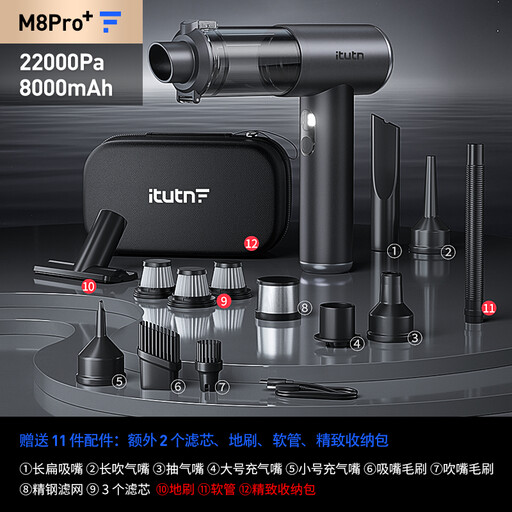
Why This Fits Their Persona: The soft-pack configuration may suit drivers who prioritise a broad accessory set and frequent cleaning of larger vehicle interiors, especially where spare filters are useful.
The listed configuration identifies four 2,000mAh batteries and three washable filters, helping buyers assess battery and maintenance provisions before ordering.
The product listing specifies 22,000Pa suction, a brushless motor, a floor brush, a hose and washable filters.
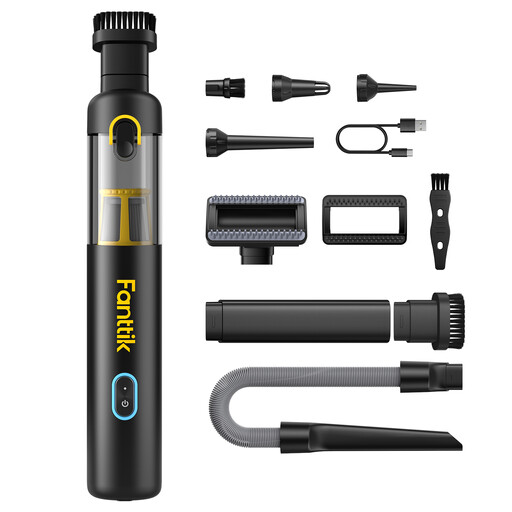
Why This Fits Their Persona: Its compact format and included pet brush make it practical for car owners, office workers and pet owners dealing with small, frequent messes.
The listing clearly states that high-speed runtime is up to 13 minutes, while Eco mode is up to 40 minutes. This distinction helps avoid confusing maximum and everyday operation.
It offers 19kPa maximum suction, Type-C charging, vacuuming, blowing, inflating and pumping functions, plus a flexible hose and pet brush.
We have compiled a complete, real-time list of products that fully satisfy these strict selection criteria and UK safety regulations.
It can handle routine crumbs, dust, sand and light pet hair, particularly around seats, mats and the boot. Compact models are not generally a substitute for a full-size vacuum during heavy or deep cleaning. For larger interiors, prioritise a larger bin, suitable brushes and a runtime that covers the whole vehicle.
Battery lifespan depends on charging habits, storage temperature, filter maintenance and frequency of use. Cleaning the filter, preventing blockages and following the supplied charging guidance can help maintain performance. Check whether replacement filters or other consumables are available before purchasing.
A car vacuum with blower can redirect airflow to clear light dust from vents, gaps and keyboards. It is useful as an added function, but it may not match a dedicated compressed-air tool for every task. Make sure loose dust is directed somewhere it can be collected safely, and do not blow debris towards people, pets or sensitive equipment.