
24/7 全天候客户支持

免费退货

当日/次日达

品质保障

开启新人专享福利: 全场免邮 | 低至 2 折 | 免费试用 30 天 JoyPlus 会员
下载 Joybuy
Choosing between lawn mowers can be surprisingly difficult. A compact cordless model may suit a small terrace garden, while a robot lawn mower could save time on a larger lawn. However, headline features do not always tell the full story.
Before buying, UK homeowners should look beyond battery voltage, smart app functions and advertised coverage. Cutting width, actual runtime, storage, boundary setup and replacement costs can have a greater effect on everyday use.
A robot mower described as suitable for a particular area may assume regular mowing, an uncomplicated lawn shape and favourable conditions. Slopes, narrow passages, separate grass zones and wet weather can reduce practical coverage.
For a cordless mower, advertised area also depends on grass length, cutting height, blade condition and how often the machine is used. Treat the stated coverage as a guide rather than a guarantee.
An 18V cordless mower can be convenient, particularly if you already own compatible batteries. However, voltage alone does not show how long the mower will run. Battery capacity, normally expressed in amp-hours (Ah), motor efficiency and the number of batteries supplied are also important.
Check whether the price includes batteries and a charger. Some systems require two batteries at once, while others sell them separately. Also consider the cost and availability of replacement batteries several years later.
A wireless boundary robot mower may avoid the need to bury a perimeter cable, but it still needs accurate mapping and a suitable signal environment. Trees, outbuildings, narrow routes and complex borders can affect navigation.
Features such as AI vision lawn mower obstacle recognition or LiDAR robot lawn mower mapping may reduce manual input, but they do not remove the need to check garden compatibility. Before ordering, review the manufacturer’s requirements for charging-base placement, Wi-Fi or mobile connectivity and safe operating distances.
For a small garden, a small garden lawn mower with a narrow deck is easier to turn around borders, furniture and raised beds. A 25cm cutting width can be practical in restricted spaces, although it will require more passes across a larger lawn.
Larger gardens benefit from a wider deck. The Stanley FatMax model has a 51cm cutting width, which can reduce mowing time on open lawns. A wider mower may be less convenient in tight passages, so measure gates, sheds and storage areas before purchase.
Robot mowers are usually selected by recommended lawn area. Allow extra capacity if the lawn has several zones, gradients or areas that need frequent cutting.
Look for a stated runtime and charging time, then consider whether these suit your mowing routine. The Gtech SLM50 states up to 30 minutes’ runtime from a four-hour charge and coverage of up to 100m². This is aimed at smaller areas rather than extensive lawns.
A cordless battery lawn mower should have a visible battery indicator or dashboard. Folding handles and vertical storage can be useful in UK sheds and garages where floor space is limited. Store batteries according to the supplied instructions and avoid leaving them exposed to damp or extreme temperatures.
Adjustable cutting height helps you respond to seasonal growth. A mower with mulching, bagging and side-discharge options offers more flexibility, but check how easy it is to change between modes.
For sloping gardens, compare the stated slope capability rather than relying on motor power alone. The Sunseeker V1 is listed with a 27% slope capability, while robot models also need adequate traction and a clear route to operate consistently.
Check the grass box size, handle design and mower weight. A heavy deck may feel stable but can be tiring to push or lift. For robot models, inspect obstacle detection, rain-handling guidance and whether the system can manage multiple zones.
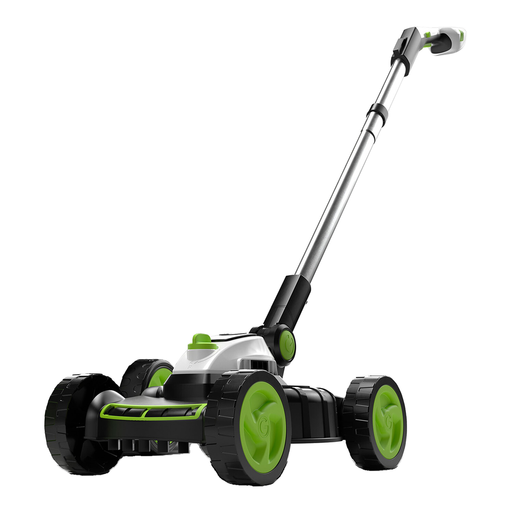
Why This Fits Their Persona: Its compact design suits UK homeowners with smaller lawns, narrow access routes or garden furniture that makes a full-size mower awkward.
The stated 25cm cutting width and up to 100m² coverage make its intended use clearer than choosing a larger mower for a small footprint.
3.5kg weight, four-stage battery display and low-profile handle for reaching beneath garden furniture.
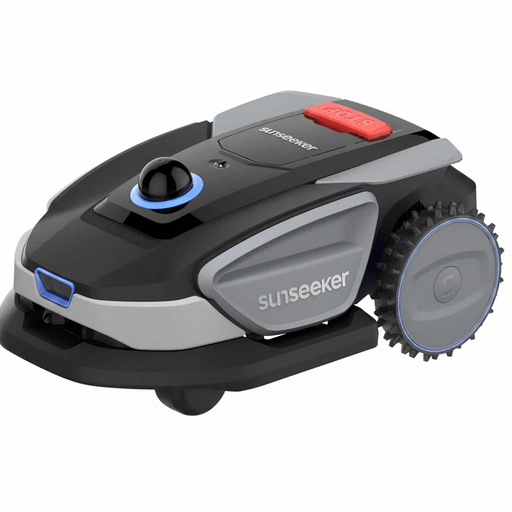
Why This Fits Their Persona: It is designed for larger UK lawns where automated scheduling, multiple zones and reduced routine pushing are priorities.
Its listed 1,000m² capacity, automatic mapping and multi-zone support help buyers compare it against the actual layout of their lawn.
360° LiDAR, AI vision, app control and automatic mapping are specified features.
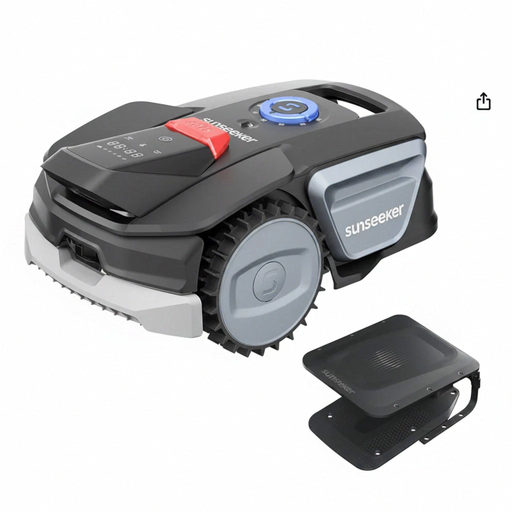
Why This Fits Their Persona: A suitable option for owners of smaller lawns who want automated mowing without managing a traditional boundary cable.
The 300m² rating and stated 27% slope capability give a clearer starting point for checking garden size and gradient.
AI vision, smart obstacle avoidance, one-key mowing, app control and a supplied garage are listed features.
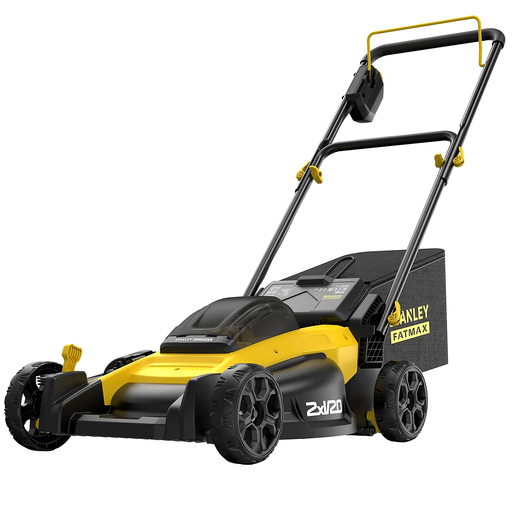
Why This Fits Their Persona: It is aimed at owners who need a conventional cordless mower for lawns of up to 750m² and prefer direct control over mowing.
The supplied two 4.0Ah batteries, 40L collection bag and 3-in-1 cutting functions make the package contents easier to assess.
51cm deck, five cutting-height positions, folding handles and vertical storage; listed weight is 22kg.
We have compiled a complete, real-time list of products that fully satisfy these strict selection criteria and UK safety regulations.
Yes, provided the battery capacity and cutting width match the lawn. They are particularly practical where lower noise, easier starting and freedom from a mains cable are priorities. For larger or frequently used lawns, choose a model with sufficient battery capacity or a compatible spare battery.
Service life depends on weather exposure, mowing frequency, blade replacement, battery care and storage. Keep the charging area clear, clean the mower as instructed and replace blades when cutting performance declines. Check the warranty and the availability of replacement batteries before purchasing.