
24/7 全天候客户支持

免费退货

当日/次日达

品质保障

开启新人专享福利: 全场免邮 | 低至 2 折 | 免费试用 30 天 JoyPlus 会员
下载 Joybuy
Navigating the market for a new cordless vacuum cleaner can feel overwhelming. With endless specifications and bold marketing claims, it’s easy to end up with a model that looks great on paper but fails to perform in a real British home. As the Joybuy Product Recommendation Officer, my role is to help you see past the hype and focus on what truly matters. Before you spend your hard-earned money, let's look at the common pitfalls that catch many buyers out.
To make a smart purchase, focus on the practical balance of key features rather than just the headline numbers. Here are the non-negotiables to check.
Instead of being swayed by the highest possible suction number, look for a powerful suction vacuum that offers a good balance. A useful indicator is the runtime on the 'Auto' or 'Medium' power setting, which typically provides enough power for mixed flooring (carpets and hard floors) without depleting the battery instantly. A model that offers 20-30 minutes of solid, consistent suction is far more practical than one offering 60 minutes of weak performance or 8 minutes of extreme power. A long runtime vacuum is only useful if that runtime is achieved at a usable power level.
The quality of a vacuum's filtration system is crucial, especially for households with pets or allergy sufferers. Look for models with a multi-stage, sealed system and a HEPA filter vacuum. A HEPA (High-Efficiency Particulate Air) filter is designed to capture at least 99.97% of microscopic particles like dust mites, pollen and pet dander. A "sealed" system is just as important, as it prevents these captured allergens from leaking back into the room's air. This feature is a must for improving indoor air quality.
A lightweight vacuum cleaner is a great starting point, but the overall ergonomics are what determine comfort. A model might be light, but if it's top-heavy, it can cause wrist strain during longer cleaning sessions. Consider how it feels in your hand and how easily it converts into a handheld vacuum for cleaning stairs, upholstery or the car. The included attachments also add to its versatility, with crevice tools and motorised mini-brushes being particularly useful for a complete clean.
To help you find the right fit, we've matched some models to common UK household needs. These recommendations are based on a practical assessment of their features, helping you sidestep the common purchasing traps.
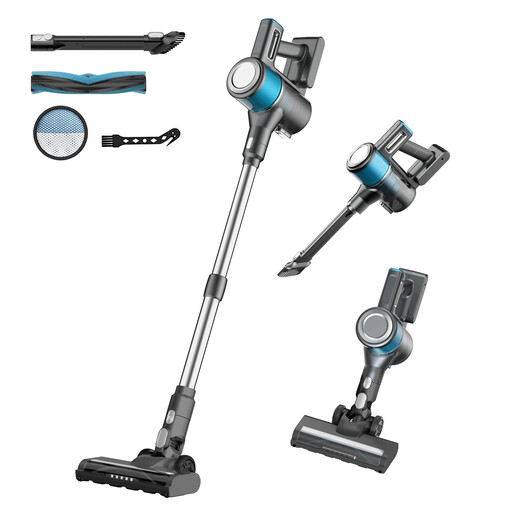
Why This Fits Their Persona: An excellent entry-point for those in smaller homes or flats. It's a straightforward, lightweight option for daily touch-ups on hard floors and low-pile rugs without a large financial commitment.
It avoids the runtime illusion by offering a clear, functional balance. Its 18 kPa suction and up to 40-minute runtime set realistic expectations for its price point, unlike models that over-promise and under-deliver.
Its 4-in-1 versatility and lightweight body make it easy to handle for quick clean-ups, converting easily to a handheld vacuum for furniture or as a car vacuum cleaner.
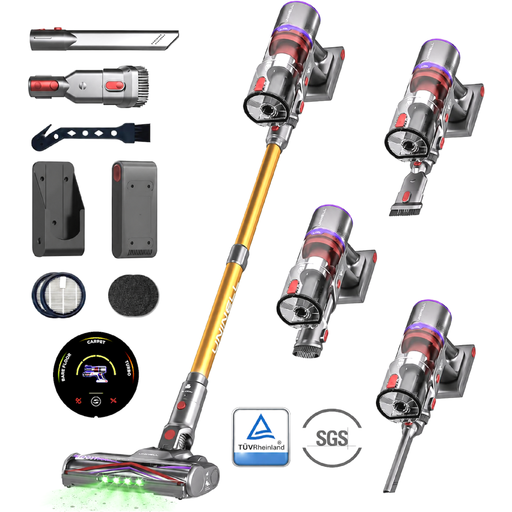
Why This Fits Their Persona: Specifically engineered for the challenges of a pet-friendly home. It has the power and features needed to effectively tackle stubborn pet hair on both carpets and hard floors.
It counters the 'anti-tangle' trap with a genuinely effective brush design that combines dense velvet and rubber strips to actively reduce hair wrap. Its 7-stage filtration system also properly traps dander, rather than just circulating it.
Features high 60KPa peak suction for deep cleaning carpets and a filtration system that captures up to 99.99% of fine particles, making it a strong choice for managing pet dander and other allergens.
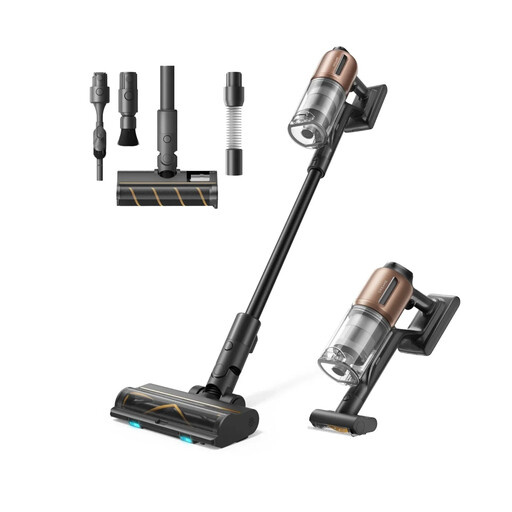
Why This Fits Their Persona: Its combination of very high suction power and an extended runtime of up to 90 minutes is suitable for cleaning larger properties from top to bottom in a single session without needing to recharge.
It moves beyond the simple runtime trap by using smart dirt detection to automatically adjust suction. This optimises battery use, providing power when needed and conserving it when not, for a more practical and efficient clean than a basic 'eco mode'.
Features a whole-machine sealed HEPA H14 filtration system and 250 AW suction, providing high-end performance for both particle capture and dirt removal on all floor types.
We have compiled a complete, real-time list of products that fully satisfy these strict selection criteria and UK safety regulations.
How often should I clean or replace my vacuum's filter? For optimal performance, it's good practice to clean the filters at least once a month. Most modern cordless vacuums come with washable filters. Simply rinse them under cool water (without soap) and let them air dry completely for at least 24 hours before reinserting. A HEPA filter may need replacing every 6 to 12 months, depending on usage and your home environment. Check the manufacturer's guidelines for specific recommendations.
Is a cordless stick vacuum powerful enough for deep-pile carpets? Modern, high-end cordless vacuums have made significant strides in power. Models with high Air Watts (AW) or Pascal (Pa) ratings, combined with a motorised brush head designed for agitation, can be very effective on deep-pile carpets, especially for removing surface debris and vacuum for pet hair. While a premium corded model may still have an edge for the deepest cleans, a powerful cordless model is more than sufficient for the vast majority of households.
What's the difference between suction measured in Pascals (Pa) and Air Watts (AW)? Both are units used to measure suction, but they describe different things. Pascals (Pa) measure the raw pressure difference the motor can create, essentially its pulling force. Air Watts (AW) is a more comprehensive measurement that combines this pressure with the rate of airflow. Because it accounts for both pressure and volume of air moved, AW is often considered a more practical and realistic indicator of a vacuum's overall cleaning effectiveness.