
24/7 Customer Support

Free returns

Same-day & Next-day Delivery

Quality Guaranteed

Unlock Your Welcome Offers: FREE Delivery | Up to 80% OFF | Free 30-day JoyPlus trial
Download the APP
The convenience of a cordless vacuum cleaner is undeniable. No more tripping over cables or searching for a nearby socket. However, the market is flooded with models that promise the world but often fail to deliver, leaving many UK buyers with a device that loses suction or runs out of power halfway through a clean.
Before you invest, it's crucial to see past the marketing hype. Many promising-looking vacuums fall short due to a few common design flaws and exaggerated claims. Understanding these pitfalls is the first step to finding a reliable machine that suits your home.
To make a smart choice, focus on the practical specifications that determine a vacuum's day-to-day performance. Here are the key factors to analyse.
Instead of fixating on the highest Pa number, examine the design of the brush roll. For homes with mixed flooring and pets, a V-shaped, anti-tangle brush is a significant advantage. This design actively channels hair and debris towards the suction inlet, preventing it from wrapping around the roller and causing blockages. Furthermore, look for models with LED headlights on the floorhead; this simple feature is surprisingly effective at revealing hidden dust under furniture and in dark corners.
A reliable rechargeable vacuum should offer a practical runtime for your home's size. Check the manufacturer's stated runtime for both minimum and maximum power modes. For larger homes, a model with a detachable battery is a game-changer. It allows you to have a second battery charged and ready, effectively doubling your cleaning time. Also, consider the charging solution. A wall-mounted dock that both stores and charges the unit is far more convenient than having to plug in a loose cable each time.
A good filtration system should be multi-stage, capturing particles of different sizes. A fully sealed system combined with a washable HEPA filter offers a good balance of performance and low running costs. Look for a dustbin that is easy to empty with a one-touch mechanism to avoid messy spills. A lightweight cordless vacuum is easier to handle, but ensure it doesn't compromise on a reasonably sized dustbin, or you'll be making constant trips to the bin.
Based on these practical criteria, we've identified several models that align with the needs of different UK households. Instead of a one-size-fits-all approach, we've matched them to specific user profiles.
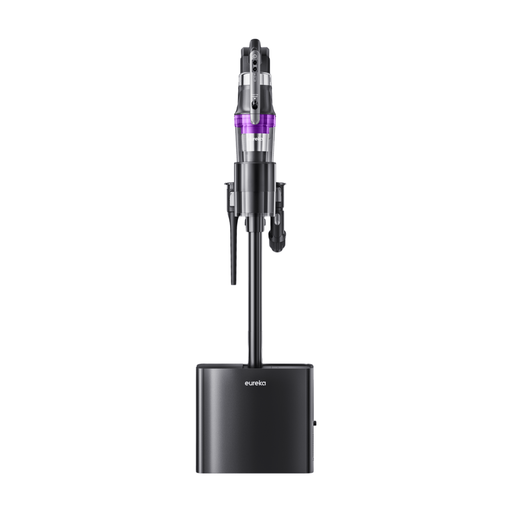
Why This Fits Their Persona: Ideal for those in smaller homes or flats who need a straightforward, lightweight cordless vacuum for daily tidying. Its compact docking station and slim profile make storage simple, avoiding the clutter of larger models.
This model focuses on practical convenience over inflated specs. Instead of promising extreme suction it can't sustain, it offers reliable performance for hard floors and low-pile carpets, with a runtime suited for smaller living spaces.
Primary Advantage: Excellent storage and manoeuvrability with its dedicated docking station and lightweight frame. Pro: Swivel steering makes cleaning around furniture in tight spaces much easier.
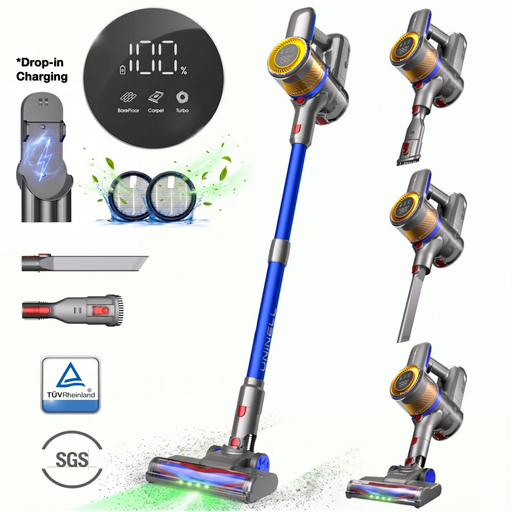
Why This Fits Their Persona: Specifically designed for households battling pet hair and embedded dirt. The combination of high suction power (45,000Pa) and a specialised anti-tangle brush head directly addresses the main frustration for any owner of a vacuum for pet hair.
It counters the 'unrealistic runtime' trap by offering a substantial 60-minute runtime in its standard mode and a detachable battery. The V-shaped anti-tangle brush is a practical solution to hair wrapping, a common failure point in lesser models.
Primary Advantage: The anti-tangle brush head is engineered to minimise hair wrap, reducing maintenance. Pro: Features a self-standing design, so you can pause cleaning without needing to lean it against a wall.
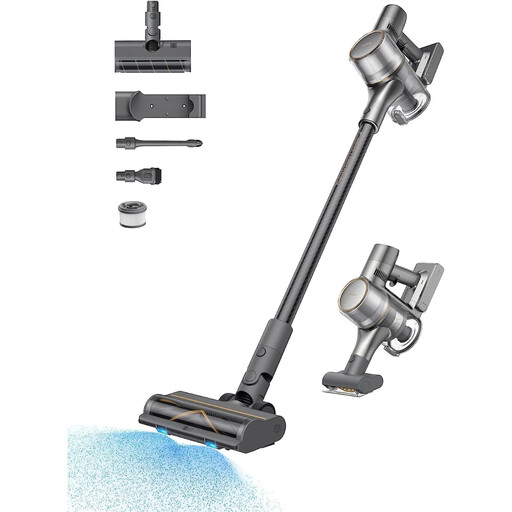
Why This Fits Their Persona: For those with larger homes who want comprehensive cleaning without compromise. Its exceptionally long 90-minute runtime, intelligent dirt detection and multiple floor heads provide a versatile, whole-home cleaning system.
This model delivers on its high-performance claims by pairing a powerful 190AW motor with a large battery. The intelligent dirt sensor automatically adjusts suction, optimising battery use for a genuine long-lasting clean, rather than just quoting a theoretical maximum.
Primary Advantage: An impressive maximum runtime of up to 90 minutes covers large homes in a single charge. Pro: The intelligent dirt sensing system automatically boosts power where needed, improving efficiency.
We have compiled a complete, real-time list of products that fully satisfy these strict selection criteria and UK safety regulations.
1. How long should a cordless vacuum cleaner battery last? The lifespan of the battery itself, not just a single charge, typically ranges from two to five years, depending on usage frequency and charging habits. To prolong its life, avoid leaving it completely discharged for long periods and try not to store it in extreme temperatures. Models with a detachable battery offer an advantage, as you can simply replace the battery pack rather than the entire vacuum.
2. Is higher Pa or AW always better in a cordless vacuum? Not necessarily. While Pascals (Pa) and Air Watts (AW) are useful measures of raw motor power, they don't tell the whole story. Effective cleaning performance is a combination of suction, airflow, filtration and floorhead design. A mid-range vacuum with a well-engineered, anti-tangle brush head can easily outperform a model with higher suction but a poorly designed head that clogs or fails to create a good seal with the floor.
3. How often do I need to clean the filters on my stick vacuum cleaner? For optimal performance, it's good practice to check the filters monthly. Most modern cordless vacuums come with washable filters. After washing with cool water, it is essential to let them air dry completely for at least 24 hours before reinstalling. A clogged filter restricts airflow, which significantly reduces suction power and can put a strain on the motor.