
24/7 全天候客户支持

免费退货

当日/次日达

品质保障

开启新人专享福利: 全场免邮 | 低至 2 折 | 免费试用 30 天 JoyPlus 会员
下载 Joybuy
Choosing a cordless vacuum cleaner UK households can use comfortably means looking beyond suction figures and glossy feature lists. A cordless stick vacuum cleaner may be convenient for daily crumbs, stairs and car interiors, but not every model is equally suitable for thick carpet, pet hair or a larger home.
The right choice depends on floor type, cleaning habits, battery expectations and how much maintenance you are prepared to do. These are the main buying pitfalls to avoid.
Manufacturers may quote suction in air watts (AW), kilopascals (kPa) or motor wattage. These measurements describe different aspects of performance and should not be compared as if they were interchangeable.
A higher headline figure does not automatically mean better results on every surface. Brush design, airflow, floor detection and filtration also affect how effectively a vacuum collects dust and hair.
“Up to” runtime is commonly measured in an energy-saving mode, often with a non-motorised attachment. Using a motorised floor head or maximum suction can reduce operating time substantially.
Before buying a long-runtime vacuum cleaner, check whether the stated figure applies to the floor head you will use. A removable battery or spare battery option may be more useful than a large headline runtime.
Hair can wrap around a brush roll, filters can become blocked and a small dust cup may require frequent emptying. These issues can make a lightweight vacuum cleaner frustrating to use after the initial novelty wears off.
Look for clear filter-washing instructions, accessible brush-roll maintenance and a storage solution that suits your home. A freestanding or wall-mounted design can be particularly useful in flats and smaller UK utility spaces.
For a vacuum cleaner for carpets and hard floors, check whether the main head has a floor-selection control, automatic adjustment or a brush design intended for both surfaces. Soft rollers may be useful on hard floors, while motorised bristles can help lift debris from carpet pile.
FloorDetect technology, as found on selected models, can automatically adjust cleaning behaviour between hard floors and carpets. However, always check the manufacturer’s instructions for delicate flooring such as untreated wood or natural stone.
Compare:
For larger homes, detachable batteries and charging docks can reduce interruptions. For a flat, a compact handheld vacuum cleaner with a moderate runtime may be sufficient.
A dust cup of around 0.7 litres may suit regular maintenance, while a larger 1.5-litre container can reduce emptying during whole-home cleaning. Dust capacity also affects the physical size and weight of the machine.
Pet owners should check for an anti-tangle vacuum cleaner brush roll or a dedicated pet tool. These features can reduce hair wrapping, but brush rolls still require periodic inspection.
Filtration systems should be maintained according to the instructions. Washable filters must be fully dry before refitting, and no domestic vacuum should be used on liquids unless the product specifically permits it.
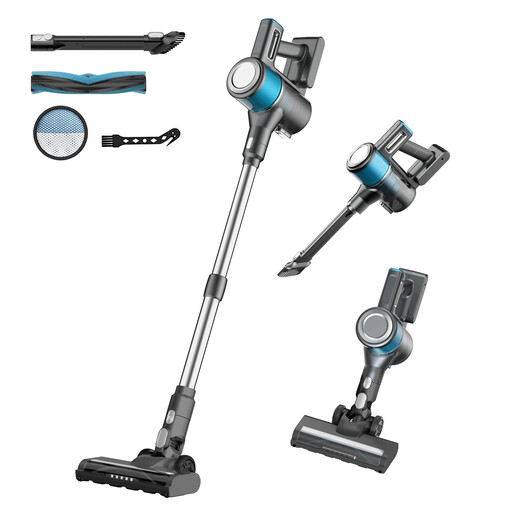
Why This Fits Their Persona: A practical option for smaller homes, quick kitchen clean-ups and car interiors where compact storage matters more than maximum whole-home capacity.
Its stated 4-in-1 design and cordless format focus on everyday versatility rather than relying only on a large suction claim.
Lightweight cordless format, LED headlights and four cleaning functions for floors, furniture and cars.
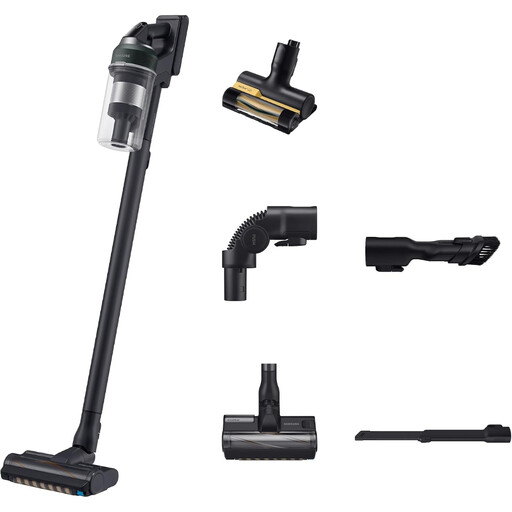
Why This Fits Their Persona: Suitable for households wanting a lighter premium cordless stick vacuum cleaner with dedicated pet and filtration features.
The product specification states runtime by power conditions and identifies its charging time, helping buyers set realistic expectations.
Up to 60 minutes on minimum power, 0.8-litre dust container, Pet Tool+ and a HEPA filtration system specified to capture 99.995% of fine dust particles.
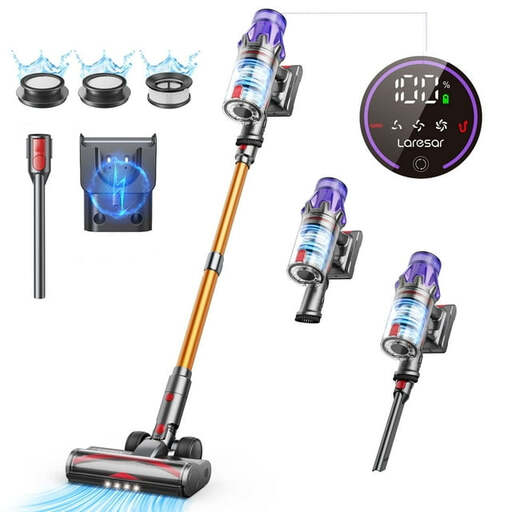
Why This Fits Their Persona: Designed for users moving between hard floors, low-pile carpet, stairs, furniture and vehicles who want several attachments in one machine.
The product details distinguish energy-saving runtime of 40–60 minutes from maximum-mode runtime of 15–30 minutes.
1.5-litre dust cup, seven-stage filtration, V-shaped roller brush and conversion to a handheld vacuum cleaner.
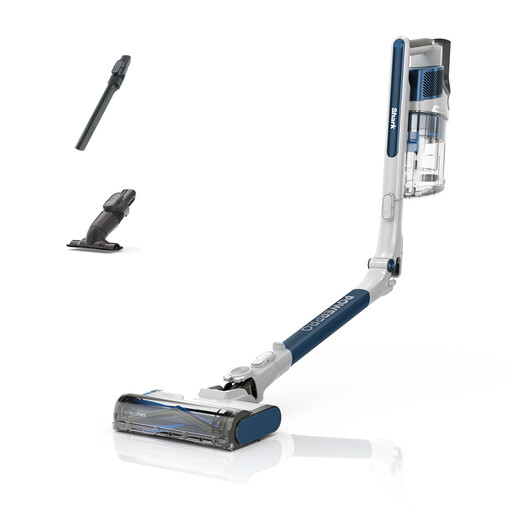
Why This Fits Their Persona: A useful match for busy homes needing one cordless hoover for routine floor cleaning, stairs, furniture and under-sofa access.
FloorDetect and Anti Hair Wrap features address two common concerns: changing surfaces and hair build-up around the brush roll.
75 AW maximum suction, up to 50 minutes’ stated runtime, 0.7-litre dust cup, Flexology wand and handheld conversion.
We have compiled a complete, real-time list of products that fully meet these strict selection criteria and UK safety regulations.
A cordless model is convenient for quick cleaning, stairs and areas without nearby sockets. It is usually easier to convert into a handheld vacuum cleaner and store in a compact space.
An upright vacuum cleaner can be more suitable for extended carpet cleaning, larger dust capacity and households that prefer continuous mains power. For example, the Vax Air Stretch has a 1.5-litre container, 13-metre cord and up to 17 metres’ cleaning reach. Its 4.9 kg weight may be less convenient on stairs than a lightweight cordless model.
Pet owners should compare brush-roll design, upholstery tools and dust capacity rather than choosing solely by motor wattage.
It can be suitable for many carpets, particularly when fitted with a motorised brush head and an appropriate carpet mode. Performance varies with carpet pile, battery mode, brush design and maintenance. Check the product’s stated floor compatibility before buying.
Battery life depends on suction setting, floor head and attachment. Stated maximum runtimes are usually measured in lower-power conditions. For regular whole-home cleaning, consider a removable battery, a spare battery option or a model offering clearly stated mode-specific figures.
Both types use electricity, but running cost depends on power consumption, charging frequency and cleaning time. A cordless model charges between uses, while an upright draws power during operation. Compare the appliance’s energy use and your expected cleaning frequency rather than assuming one format is automatically cheaper.