
24/7 Customer Support

Free returns

Same-day & Next-day Delivery

Quality Guaranteed

Unlock Your Welcome Offers: FREE Delivery | Up to 80% OFF | Free 30-day JoyPlus trial
Download the APP
A cordless water flosser can make interdental cleaning easier for people who find string floss awkward, have braces or implants or regularly deal with food trapped between teeth. However, impressive-looking specifications do not always indicate a practical device.
Before buying an electric water flosser, look beyond pressure figures and battery claims. A model that is difficult to refill, uncomfortable on sensitive gums or awkward to clean may end up unused in a bathroom drawer.
A high-pressure water flosser may sound appealing, but maximum pressure is not suitable for every user. People with sensitive gums, first-time users or areas around dental work may prefer a gentle setting. A useful device should offer several adjustable modes rather than one powerful stream.
Also check whether the product provides meaningful mode descriptions. “Soft”, “medium”, “normal”, “strong” and “pulse” are easier to understand than vague labels such as “advanced” or “deep clean”.
A compact portable water flosser is convenient for travel, but a very small tank may require repeated refilling during one cleaning session. Consider the balance between tank capacity and portability:
A larger tank also adds size and weight, so frequent travellers may reasonably prioritise compact dimensions instead.
“Up to” battery figures depend on the selected pressure, cleaning duration and frequency of use. A rechargeable water flosser should ideally use a common charging connection, such as USB Type-C, and provide clear charging instructions.
Do not use a cordless oral irrigator while it is charging. Ensure the charging port is dry before connecting the cable, particularly after use in a wet bathroom.
A water flosser with multiple modes gives you more control than a fixed-pressure model. For gentle starting, look for a soft mode. Pulse settings alternate the water flow and may help users reach different interdental spaces without maintaining a constant strong stream.
Pressure may be listed in PSI, while flow may be described in pulses per minute. These numbers are not directly comparable across every design, so assess them alongside the number of modes, nozzle selection and the manufacturer’s usage guidance. Start at the lowest comfortable setting rather than selecting a high-pressure water flosser immediately.
An IPX7 waterproof water flosser is designed for the relevant water-ingress test conditions and can generally tolerate temporary immersion more than an IPX6 device. This does not mean it should be left submerged, used while charging or stored wet.
For either rating:
IP ratings describe water resistance, not cleaning performance or suitability for a particular dental condition.
A standard nozzle is suitable for general daily cleaning, while orthodontic, periodontal or tongue-cleaning attachments may be useful for particular routines. Check exactly which tips are included rather than relying on phrases such as “professional accessories”.
Nozzles need regular cleaning and eventual replacement. Follow the product instructions; the Rushi guidance, for example, recommends replacing the tip every three months or when it becomes worn. Buyers should also confirm that replacement tips are available before committing to a model.
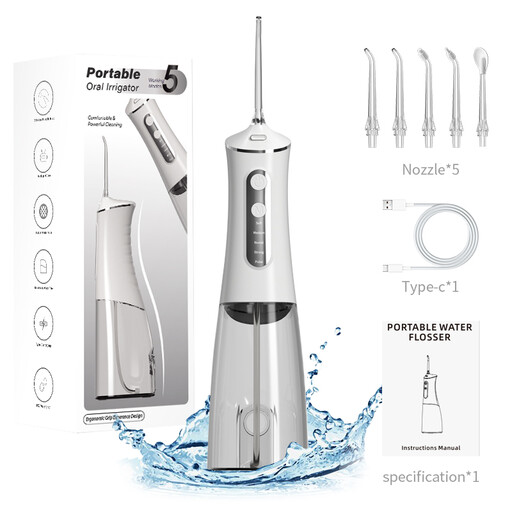
Why This Fits Their Persona: A straightforward daily oral irrigator for shoppers who want several pressure options and a reasonably large tank without choosing a specialist design.
Its five modes include Soft and Pulse, helping new users avoid relying on maximum pressure. The 350ml tank also reduces frequent refilling.
Five pressure modes, Type-C charging, 350ml tank and an IPX7 waterproof rating are listed in the product specifications.
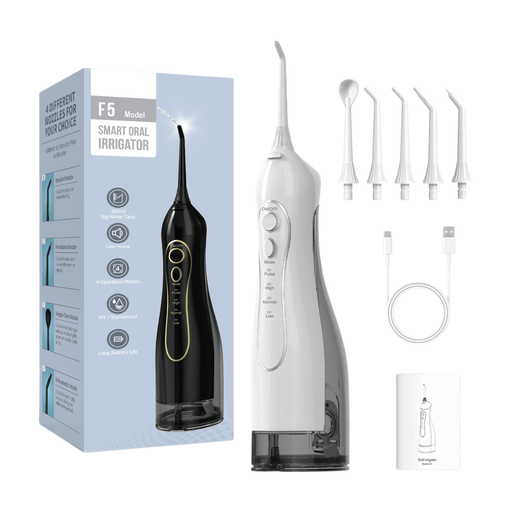
Why This Fits Their Persona: Suitable for buyers prioritising a larger tank, rotating nozzle and several attachments for a more adaptable home routine.
The 40–140 PSI range is paired with five modes, so the listed high-pressure setting does not have to be used for every session.
The specifications list a 300ml detachable tank, 360° rotatable nozzle, 2,000mAh battery and IPX7 water resistance.
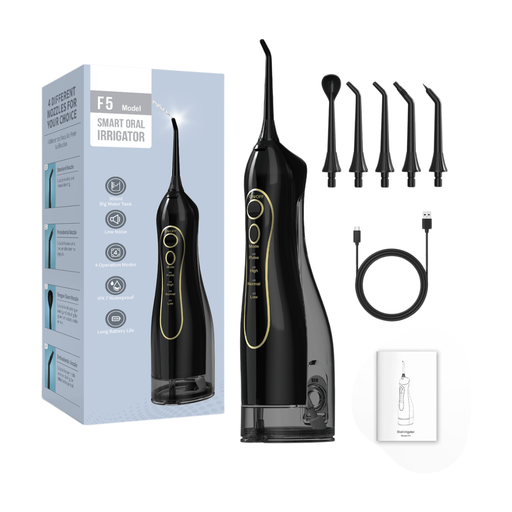
Why This Fits Their Persona: A practical match for users cleaning around braces, bridges or hard-to-reach spaces who want dedicated nozzle types and flexible positioning.
The included orthodontic and gum-care nozzles address specific cleaning preferences, while adjustable modes help reduce the need for constant strong pressure.
It lists five modes, a 300ml tank, 360° nozzle rotation, up to 40 days of battery use and an IPX7 rating.
Fill the tank with lukewarm water and begin on the softest setting, especially if you have sensitive gums or are new to an oral irrigator. Lean over the sink, place the nozzle in your mouth before switching it on and direct the stream towards the gumline rather than forcing it into the gums.
A water flosser is an oral-care aid, not a replacement for professional dental care. If you have recent oral surgery, persistent bleeding, significant discomfort or a diagnosed dental condition, ask your dentist whether a dental water jet is appropriate for you. Do not use hot water, oils or other liquids unless the product instructions specifically permit them.
We have compiled a complete, real-time list of products that fully satisfy these strict selection criteria and UK safety regulations.
A water flosser may help remove loose food debris around brackets and wires, but it should be used gently and according to your orthodontic care instructions. Look for an orthodontic nozzle and adjustable pressure modes. It should supplement, not replace, the cleaning routine recommended by your dental professional.
Battery life varies with pressure, session length and frequency. The listed products specify up to 40, 50 or 90 days, but these are maximum figures rather than guaranteed results for every user. Charging fully before the first use and keeping the port dry can support safer everyday operation.
Electricity use is generally limited to recharging the battery. Ongoing costs are more likely to involve replacement nozzles and water. Emptying and rinsing the tank after each session can also help prevent odours and reduce the need for intensive cleaning.