
24/7 Customer Support

Free returns

Same-day & Next-day Delivery

Quality Guaranteed

Unlock Your Welcome Offers: FREE Delivery | Up to 80% OFF | Free 30-day JoyPlus trial
Download the APP
Sticky kitchen spills, muddy paw prints and everyday dust can make sealed hard floors feel like a constant chore. A cordless wet and dry vacuum cleaner and mop aims to simplify this by vacuuming debris, washing the floor and collecting dirty water in one pass. However, not every vacuum mop suits every household.
As the Joybuy Product Recommendation Officer, I focus on practical differences rather than promotional wording. Before choosing a cordless floor cleaner, consider these common buying traps.
A stated battery time may apply to a lower-power setting. Using maximum suction, heavier washing modes or extra passes over sticky messes can reduce the usable runtime. Check whether the product lists different operating modes and whether its runtime is sufficient for your floor area.
A wet and dry floor cleaner collects liquid, hair and debris in a separate tank. A small dirty-water tank may need emptying during a larger clean, while an unclear cleaning process can leave odours in the brush roller or tubing.
A self-cleaning vacuum mop can reduce manual rinsing, but it does not remove the need to empty tanks, clean filters and follow drying instructions.
These machines are generally designed for sealed hard floors, such as appropriately finished tile, vinyl, laminate or treated wood. Unsealed, waxed, oiled or damaged surfaces may be unsuitable for water-based cleaning. Always check the product instructions and your flooring manufacturer’s guidance before use.
Separate tanks are preferable for hygienic everyday operation because fresh water is used for washing while recovered liquid is kept apart. Compare both capacities, not just the clean-water figure. For example, the Tower Aquajet Pro has a 650ml clean-water tank and 550ml dirty-water tank, giving useful context for its intended cleaning capacity.
A product with continuous fresh-water washing and dirty-water recycling may be useful for sticky marks, although households should still expect to empty and rinse the recovery tank after use.
Look for a stated runtime that matches your routine. Up to 30–40 minutes may be suitable for regular cleaning in many homes, but the actual time depends on mode, floor condition and technique. Also check charge time: a cleaner that takes several hours to recharge may be less convenient if you need repeated sessions in one day.
For larger homes, consider whether the machine can complete the main floor area without interruption. For a flat or small kitchen clean-up, a shorter runtime may be perfectly practical.
A floor cleaning machine must be comfortable to push, turn and store. Check its weight, height and whether it can reach close to skirting boards and beneath furniture. Dual-sided edge cleaning can reduce the untreated strip often left along walls.
A self-propulsion feature may make a heavier unit easier to move, while a slim microfibre mop head can be more suitable for low spaces. Compare the machine’s physical dimensions with your cupboards, utility area or charging station.
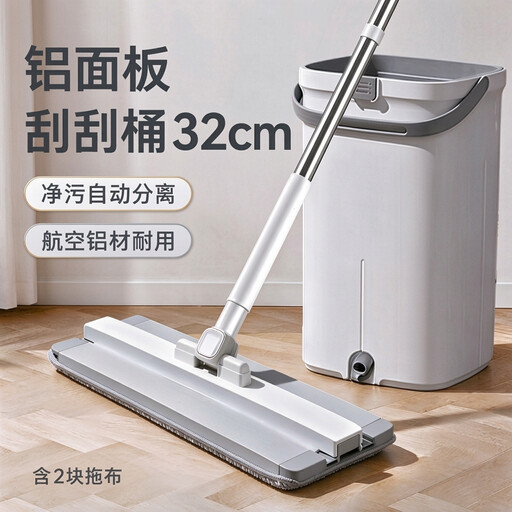
Why This Fits Their Persona: A practical option for shoppers who want cleaner water separation and hands-free wringing without paying for a powered vacuum mop. It suits flats and smaller homes with sealed hard floors.
It does not rely on battery runtime or hidden charging requirements. The dual-compartment bucket separates washing and dehydration, while the built-in scraper helps clean the mop head during use.
32cm microfibre mop head; separate clean and dirty water areas; single-hand push-pull wringing; flat head for low furniture.
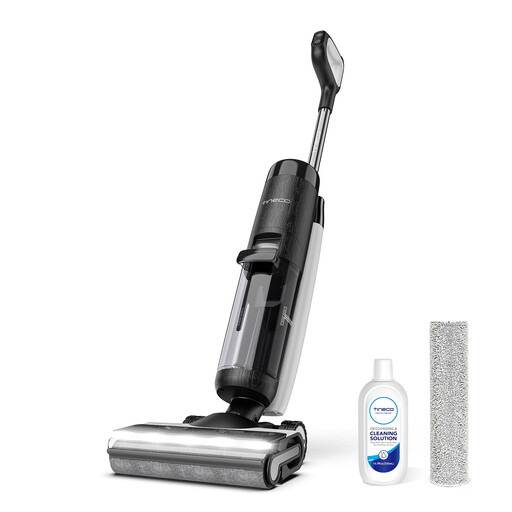
Why This Fits Their Persona: Suitable for households wanting powered vacuuming and washing with less manual pushing. Its stated runtime and edge-cleaning design may appeal to families managing frequent spills and pet hair on sealed floors.
The product description specifies up to 40 minutes of runtime, dual-sided edge cleaning to within 0.4 inch and a self-cleaning cycle with centrifugal roller drying.
Bi-directional self-propulsion; continuous fresh-water washing; dirty-water recycling; roller drying after the self-cleaning cycle.
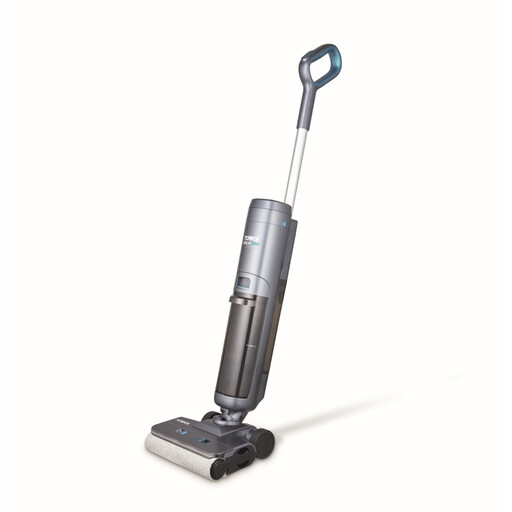
Why This Fits Their Persona: A straightforward choice for busy UK households that want one machine for routine vacuuming, washing and drying across sealed hard floors.
Its capacity, runtime and charging details are clearly listed: 650ml clean tank, 550ml dirty tank, up to 30 minutes of operation and approximately four to five hours of charging.
22.2V lithium-ion battery; BLDC motor; one-touch controls; LED display; self-cleaning brush and internal system.
We have compiled a complete, real-time list of products that fully satisfy these strict selection criteria and UK safety regulations.
A cordless vacuum mop is convenient when you want to collect dry debris and wash floors in one pass. It can be particularly useful for kitchens, children’s spills and pet hair. However, it usually requires charging, tank emptying and brush maintenance.
A traditional spin mop and bucket is simpler, does not need a battery and can be economical for occasional deep cleaning. The Vileda Turbo Mop & Bucket includes a foot-pedal spin wringer, triangular mop head and telescopic handle extending from 55cm to 130cm. According to the supplied product information, its microfibre head’s bacteria-removal performance was verified by third-party lab tests; this should be understood as product-specific test information rather than a universal result for every household.
They can be suitable for sealed laminate flooring, provided the flooring manufacturer permits damp cleaning. Use the recommended amount of water, avoid leaving puddles and do not use the machine on damaged or unsealed surfaces.
After the cycle, empty the dirty-water tank, rinse removable parts, check the filter and allow components to dry as instructed. Self-cleaning helps with the brush and internal pathways, but regular maintenance remains necessary for reliable operation.
Running costs include electricity for charging, replacement rollers or pads, filters and any approved cleaning solution. A machine with a washable roller or self-cleaning function may reduce manual cleaning time, while a microfibre mop and bucket generally has fewer electrical parts and no charging cost. Compare the purchase price with how often you expect to clean and the maintenance items listed by the manufacturer.