
24/7 Customer Support

Free returns

Same-day & Next-day Delivery

Quality Guaranteed

Unlock Your Welcome Offers: FREE Delivery | Up to 80% OFF | Free 30-day JoyPlus trial
Download the APP
Corn snacks cover a wide range of textures and flavours, from roasted kernels and corn crisps to tortilla chips, rolled chilli snacks and sweet coated treats. That variety is useful, but it can also make shopping harder. A large bag may not suit a lunchbox, a “light” recipe may still be energy-dense, and a spicy flavour can contain allergens that are not obvious from the front of the pack.
This guide highlights the main buying pitfalls, the label details worth checking and our top recommendations for different UK snacking occasions.
A sharing bag can look economical, but it may be opened and left exposed to air for several days. Corn crisps and tortilla chips gradually lose their crunch once opened, particularly if the bag is not resealed. For lunchboxes, commuting or portion-conscious snacking, individual bags may be more convenient than one large pack.
Compare the total weight, number of portions and storage requirements rather than judging value by bag size alone. A 5 x 30g multipack, for example, gives clearer individual portions, while a 180g sharing bag is more suitable for a film night or gathering.
Terms such as spicy, hot and intense are not consistent measures across brands. A chilli and lime tortilla chip may deliver sharp acidity as well as heat, while habanero corn snacks can have a slower, lingering burn. If you prefer milder savoury snacks, look for salt and vinegar, sea salt or cheese flavours instead.
For adventurous shoppers, check whether the seasoning includes chilli, cayenne, jalapeño or habanero. This gives a more useful indication of the flavour profile than the front-of-pack heat description.
Corn itself does not contain gluten, but the finished snack may include wheat, barley, milk or soya through seasoning, flavourings or shared production facilities. For example, some tortilla chips list possible milk, soya, wheat or gluten traces, while cheese tortilla chips contain milk ingredients.
Always read the allergen declaration and full ingredient list on the current UK packaging. This is especially important for children’s lunchboxes and anyone managing a food allergy. Vegan corn snacks and gluten-free corn snacks should be checked for formal pack wording rather than inferred from the product name.
Check the ingredients in order of weight and look for the specific flavour components you want. Roasted corn kernels may have a short ingredient list, such as corn, sunflower oil, seasoning and salt. More heavily seasoned crunchy corn snacks may include flavour enhancers, acidity regulators, colours or dairy powders.
For vegan shoppers, verify that the product contains no milk, whey or cheese powder. For gluten avoidance, check for wheat, barley, malt vinegar and “may contain” statements. A product can be made primarily from maize but still carry a gluten warning.
Use both columns when comparing products. Per-100g values make different pack sizes easier to compare, while per-serving information helps with everyday portions. The products listed here range from approximately 426 to 553 kcal per 100g, so “corn-based” does not automatically mean low-calorie.
Pay particular attention to fat, saturates, salt and fibre. Love Corn Salt & Vinegar lists 192 kcal and 0.5g salt per 45g portion, while Love Corn Habanero lists 224 kcal and 1.3g salt per 45g portion. These figures show why flavour and portion size should be considered together.
Choose the format around how the snack will be used:
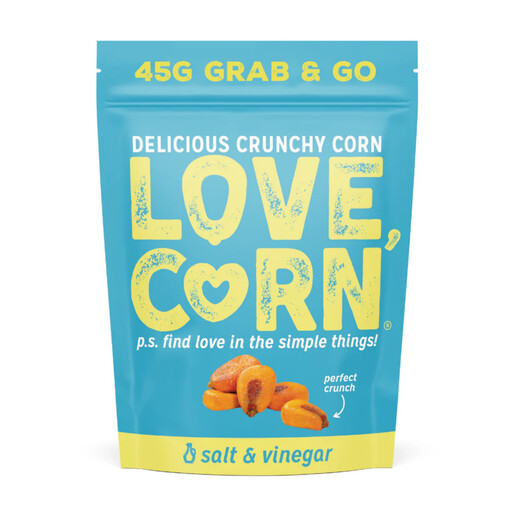
Why This Fits Their Persona: Ten 45g bags make it easy to portion snacks for work, study or day trips without opening a large sharing bag.
The multipack avoids relying on a large open bag and provides clear 45g portions. Its ingredient list includes corn, sunflower oil, salt and vinegar powder.
Vegan and gluten-free according to the supplied product information; 192 kcal and 0.5g salt per 45g portion.
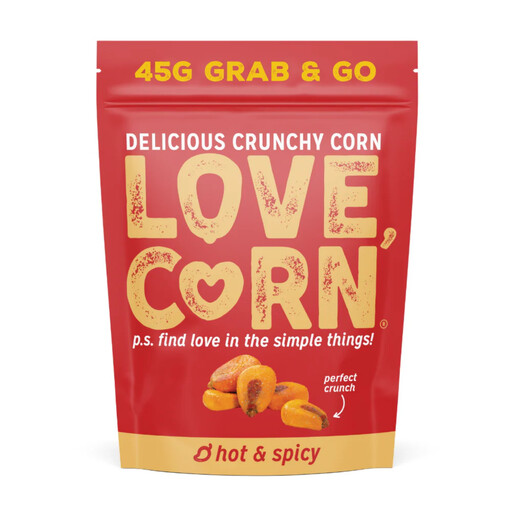
Why This Fits Their Persona: A short ingredient list and pronounced habanero flavour suit shoppers looking for a more distinctive alternative to standard crisps.
The heat is identified by a specific pepper rather than a vague “hot” description. The pack is divided into ten 45g bags.
Listed as vegan and gluten-free; ingredients include corn, sunflower oil, habanero peppers and sea salt.
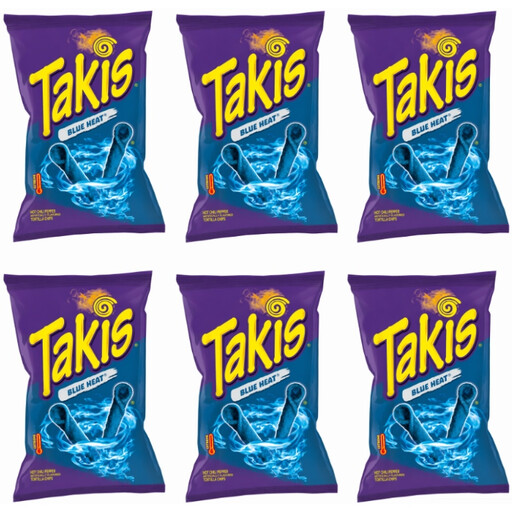
Why This Fits Their Persona: Six 100g bags suit frequent snack buyers, gaming sessions and parties where bold chilli snacks are likely to be shared.
The pack quantity and 100g bag size are stated clearly. Buyers can assess the larger portion before ordering rather than mistaking it for an individual serving.
Rolled corn texture with chilli and lime flavour; the listed allergen information includes soya and possible gluten-containing cereals or milk.
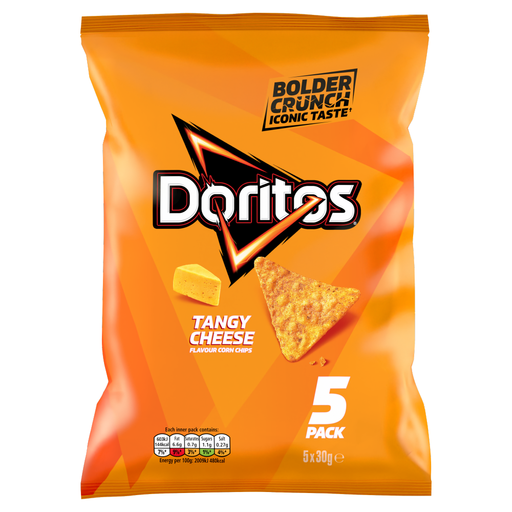
Why This Fits Their Persona: Individual 30g bags are convenient for packed lunches, picnics and after-school snacks.
The five-pack separates servings and helps preserve crunch until each inner bag is opened. Milk is clearly identified in the allergen information.
Vegetarian tortilla chips with a tangy cheese flavour; each 30g pack is listed at 144 kcal.
For a lighter-flavoured option, consider Love Corn Crunchy Snacks Sea Salt 115g, which lists 13.3g fat per 100g and uses corn, sunflower oil and sea salt. Fans of sharing crisps can compare Doritos Chilli Heatwave 180g, Doritos Cool Original 180g, Doritos Tangy Cheese 180g and Doritos Sweet Tang BBQ 180g. Those seeking stronger heat can also look at Doritos Extra Flamin' Hot 163g or Takis Blue Heat Chilli and Lime Flavour Corn Snack 180g.
We have compiled a complete, real-time list of products that fully satisfy these strict selection criteria and UK safety regulations.
Some are, but not all. Check the complete ingredient list and allergen statement. Seasonings may contain wheat, barley malt or other cereals, and some packs state that they may contain gluten. Use the current packaging as the final reference.
Keep them in a cool, dry place away from direct sunlight and humidity. Reseal the bag or transfer the contents to an airtight container. For maximum crunch, follow the pack’s guidance and consume opened snacks promptly.
Not always. Compare the price per 100g as well as the convenience of individual portions. Multipacks can reduce waste and make serving sizes clearer, while sharing bags may offer more food per pound for group occasions.