
24/7 Customer Support

Free returns

Same-day & Next-day Delivery

Quality Guaranteed

Unlock Your Welcome Offers: FREE Delivery | Up to 80% OFF | Free 30-day JoyPlus trial
Download the APP
Preparing a nursery is an exciting time, but choosing the central piece—the cot—can feel overwhelming. The market is filled with options, and it's easy to fall into common traps that lead to disappointment. As a Joybuy Product Recommendation Officer, my role is to help you navigate these choices by focusing on what truly matters for safety, practicality and long-term value.
Many parents find themselves regretting their purchase within a year. Let's look at the most common pitfalls to avoid:
cot bed and mattress set seems like a great deal, but often the included mattress is a low-quality afterthought. It might be too soft, lack a protective cover or be made from materials that aren't breathable, all of which are critical considerations for a baby's sleep environment.toddler convertible cot bed is appealing, but many are poorly designed. They can be wobbly once converted, have complex instructions or require you to store bulky parts for years, defeating the purpose of a space-saving, long-term investment.cot bed with storage drawer are not just nice-to-haves; they are practical necessities that can make the first few years significantly easier.To make a confident choice, focus on these core parameters rather than marketing buzzwords.
Your primary concern should always be safety. In the UK, cots must comply with BS EN 716-1:2017+AC:2019. This standard governs structural integrity, the spacing between bars (to prevent a baby's head from getting trapped) and ensures there are no footholds for climbing.
For the mattress, the key is a perfect fit. There should be no gap larger than 30mm between the mattress and the cot frame. A mattress that is too small poses a serious entrapment and suffocation risk. Always use the mattress size specified by the cot manufacturer.
The quality of the mattress directly impacts your baby's comfort and safety. Look for these features:
A true toddler convertible cot bed should be a sturdy, long-lasting piece of furniture. A solid wooden cot bed frame is generally more durable than one made from cheaper composite boards or MDF. Check that the conversion mechanism is straightforward and that the resulting toddler bed feels just as stable as the original cot. Finishes should be non-toxic and baby-safe, capable of withstanding the inevitable teething phase.
Based on these practical criteria, here are some recommendations matched to different parental needs.
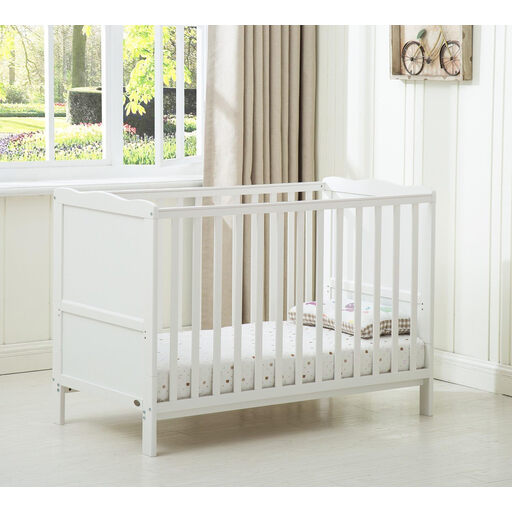
Why This Fits Their Persona: This parent wants a single, reliable purchase that will adapt as their child grows. The focus is on durability and a seamless transition from cot to toddler bed, providing value for years.
It directly counters the flimsy conversion flaw with a solid wood frame and included conversion rails. The bundled Aloe Vera mattress is a high-specification item, not a cheap filler.
True 2-in-1 functionality with a sturdy wooden frame. The three-position base and quality water-repellent mattress provide safety and convenience from day one.

Why This Fits Their Persona: For those with a smaller UK nursery, every square foot counts. This parent prioritises furniture that is multifunctional and helps keep the room tidy and organised without sacrificing style.
This set avoids the trap of overlooking practicality. The integrated rollaway drawer is a thoughtful design feature that provides essential storage for bedding and supplies from the outset.
The full-length under-bed drawer on castors maximises unused space. It combines this with all the core features: solid wood construction, conversion to a toddler bed and a quality mattress.
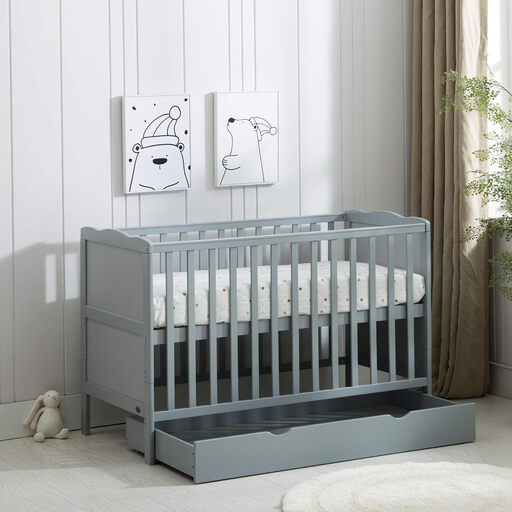
Why This Fits Their Persona: This parent is creating a specific aesthetic and wants high-quality, stylish grey nursery furniture. The cot bed must be the centrepiece, combining a contemporary look with complete functionality.
It proves that style doesn't require sacrificing substance. While delivering the modern grey finish, it includes the practical storage drawer and a quality convertible design, avoiding the trap of being just a pretty object.
This set offers a complete package: a stylish grey finish, integrated storage, a convertible frame and a high-quality Aloe Vera mattress. It also features protective teething rails.
Current safe sleep guidance advises against using loose bedding like duvets or blankets in a cot. A baby sleeping bag is a widely recommended alternative. They are wearable, cannot be kicked off and reduce the risk of covering a baby's face.
For warmer months or well-heated homes, a baby sleeping bag 1.0 tog is often suitable. The aden and anais sleeping bag range, for example, is made from breathable cotton muslin, which is soft on the skin and helps prevent overheating. The bottom-zip design also makes nighttime nappy changes much easier.
We have compiled a complete, real-time list of products that fully satisfy these strict selection criteria and UK safety regulations.
A standard cot is smaller (usually fitting a 120cm x 60cm mattress) and is designed for use until your child is around two years old. A cot bed is larger (typically for a 140cm x 70cm mattress) and has removable sides and end panels, allowing it to be converted into a small toddler bed. This extends its lifespan to around four or five years, offering better long-term value.
A cot mattress should feel firm to the touch. When you press on it, it should spring back quickly and not hold the impression of your hand. This provides the supportive, flat surface that is required for safe infant sleep and helps reduce the risk of suffocation.
There are two main indicators. First, for safety, you must stop using it as a cot as soon as your child shows signs of being able to climb out, even if they haven't succeeded yet. Second, you can make the switch when your child seems ready for more independence and is capable of safely getting in and out of a low bed on their own. This is typically between the ages of 18 months and 3 years.