Space-limited cottage bakers
If worktop and cupboard space are tight, or the mixer will travel with you, compare its dimensions and weight with your intended dough batch. Bosch lists its compact Series 2 at 3.0 kg with a 1.3 kg bread-dough limit.


Choose a compact stand mixer if you make smaller bread batches and need to carry or store it in a holiday cottage; consider a larger machine if you regularly make bigger batches and have room to keep it. In either case, check the exact model’s dough limit and supplied hook before relying on bowl size or wattage, then account for its weight, storage space and electrical rating.
If worktop and cupboard space are tight, or the mixer will travel with you, compare its dimensions and weight with your intended dough batch. Bosch lists its compact Series 2 at 3.0 kg with a 1.3 kg bread-dough limit.
For several loaves or a group meal, start with the exact model’s stated dough capacity and check that a dough hook is supplied. A larger bowl alone does not tell you how much dough the machine is intended to knead.
If you also whisk and beat mixtures at home, check the included tools alongside bread-dough suitability. A machine that serves several baking tasks still needs a manageable place in the cottage kitchen.
Decide how much dough you normally make, then check whether a mixer with that stated limit will fit the cottage worktop and your travel plans.
| Concern | What to check | Who this matters to |
|---|---|---|
| Space and transport | Measure the available worktop and storage space; compare appliance dimensions and weight. | I need to take the mixer to the cottage and put it away between uses, so carrying and storage matter most. Around 40% of consumers put space and transport first. |
| Bread-batch capacity | Check the exact model’s stated bread- or dough-capacity and whether it comes with a dough hook. | If I am making bread for a group, I need a stated dough limit that accommodates my usual batch. Batch capability is the main concern for around 40% of consumers. |
| Other baking tasks | Check which beaters and whisks are included and whether any desired attachments fit the model. | I bake bread at the cottage but also want to use the mixer for other recipes at home. That wider use comes first for around 20% of consumers. |
Neither figure is the exact amount of bread dough a mixer is intended to knead. Bosch lists a 1.3 kg bread-dough limit for Series 2, while Kenwood lists a 2.18 kg dough limit for the Chef KVC3100W.
Compare the stated limit for the exact model with your usual batch, and check that the appropriate dough hook is supplied.
A larger machine can be awkward to carry and store: Kenwood lists the Chef KVC3100W at 7.52 kg and the Chef XL KVL4100W at 7.84 kg.
Measure the cottage space and decide whether the mixer will stay there or travel with you before choosing a heavier model.
Speed guidance depends on the machine. KitchenAid warns against exceeding speed 2 when kneading with its dough hooks; that is not a setting to assume for every brand.
Follow the exact model’s instructions for its hook, dough quantity, speed and running time.
Electrical Safety First states that the UK supply is 230 V at 50 Hz; a plug adaptor does not convert voltage or frequency.
Check the mixer’s rating label, cable and plug before use, and avoid overloading a socket or extension lead.
Its UK Series 2 and Series 6 ranges give you compact and larger-machine options to compare.
The Chef and Chef XL provide different bowl and stated dough capacities for buyers planning their batch size.
Its 5KSM70SHX bowl-lift model is a larger-bowl option for buyers considering substantial batches.
These stand mixers cover compact cottage use and bread making alongside other baking tasks. Compare each model with your intended batch and the space available before choosing.
 No image available
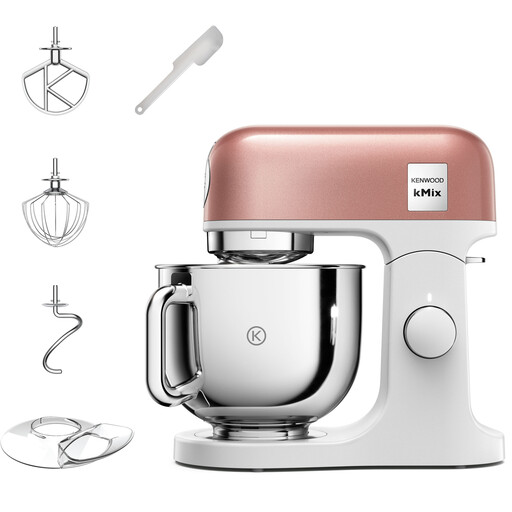
Consider this for occasional cottage baking when storage and carrying matter. The title specifies a 4.3 L bowl, 1000 W rating and three bowl tools; check that its dough limit suits your recipe before buying.
 No image available
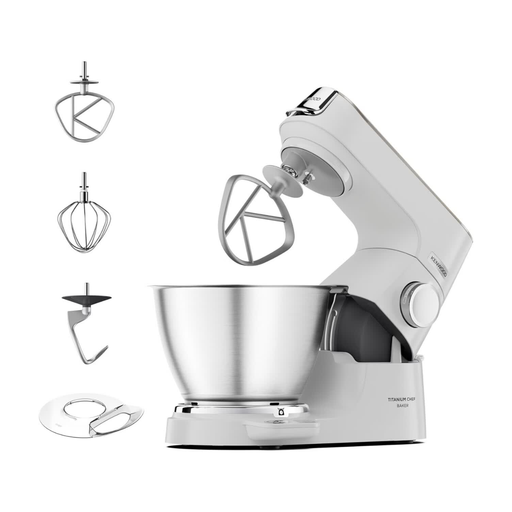
This model is worth considering if you want to knead bread and use the mixer for other baking, but plan where to keep it and how to carry it. Check the exact dough limit, operating instructions and electrical rating against your intended use.
 No image available
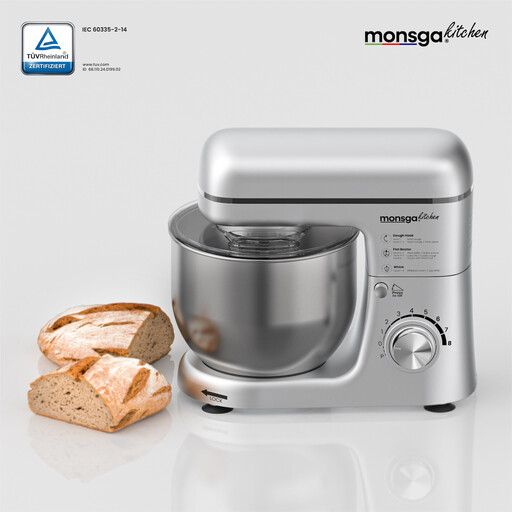
Consider this if bread is one of several baking tasks and the mixer can stay in a suitable space rather than travel frequently. Check its exact dough capacity against your normal batch and allow for carrying it to the cottage.
 No image available
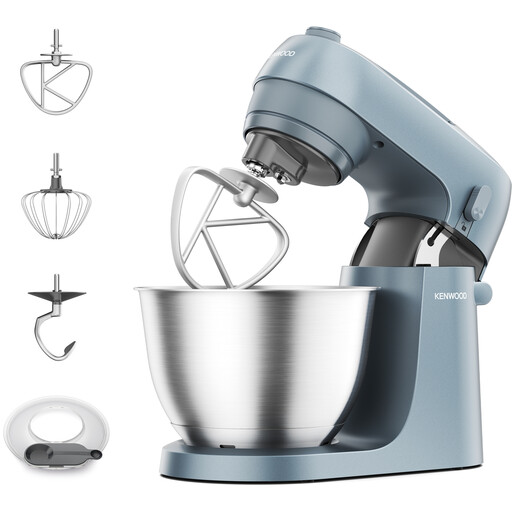
This is an option to examine if the mixer will stay at the cottage and you want a dough hook plus tools for other tasks. The title specifies eight speed settings, a whisk and a splash guard; confirm the model’s dough limit and appliance dimensions before deciding whether it fits your batch and kitchen.
 No image available
Consider this model when worktop and cupboard space are priorities. Before planning a bread batch around it, confirm its stated maximum dough quantity and follow the model’s kneading instructions.
Choose by the exact model’s stated bread- or dough-capacity and your usual batch, not bowl litres alone. Bosch lists a 1.3 kg bread-dough limit for Series 2; Kenwood lists dough limits of 2.18 kg for Chef KVC3100W and 2.42 kg for Chef XL KVL4100W. Check which kind of dough each figure describes before comparing it with your recipe.
No: follow the instructions for your exact model. KitchenAid warns users not to exceed speed 2 when kneading with its dough hooks, but that instruction should not be applied to another brand without checking its manual.
Check the appliance rating label and the condition of its cable, plug and intended socket. Electrical Safety First states that the UK supply is 230 V at 50 Hz and that a plug adaptor does not convert voltage or frequency; avoid overloading an extension lead or socket.
No: check the coverage and conditions for the exact model. Bosch advertises a 10-year motor-and-housing warranty for Series 6, while KitchenAid advertises a five-year guarantee for its 5KSM70SHX; the stated periods do not, by themselves, establish which repairs are covered.