Small-cottage practical cooks
Owners fitting out a compact kitchen or adding an occasional cooking position who need a manageable number of zones and an installation route that suits the property.


A plug-in two-zone hob suits a small cottage where the socket and circuit are suitable and cooking several dishes at once is less important; a four-zone 60 cm hob gives guests more space for ordinary meals. Consider a wider bridge-zone hob for large pans and group cooking only if the kitchen and electrical installation can accommodate it. For slowly cooked onions, adjustable lower settings and a compatible pan matter more to the choice than a Boost feature.
Owners fitting out a compact kitchen or adding an occasional cooking position who need a manageable number of zones and an installation route that suits the property.
Owners expecting guests to cook several dishes at once or use wide pans, for whom four zones and the available worktop space deserve closer attention.
Owners who want guests to find lower heat settings and longer-cook controls easy to use when making dishes such as caramelised onions.
Start with the cottage’s worktop and electrical provision, then choose enough cooking space for guests’ usual meals. Check the controls with a slow onion cook in mind rather than choosing by maximum power alone.
Consider it when: The kitchen is small, guests seldom need several pans at once, and the intended socket and circuit are suitable.
Trade-off: Two zones leave less room for other dishes while onions occupy one pan. IKEA specifies its plug-in LAGAN example at 2,800W and 13A.
Consider it when: The cottage needs a main hob for several pans and has space for the exact model’s required opening.
Trade-off: Connection requirements vary by model; a 60 cm label does not establish that an existing cut-out or electrical supply will fit.
Consider it when: Group meals and wide cookware make a combined cooking area useful.
Trade-off: A wider built-in model needs its own space and electrical assessment. AEG specifies a 750 × 490 mm cut-out and hardwired connection for the IKX84443CB.
| Concern | What to check | Who this matters to |
|---|---|---|
| Electrical connection and fit | Check the exact model’s connection rating and installation sheet against the intended circuit, worktop opening and cabinet. | If the kitchen may need a different connection or worktop opening, I want to settle that before choosing a hob; around 33% of consumers put installation and fit first. |
| Space for pans | Count the zones and compare their usable sizes with the cottage’s pans; check for a bridge area if wide cookware is supplied. | When onions occupy one pan during a family meal, I still need room to cook the other dishes. About 25% of consumers make multi-pan capacity their primary concern. |
| Control during slow cooking | Look for clear power adjustment and, if useful, a timer or pause control; consult the manual before relying on a frying sensor. | For onions that need attention over a longer cook, I want guests to be able to adjust the setting without relying on Boost; roughly 25% of consumers put lower-heat control first. |
| Guest use and upkeep | Check the model’s lock, residual-heat information and cleaning instructions, then plan simple guidance for guests. | With different guests using the kitchen, I need controls and care instructions they can follow easily; around 17% of consumers prioritise straightforward use and upkeep. |
A 60 cm or 80 cm label does not establish the required worktop opening, cabinet clearances or connection. AEG specifies a 750 × 490 mm cut-out and hardwired connection for its 80 cm IKX84443CB.
Measure the existing opening and compare it with the exact installation sheet; seek electrical advice before ordering a built-in replacement.
A mismatched opening may require worktop alteration, while an unsuitable electrical supply may require installation work.
Boost is intended for a rapid increase in power. Slowly cooking onions instead calls for a suitable pan and controls that make lower settings easy to adjust.
Prioritise an understandable power control; check whether the model’s timer or pause function would help guests manage a longer cook.
Induction needs magnetic-base cookware, so an otherwise suitable hob may not work with the pans already supplied to guests.
Check the commonly used pans with a magnet before changing the hob, and replace or clearly identify any unsuitable pans.
Replacing incompatible cookware may be part of preparing the kitchen for guests.
Locks and residual-heat indicators can help guests use a hob, but they do not replace the property’s wider fire-safety arrangements. Home Office guidance for small paying guest accommodation includes fire-risk assessment.
Keep the appliance instructions accessible, give guests concise cooking guidance and review relevant fire-risk arrangements when changing the kitchen appliance.
IKEA’s LAGAN provides a compact plug-in, two-zone point of reference.
Bosch’s PWP611BB5B is a four-zone, 60 cm main-hob example.
AEG’s IKX84443CB illustrates the wider built-in route for large cookware.
NEFF’s T66FHX4L0 is a reference for flex zones and sensor-led frying controls.
Hotpoint’s HTX8017DCF2 is a wider-hob reference for temperature-control and guest-facing features.
These choices cover four-zone built-in hobs for everyday cottage cooking, including a wider model with a bridge area. Compare each model’s installation requirements with the cottage before deciding whether its cooking space suits guests.
 Image unavailable
Consider this built-in hob where a 60 cm main cooking position suits the cottage.
The product name specifies a hardwired connection; check the required opening and electrical supply against the model’s installation instructions. Make sure the cottage has magnetic-base pans.
 Image unavailable
Four zones may suit a cottage where guests cook other dishes while onions occupy one pan.
The product name identifies a 60 cm built-in model. Check its installation instructions and the cottage’s electrical provision before ordering, and confirm that the supplied pans have magnetic bases.
 Image unavailable
This four-zone format is relevant when guests need space for several pans during an ordinary meal.
Compare the exact model’s opening and connection instructions with the cottage kitchen, and check that its everyday pans are induction-compatible.
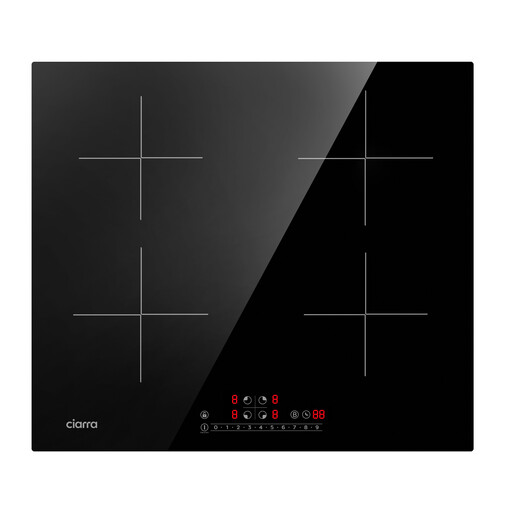 Image unavailable
Consider the adjustable settings if guests need to turn down the heat during a longer onion cook while using other zones.
The product name specifies a built-in black ceramic-glass hob, touch controls, four zones and a Booster function. Confirm the connection instructions, required opening and suitability of the cottage’s pans.
 Image unavailable
The flexible bridge is worth considering if the cottage supplies wide cookware and guests regularly cook several dishes.
The product name specifies four zones, a 77 cm format, touch controls and Boost mode. Check the worktop opening and electrical requirements before choosing this wider built-in hob; the bridge does not replace the need for suitable heat adjustment when cooking onions.
Only pans with a suitable magnetic base will work. IKEA advises checking uncertain cookware with a magnet, so test the pans guests use most often before changing the hob.
No: the connection, electrical load and required worktop opening must suit the exact model and property. Electrical Safety First notes that electrical-installation requirements differ across England and Wales, Scotland and Northern Ireland; obtain appropriate electrical advice for fixed installation work in the cottage’s location.
A bridge zone helps accommodate suitable larger cookware, but does not by itself improve a slow onion cook. AEG describes its bridge function as combining two zones; for onions, also check that the pan works with induction and that guests can adjust the heat comfortably.
Review the property’s relevant cooking instructions and fire-risk arrangements alongside the appliance change. Home Office guidance for small paying guest accommodation includes fire-risk assessment; the arrangements needed depend on the property and applicable location.
Follow the exact model’s cooling and cleaning instructions. For its LAGAN hob, IKEA advises a cloth, warm water and mild detergent, and cautions against scouring powder, steel wool and hard or sharp tools.