
24/7 Customer Support

Free returns

Same-day & Next-day Delivery

Quality Guaranteed

Unlock Your Welcome Offers: FREE Delivery | Up to 80% OFF | Free 30-day JoyPlus trial
Download the APP
Cotton candy—also known as candy floss in the UK—is a colourful, ready-to-eat sweet associated with fairgrounds, fêtes and family celebrations. Today, sealed bags and individually wrapped formats make it easier to enjoy at home, add to party bags or serve at birthdays without hiring a candy-floss machine.
However, product photos can make different options appear more similar than they are. Before you buy cotton candy online, check the actual net weight, packaging format, ingredients and intended use. These details have a greater effect on value and convenience than colourful branding alone.
Cotton candy has a large visual volume but relatively little weight. A 10g bag may look generous in a product photograph, while a 60g or 71g bag is more suitable for sharing or repeated serving. Always compare net quantity, not the size of the image or outer packaging.
Multipacks can also be misleading if you do not calculate the total weight. Three 10g portions provide 30g in total, whereas a single 60g bag contains twice as much sweet by weight.
Cotton candy absorbs moisture from the air. Once exposed, it can shrink, become sticky or lose its soft texture. Airtight or moisture-resistant packaging helps before opening, but it does not prevent deterioration indefinitely.
Check the best-before date, keep unopened packs in a cool, dry cupboard and avoid storing them near kettles, radiators or steamy kitchens. Opened ready-to-eat sweets are generally best consumed promptly, particularly smaller Korean cotton candy portions.
Bright rainbow cotton candy may contain several artificial colours, while flavoured cotton candy can include flavourings that differ from the name shown on the front. Read the ingredients list rather than relying only on descriptions such as strawberry cotton candy or watermelon cotton candy.
Some products list milk or soya, or warn that they are made in facilities handling wheat, milk or soya. Cotton candy is also a high-sugar confectionery product. Follow the pack’s age guidance: the supplied products are not suitable for children under three because of choking risks. Young children should be supervised while eating.
Choose according to how the sweet will be used:
A larger bag is not automatically better value if it will be opened and left in a humid room. For children’s parties, individual packs may reduce waste even when the cost per gram is higher.
Look for wording such as airtight, moisture-proof, sealed or stay-fresh bag. These features address cotton candy’s main weakness: moisture absorption. They do not change the sugar content or make the product suitable for prolonged storage after opening.
For the best texture, store packs away from direct sunlight and heat. Do not refrigerate products unless the packaging specifically instructs you to do so, as condensation can affect the texture.
Cotton candy is usually made primarily from sugar, syrup and flavouring. Several supplied products provide nutrition of approximately 398–400 kcal and around 99–100g of sugar per 100g. This makes portion size important, particularly for children.
Check:
Avoid making assumptions based on terms such as “fat-free”, “with vitamin C” or “lighter”. These descriptions do not make a sugary treat a substitute for a balanced snack.
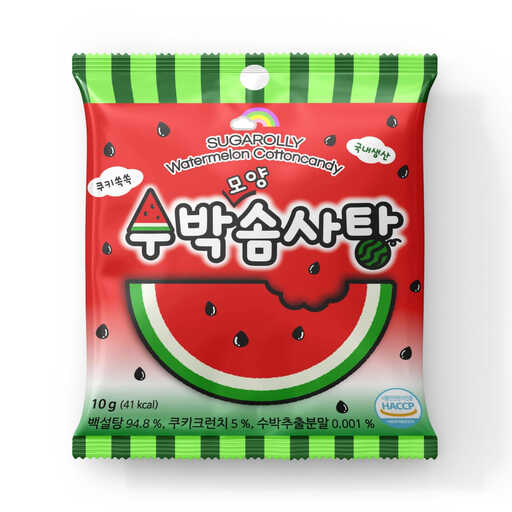
Why This Fits Their Persona: A small, single-serving format suits shoppers trying flavoured cotton candy for the first time or buying a few treats for a casual family occasion.
The 10g net quantity is clearly stated, reducing the risk of mistaking a small portion for a large sharing bag. Open immediately for the intended texture.
Watermelon flavour, ready-to-eat use and no listed allergens. The pack advises cool, dry storage and immediate consumption after opening.

Why This Fits Their Persona: The larger bag and mixed pink, orange and green presentation work well for shoppers wanting a more substantial fairground sweets experience at home.
The 60g weight is suitable for sharing, while the stay-fresh bag addresses the common problem of cotton candy losing its fluffy texture before serving.
Rainbow sherbet flavour combines strawberry, orange and lemon-lime notes. The listing identifies milk and soya allergens.
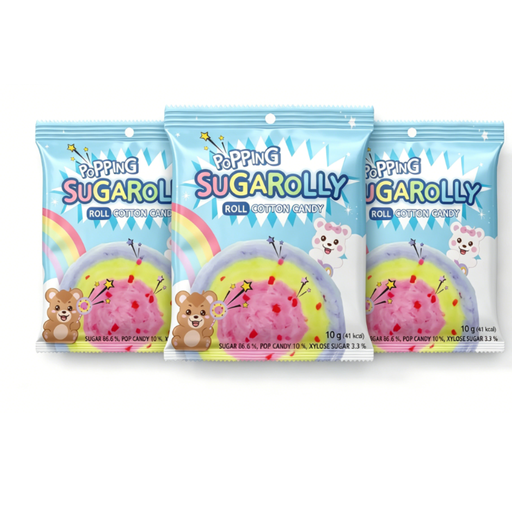
Why This Fits Their Persona: The three individually wrapped rolls are designed for party bags, celebrations and shoppers seeking a Korean-style sweet with more than a standard fluffy texture.
Individual moisture-resistant packs help prevent the whole multipack being exposed to air at once. The ingredient list also identifies the popping beads and colourings.
Rainbow layers include strawberry, lemon, soda, green apple and grape flavours. The product is ready to eat and listed with no allergens.
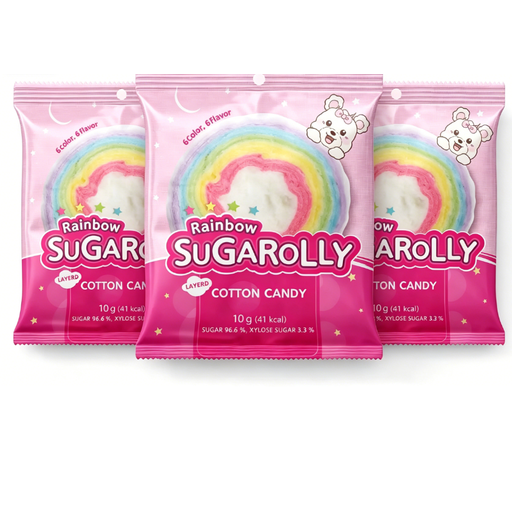
Why This Fits Their Persona: Three colourful, individually sealed portions are convenient for children’s parties, goodie bags and themed celebrations where presentation matters.
The listing specifies individual airtight foil bags and a 10–12g portion size, making the quantity and storage format easier to assess before purchase.
Five listed flavour profiles include strawberry, lemon, green apple, lime and grape. The product is sealed for distribution and displays layered colours.
We have compiled a complete, real-time list of products that fully satisfy these strict selection criteria and UK safety regulations.
Yes. “Cotton candy” is the term commonly used in the United States and on many imported products, while “candy floss” is widely used in the United Kingdom. Both refer to spun sugar with a light, airy texture.
Unopened cotton candy can retain its texture until the best-before date when stored in a cool, dry place. The exact period depends on the product and packaging. Once opened, moisture can cause it to collapse or harden, so consume it promptly.
Individually wrapped sweets or a cotton candy multipack are generally easier to distribute than one large bag. They help keep portions sealed until serving, but parents should still check ingredients, allergen information and the under-three safety warning before buying.