Occasional pillowcase pressers
If you press only a few items before putting the iron away, an integrated-tank steam iron keeps storage straightforward. Which? describes conventional steam irons as more compact than steam generators.


For a shared house pressing a few cotton pillowcases at a time, a conventional steam iron is usually the more practical choice: it takes less storage space than a steam generator, according to Which?. Look for a suitable cotton setting and consider auto shut-off for shared use, while still unplugging the iron after use. A steam generator is worth considering when the household regularly presses larger batches and has room for its separate base.
If you press only a few items before putting the iron away, an integrated-tank steam iron keeps storage straightforward. Which? describes conventional steam irons as more compact than steam generators.
If several people regularly press bedding, compare tank capacity, stated continuous steam and cord length alongside the space needed to use and store the iron.
For an appliance passed between users, agree who will unplug it, check its cable and follow the model’s cleaning instructions. Electrical Safety First advises unplugging irons when they are not in use.
Start with how many pillowcases the household presses at once; then check the iron’s controls, safe-use features and upkeep requirements against that routine.
| Concern | What to check | Who this matters to |
|---|---|---|
| Safe shared use | Check for a UK three-pin plug, the specified fuse, a stable rest and auto shut-off. Inspect the plug, lead and casing before use; auto shut-off does not replace unplugging. | If several housemates use the iron, I want a clear routine for putting it down, unplugging it and spotting damage before the next turn. Around 36% of consumers put safe shared use first. |
| Cotton creases | Check the pillowcase care label and the model’s cotton setting or stated suitability for ironable fabrics. Compare continuous steam with the separate, intermittent steam-boost figure. | When I press folded cotton pillowcases, I want to know the iron has an appropriate setting rather than choosing by its wattage alone. For around 29% of consumers, handling cotton creases is the main priority. |
| Refills and scale care | Compare tank capacity for longer sessions and read the exact model’s water and cleaning instructions. A scale-care feature still needs the maintenance described in its manual. | If our household presses several bedding items in one session, I would rather pause less often to refill and know who will clean the iron. Around 21% of consumers primarily care about refills and scale upkeep. |
| Storage and handover | Check cupboard space, cord length and whether every intended user can understand the controls. Allow the soleplate to cool before storage. | With limited shared storage, I need an iron that can be put away safely and handed over without complicated controls. Compact storage and simple handover come first for around 14% of consumers. |
Which? distinguishes the compact integrated tank of a conventional steam iron from a generator’s separate tank. That extra base can be awkward in a shared house with limited storage.
Consider a generator when the household regularly presses sizeable bedding or laundry batches and has a suitable place for the base.
The separate base takes up storage space even between ironing sessions.
A steam boost is an intermittent burst, not the continuous steam available throughout a longer session. Manufacturer figures describe different specifications, not a like-for-like pressing test.
Compare continuous steam and boost separately, then check the model’s temperature controls, tank and care instructions.
Philips says scale develops faster in harder water, while Morphy Richards advises following the particular model’s instructions for water and descaling.
Keep the manual accessible to housemates and agree who will empty and clean the iron. Use cleaning products only if that model’s instructions permit them.
Auto shut-off cannot make a damaged lead or plug safe, or replace care while an iron is cooling.
Electrical Safety First advises unplugging irons when not in use. Check the plug and cable, and stop using an iron with exposed wires or a broken casing.
The Power Steam Ultra 20630-56 is a conventional steam iron to consider for cotton pressing and shared-house upkeep.
The Ultimate Pure FV9845G0 is a conventional iron with a 350 ml tank and scale-management features, rather than a steam generator.
The Azur 8000 DST8050/26 offers an automatic-temperature approach for a household also ironing other suitable fabrics.
The Crystal Clear conventional iron and Speed Steam generator illustrate choices for different batch sizes, not interchangeable formats.
These choices include conventional steam irons for smaller pillowcase sessions and steam generators to consider for regular, larger batches. Check the exact model’s safety features, care instructions and UK plug and fuse before buying.
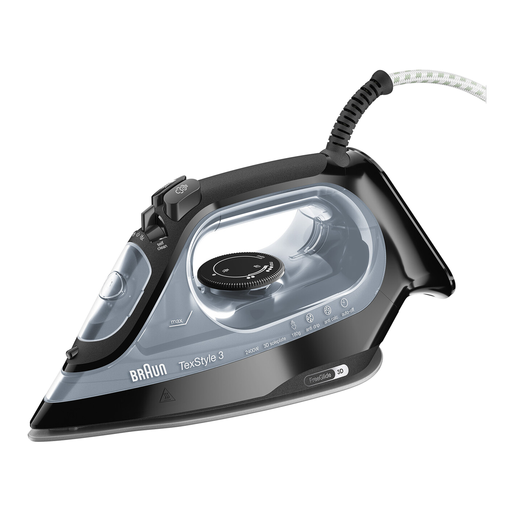 No image available
A conventional steam iron to consider when a shared house presses a few pillowcases at a time.
The listed variant is blue and names 2600 W power, a FreeGlide 3D EloxalPlus soleplate and a precision tip. Confirm its UK plug and supplied fuse rating before use.
 No image available
Consider this generator if housemates regularly press larger batches and have space for a separate base.
The listed black-and-purple variant names 2800 W power and a 1.8 L water tank. Confirm its UK plug and supplied fuse rating before use.
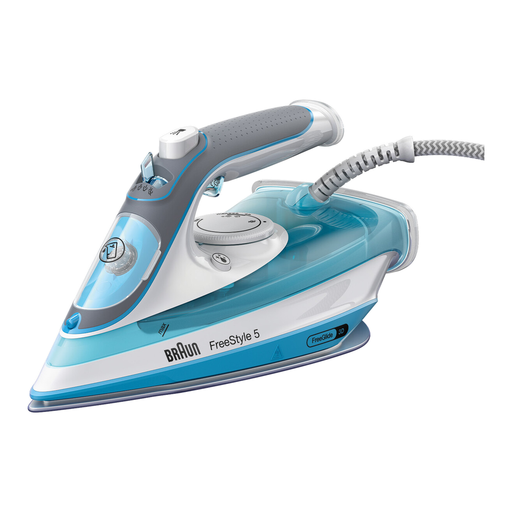 No image available
This conventional iron is another format to consider for occasional pillowcase pressing without a generator base.
The listed blue variant names 2600 W power, a SuperCeramic soleplate, FreeGlide 3D and anti-drip. If auto shut-off or a particular scale-care feature matters to your household, confirm it for this exact model; also check its UK plug and supplied fuse rating.
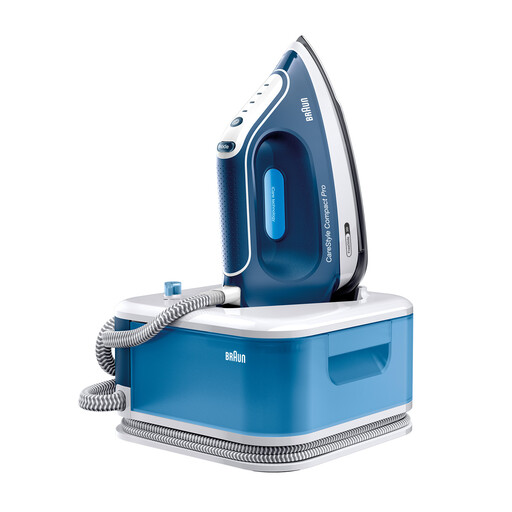 No image available
This generator format makes more sense for repeated, longer sessions than for a few occasional pillowcases, provided the base has suitable storage space.
The listed blue variant names a 1.5 L tank, 7.5 bar pressure, FreeGlide 3D and iCare technology. Confirm auto shut-off, scale-care instructions and the UK plug and supplied fuse rating for this model.
A conventional steam iron is usually enough for a few pillowcases at a time. Which? notes that its integrated-tank format is more compact than a steam generator; consider a generator instead for regular large batches when there is room for its separate base.
Check each pillowcase’s care label first, then choose a suitable setting on a variable-temperature iron. An automatic-temperature model is an alternative only where its manufacturer states that the fabric is suitable; do not iron an item labelled non-ironable.
Follow the exact model’s instructions for water type, cleaning method and frequency, and agree who will do the cleaning. Philips says harder water accelerates scale development, while Morphy Richards advises following model-specific descaling instructions.
Check for a UK three-pin plug and the manufacturer-specified fuse, and inspect the plug, cable and socket for damage before use. Electrical Safety First identifies irons as typical 13 A-fuse appliances and advises keeping them unplugged when not in use; do not change the supplied fuse rating without checking the model’s instructions.
No. Auto shut-off responds to inactivity, but it does not replace unplugging the iron when it is not in use or checking that it can cool safely away from anything flammable.