Weekly cotton-shirt pressers
If work, school or formal shirts need regular pressing, look for control around collars, seams, cuffs and buttons as well as ongoing steam for the rest of the shirt.


For regular cotton-shirt pressing in a family home, start with a conventional steam iron that you can manoeuvre around collars, cuffs and buttons. A steam-generator iron is worth considering for frequent large batches if you have room for its separate base; a handheld steamer is better kept for quick refreshes than used as the main tool for a sharply pressed shirt. Whatever you choose, follow each garment’s care label when setting the heat.
If work, school or formal shirts need regular pressing, look for control around collars, seams, cuffs and buttons as well as ongoing steam for the rest of the shirt.
If you iron sizeable loads in one session, a steam generator’s separate water tank may be more useful than the smaller storage footprint of a conventional iron. Which? describes this distinction between the two formats.
If cotton shirts share an ironing session with other fabrics, decide whether manual controls or a model-specific temperature-managed setting suits your routine. Check the care label on every garment either way.
Choose when: Shirt pressing is regular but sessions are moderate, and you want a compact iron to guide around shirt details.
Allow for: Its onboard tank may mean more refills during a large family load.
Choose when: You regularly press large batches and a separate tank would suit your routine.
Allow for: The separate base needs storage and working space. Which? notes that generators use a separate water tank, while standard irons are more compact.
Choose when: You want a supplementary way to refresh a hanging shirt quickly.
Allow for: Philips says a steamer does not give the same result as an iron, particularly on thick cotton or linen shirts.
Once you have chosen a format, compare the controls and upkeep of exact models. The concerns below reflect different primary needs among consumers shopping for a family-home cotton-shirt routine.
| Concern | What to check | Who this matters to |
|---|---|---|
| Shirt details and creases | Compare continuous steam separately from the short steam boost, and check the tip and soleplate on the exact model. | If I press collars, cuffs and button areas every week, control over those details matters more to me than finishing a large load quickly; around 36% of consumers put shirt-detail pressing first. |
| Large family batches | Check tank capacity, the refilling arrangement and the space needed for the appliance and any separate base. | When several shirts and other garments need pressing in one session, I want fewer interruptions without giving up too much space; roughly 29% of consumers prioritise batch ironing. |
| Mixed-fabric settings | Check the controls or the exact model’s temperature-managed setting against the garments you iron; use each care label to set the permitted heat. | If my load mixes cotton shirts with other fabrics, I would rather make fewer setting changes while still following their labels. Around 21% of consumers place that simplicity first. |
| Upkeep and safety | Read the model manual for water and descaling instructions; check the supplied plug, applicable marking and seller. | I want to know how to maintain a mains appliance and make the relevant safety checks before relying on it regularly; about 14% of consumers make upkeep and safety their primary concern. |
A steamer can refresh a hanging shirt, but Philips says it will not give the same result as an iron, especially on thick cotton or linen.
For a sharply pressed cotton shirt, choose a conventional or steam-generator iron; consider a steamer only as a supplementary tool.
A boost is a short burst, not the steam delivered continuously while you work through a shirt.
Compare continuous-steam output and tank capacity alongside the boost figure, using specifications for the exact models.
Water and cleaning instructions vary by model. Morphy Richards advises against putting vinegar or descaling chemicals in the tank unless the manual specifically instructs you to do so.
Read the exact model’s manual before filling or cleaning it, and follow its water and maintenance instructions.
An iron is a mains appliance, so reviews do not replace checks on the seller and the product supplied.
Electrical Safety First advises checking for a standard UK 3-pin plug and fuse. Confirm the marking applicable to your UK region, inspect the plug and cable, and check how to register the appliance for recall updates.
Tefal has named conventional and steam-generator models worth comparing if you are deciding between a compact iron and a separate-base appliance.
Relevant if you are comparing conventional irons with manual controls or a model-specific temperature-managed setting.
Its UK range gives shoppers conventional, cordless and steam-generator formats to consider.
These steam-generator irons are options for households that regularly press larger family loads and have room for a separate base. Compare their stated tank capacities and model-specific features with the space and shirt-pressing routine in your home.
 No image available
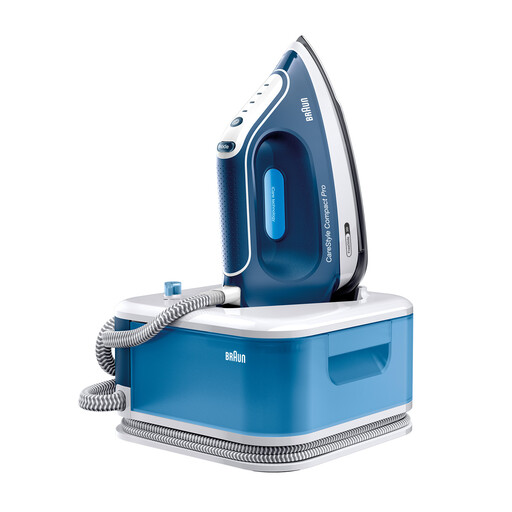
Consider this model if you press family loads in larger sessions and can accommodate a separate steam-generator base.
The product name specifies a 1.8 L water tank and 2800 W rating. Check the garment’s care label before setting the heat, and confirm the supplied plug and applicable product marking before buying.
 No image available
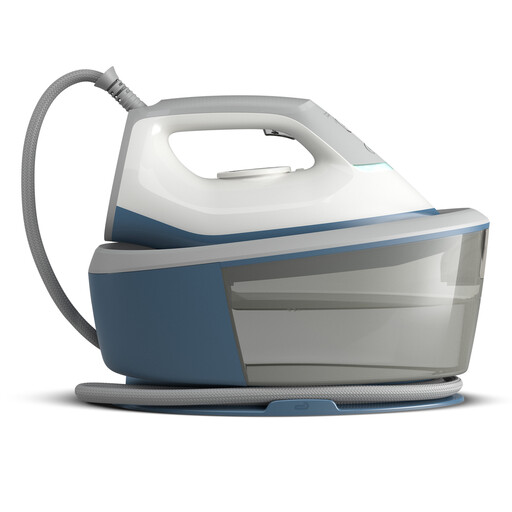
Consider this steam-generator format for longer shirt-pressing sessions if its base fits your working and storage space.
The product name specifies a 1.5 L tank and 7.5 bar pressure. Follow the exact manual’s water and maintenance instructions, and confirm the supplied plug and applicable product marking before buying.
 No image available
Consider this model for family ironing sessions where a separate-base appliance suits your space.
The product name specifies a 2400 W rating. Follow each garment’s care label when choosing a temperature, and confirm the supplied plug and applicable product marking before buying.
Choose a conventional steam iron for regular shirt pressing, or consider a steam-generator iron if you frequently tackle large batches and have room for its base. A handheld steamer suits quick refreshes, but Philips says it does not produce the same result as an iron, especially on thick cotton or linen shirts.
No. GINETEX says the garment’s care label, rather than its fibre content alone, determines the maximum ironing temperature. Check the label before selecting a setting, including on shirts with blends, trims or finishes.
Only use a water or cleaning method permitted by your exact model’s manual. Morphy Richards advises against adding vinegar, descaling chemicals or other cleaning products unless the manual specifically instructs you to do so.
Check the supplied plug, the seller and the product marking applicable where you live. Electrical Safety First advises a standard UK 3-pin plug and fuse. The Department for Business and Trade states that electrical equipment in Great Britain may use UKCA or CE marking under the current regime; Northern Ireland has a separate marking route. Read the manual, check recall information and stop using an appliance if its cable, plug or casing is damaged.