
24/7 Customer Support

Free returns

Same-day & Next-day Delivery

Quality Guaranteed

Unlock Your Welcome Offers: FREE Delivery | Up to 80% OFF | Free 30-day JoyPlus trial
Download the APP
A cough syrup can be useful when a cold leaves you with a dry throat, irritating tickle or chest congestion. However, choosing by flavour, bottle size or bold packaging alone can lead to an unsuitable purchase. The right option depends on the type of cough, the user’s age, active ingredients and how the product fits into your daily routine.
This guide explains the key checks to make before buying cough syrup in the UK, including common marketing traps and practical product comparisons.
A dry cough syrup is intended for a tickly, non-productive cough where little or no mucus is present. A chesty cough syrup or mucus cough medicine is designed for a cough producing phlegm. An expectorant such as guaifenesin is used in some formulas to help loosen mucus, whereas glycerol-based liquids are generally used to soothe an irritated throat.
Buying a mucus-focused product for a dry cough, or trying to suppress a productive cough without advice, may not match your symptoms. Start by identifying whether the cough is dry, chesty, associated with a sore throat or part of wider nasal congestion.
Non-drowsy cough medicine can be convenient during working hours, school runs or travel, but the wording does not remove age restrictions, ingredient warnings or dosage limits. Always check the label, especially if the user is pregnant, breastfeeding, managing diabetes, has allergies or takes other medicines.
For children, age suitability is particularly important. A product for adults and children aged 12 years and over must not be given to younger children unless a healthcare professional advises it.
Cough lozenges and throat lozenges offer portable, slow-dissolving comfort, but they carry a choking risk for young children. Topical products such as Vicks VapoRub are applied externally and are not a substitute for oral cough syrup. Check whether you need throat soothing, chest mucus support or relief associated with blocked noses before adding a product to your basket.
Look for the ingredients that correspond with your intended use:
Read the product leaflet rather than relying only on front-of-pack wording such as “maximum”, “fast” or “strong”.
A children’s cough syrup should state a clear minimum age and dosage. For example, the Benylin Children’s Dry Cough & Sore Throat Syrup listed here is for children aged 1 to 5 years, with a 5ml spoon supplied. Benylin Chesty Coughs products in the selection are for adults and children aged 12 years and over.
Use the supplied measuring spoon or device, follow the stated intervals and never give a double dose after a missed dose. Keep all medicines out of children’s sight and reach.
Some syrups contain sucrose, glucose, alcohol, flavourings or preservatives. Lozenges are commonly sugar-based, while some products contain ingredients such as honey, aniseed, liquorice or soy-derived sweetness enhancers. If you have an intolerance, allergy, diabetes or dietary restriction, compare the full ingredient list with your requirements.
Packaging and formulations can change, so check the label supplied with the product before use.
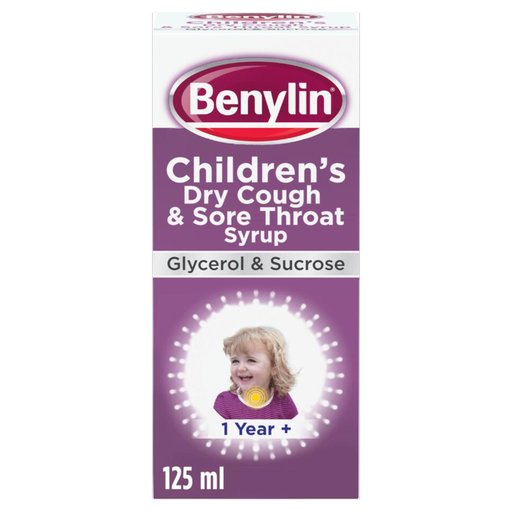
Why This Fits Their Persona: A practical choice for parents seeking one clearly age-labelled bottle for dry, tickly coughs and sore throats in children aged 1 to 5 years.
Its stated age range and supplied 5ml spoon make it easier to avoid unsuitable dosing or relying on a household teaspoon.
Blackcurrant flavour; contains glycerol and sucrose; labelled as non-drowsy.
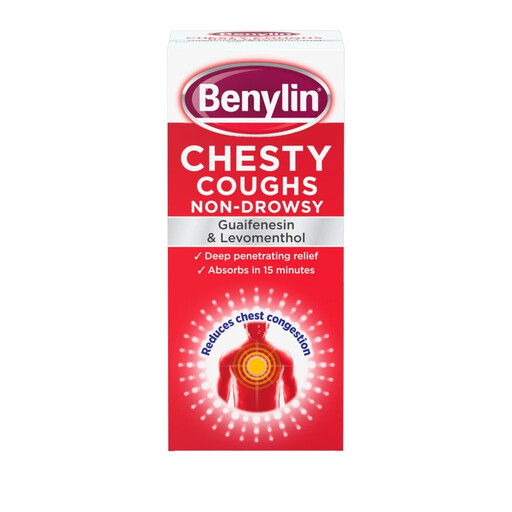
Why This Fits Their Persona: The larger 300ml format suits adults or households that prefer a fuller bottle for recurring daytime use during a cold.
The product clearly states its 12+ age limit and chesty-cough purpose, avoiding confusion with a dry cough syrup.
Contains guaifenesin and levomenthol; 300ml pack; labelled as non-drowsy.
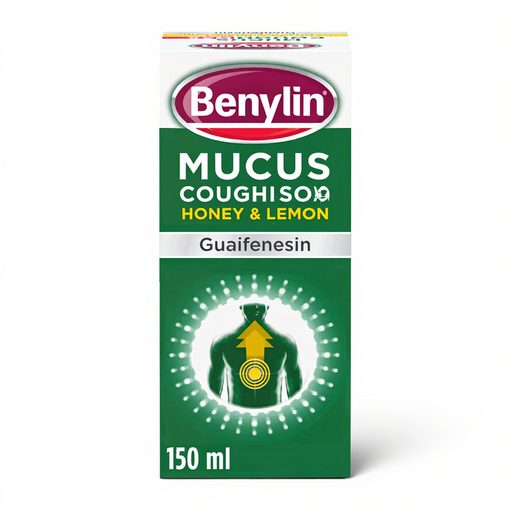
Why This Fits Their Persona: Designed for adults and adolescents aged 12 years and over who specifically need a guaifenesin-based option for a productive, mucus-producing cough.
Its stated use for productive coughs helps shoppers distinguish mucus support from throat-soothing syrup.
Contains guaifenesin; honey and lemon flavour; 150ml bottle.
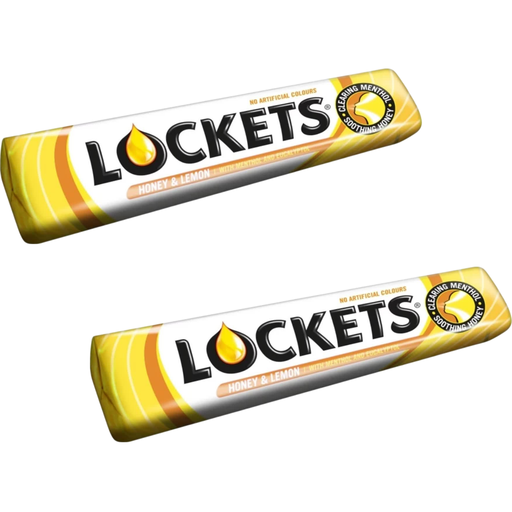
Why This Fits Their Persona: Compact packs work well for commuters, drivers and shoppers who want throat support without carrying a bottle and spoon.
The format is clearly a lozenge rather than a syrup, so shoppers can assess the separate choking and usage guidance.
Honey and lemon flavour; menthol; two compact 41g packs.
We have compiled a complete, real-time list of products that fully satisfy these strict selection criteria and UK safety regulations.
Always read the label and enclosed leaflet before taking any cough syrup. Do not exceed the stated dose or combine products with overlapping ingredients without advice from a pharmacist. Syrups containing sugar may matter for people managing diabetes or monitoring dental health.
Seek medical advice if a cough is severe, lasts longer than the period stated on the product label, repeatedly returns or is accompanied by breathing difficulty, chest pain, coughing blood, high fever, confusion or significant deterioration. For babies under one year, seek appropriate professional advice rather than giving honey-based products.
Dry cough syrup is generally aimed at soothing a tickly, irritated throat. Chesty cough syrup is intended for productive coughs involving mucus or phlegm and may contain an expectorant such as guaifenesin. Choose according to the symptom described on the label.
Not automatically. Many adult formulations are restricted to people aged 12 years and over. Use a children’s cough syrup only when the label confirms the child’s age range and follow the stated dose precisely.
Only when the packaging confirms suitability and the child can safely dissolve the lozenge without swallowing it whole. Many throat lozenges carry a choking warning for young children. Supervise use and follow the product’s age guidance.