Morning lunchbox bakers
If you bake before school or work, an accessible timer, a suitable baking mode and manageable crumb cleaning may matter more to your routine than a long list of programmes.


Choose a countertop convection oven for modest lunchbox batches if you want a plug-in appliance and have enough suitable worktop space. A built-in fan oven makes more sense when you need a permanent kitchen appliance or regularly bake larger batches; for either route, check the baking mode, usable tray area, temperature controls and cleaning access rather than judging by the number of functions alone.
If you bake before school or work, an accessible timer, a suitable baking mode and manageable crumb cleaning may matter more to your routine than a long list of programmes.
If you want a plug-in oven rather than a fitted one, measure the available worktop and check the chosen model’s clearance instructions before deciding where it will sit.
If you prepare several lunchbox portions or cook other dishes at the same time, compare usable tray space and the number of baking levels rather than choosing by external size alone.
Choose it when: You want a plug-in appliance for modest batches and can provide the worktop space and clearance specified for the model.
Trade-off: Even a countertop model can occupy considerable worktop depth, while its stated litres do not tell you how many twists fit on a tray.
Choose it when: You need a permanent fitted appliance or regularly prepare larger batches alongside other cooking.
Trade-off: The oven must suit the kitchen’s installation space; a larger cavity figure alone does not establish usable pastry-tray area.
| Concern | What to check | Who this matters to |
|---|---|---|
| Consistent browning | Confirm a Bake, fan or convection mode and look for independent oven-performance tests of the model where available. | If I want a tray of twists to colour consistently, I need more than a list of cooking programmes to guide my choice. Around 33% of consumers put consistent browning first. |
| Morning preparation | Check how the timer works, what a preheat claim compares and whether the crumb tray is easy to remove. | When I bake before leaving home, I want controls I can use readily and pastry flakes I can clear away afterwards. Morning preparation is the main concern for around 33% of consumers. |
| Batch space | Compare rack and tray dimensions, plus the baking levels usable with your chosen mode. | For several lunchboxes, I need to know whether my planned twists will fit without assuming that cavity litres equal flat tray space. Around 25% of consumers prioritise batch space. |
| Worktop fit | Measure the intended location against the appliance dimensions and its model-specific clearance instructions. | If worktop space is tight, I need an oven I can place with the required room around it, even if that limits my batch size. Worktop fit comes first for around 9% of consumers. |
Cavity volume does not show the flat area available for pastry twists. A countertop oven, combination microwave and built-in oven can have very different rack arrangements.
Check internal rack width and depth, supplied tray dimensions and the levels available in Bake or fan mode before planning a batch.
Ninja’s DT200UK speed claim uses a stated test with sausages and fish fingers, while Russell Hobbs’ cited comparisons use other foods or preheating conditions. Neither establishes a cooking time or energy result for homemade pastry twists.
Read the comparison conditions, then follow your pastry recipe and supervise the first batch to establish a suitable setting for your oven.
The Russell Hobbs 26680 manual calls for 150 mm of space around that model for heat flow and regular crumb-tray cleaning. Its surfaces remain hot after use.
Check the instructions for your chosen oven, use a stable heat-resistant surface and let the appliance cool before cleaning away pastry flakes.
External dimensions do not establish cabinet compatibility. Candy specifies an installation niche of 585 × 560 × 560 mm for the FIDC X403, which must be checked against the intended space and its installation instructions.
Measure the existing niche and consult the installation document for the exact model before ordering.
A mismatch may mean cabinet alterations or additional installation work.
These model examples illustrate different oven formats; compare the specifications of the appliance you intend to buy rather than treating a brand name as a baking result.
The Foodi DT200UK is a larger countertop option for households considering two-level cooking.
The 26680 is a 20-litre countertop mini oven with Bake, Air Fry, Grill, Toast and Keep Warm settings.
The FIDC X403 is a built-in fan oven for a fitted-kitchen purchase.
The HHF113BR0B is a built-in model for buyers considering a permanent oven with multi-level cooking features.
These choices include a countertop air-fryer oven and two built-in ovens relevant to lunchbox baking. Compare tray space and the placement or installation requirements for the format you prefer.
 Image unavailable
Consider this built-in double oven if you need a permanent kitchen appliance rather than a countertop addition.
Check the required housing dimensions and supplied tray sizes against your kitchen and planned pastry batches.
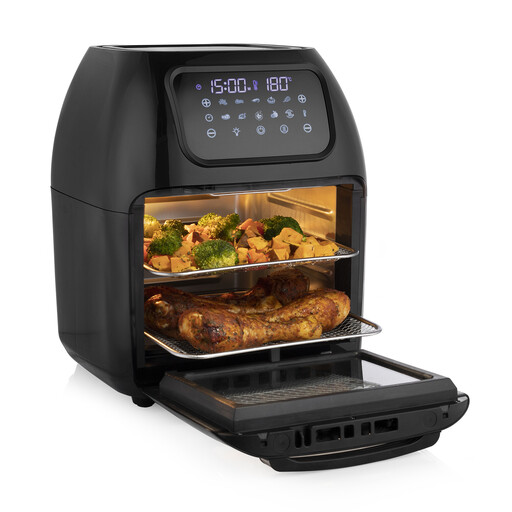 Image unavailable
For countertop lunchbox baking, check whether its usable tray layout accommodates the twists you plan to make.
The product name specifies 1800 W, touch-screen controls, 10 programmes, dishwasher-safe parts and a non-stick coating. Check the model’s worktop-clearance instructions before choosing a location.
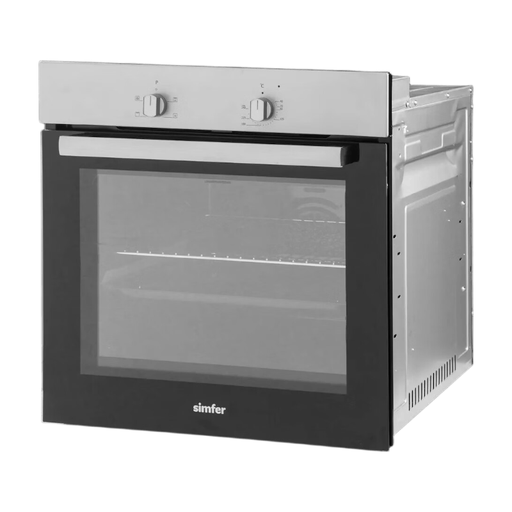 Image unavailable
This built-in fan oven is a route to consider if you are fitting a permanent kitchen appliance for regular baking.
Check its installation-niche requirements, usable tray dimensions and temperature and timer controls against your kitchen and pastry routine.
No: check for a Bake, fan or convection mode suitable for the recipe rather than requiring an air-fry setting. Crisping and speed claims depend on the model and test conditions, so monitor the first batch.
Follow the chosen model’s manual rather than a single clearance rule for every oven. For example, Russell Hobbs instructs users to leave 150 mm around its 26680 model for heat flow and to place it on a stable, level, heat-resistant surface.
It can be a practical choice for modest batches if its tray fits your twists and you can meet its worktop and clearance requirements. If you also need a permanent fitted appliance or regularly bake larger batches, compare built-in ovens’ tray layouts and installation requirements instead.
Check the filling’s ingredients and the recipe’s handling and storage instructions, particularly if the twists need chilling. The Food Standards Agency identifies cooking and chilling as important food-safety practices; the appropriate handling depends on what is inside the twists and how the lunchbox will be stored.