Small breakfast loads
If you wash only a few bowls, mugs and pieces of cutlery at a time, check whether a compact chamber holds your actual items and whether its short programme is intended for lightly soiled dishes.


For a few lightly soiled breakfast bowls and no convenient permanent water connection, start by considering a tank-fed countertop dishwasher, provided your bowls fit and you have a workable filling and drainage routine. If you usually combine breakfast items with mugs, plates and cutlery, a six-place-setting tabletop model may suit the larger load; measure your worktop and compare the exact models’ programmes and installation requirements before choosing.
If you wash only a few bowls, mugs and pieces of cutlery at a time, check whether a compact chamber holds your actual items and whether its short programme is intended for lightly soiled dishes.
A manually filled tank may suit a rented home or a kitchen where adding a water connection is impractical. You still need to plan drainage, access to a mains socket and enough clearance around the appliance.
If breakfast bowls normally wait alongside plates, mugs and cutlery, compare six-place-setting models as well as smaller tank-fed machines. The stated capacity is a starting point, not proof that every bowl will fit the rack.
Decide whether you want to clear a few bowls straight away or combine them with other crockery, then check how the dishwasher will be filled, drained and accommodated on your worktop.
| Concern | What to check | Who this matters to |
|---|---|---|
| Fit for the breakfast load | Measure your widest and tallest bowl; compare its dimensions with the exact rack layout and usable clearance, not just place settings. | If I wash a few deep bowls each morning, I need them to fit without crowding the rack. For around 36% of consumers, fitting the usual load would be the primary concern. |
| Water supply and placement | Check tank or tap-filling options, the drain route, mains socket and door-opening clearance. | When I cannot add a permanent water connection, I need a filling and drainage routine that works in my kitchen. Avoiding permanent plumbing would come first for roughly 29% of consumers. |
| Programme and resource use | Check which cycle suits lightly soiled bowls; compare duration, energy and water figures for the same named programme. | I want to clear a lightly soiled load when it is useful to me, without assuming the quick and Eco cycles take the same time. Around 21% of consumers would prioritise programme timing and per-cycle figures. |
| Drying, noise and upkeep | Check the exact model’s drying method, stated noise and any water-softener maintenance. | If the machine sits near my living space, I care about its noise and whether bowls are ready to put away. These everyday-use details would lead the decision for approximately 14% of consumers. |
Place settings describe capacity broadly, but deep bowls and wide rims can be awkward even where a specification lists a maximum dish diameter.
Measure the widest and tallest bowl you regularly use, then check the exact model’s rack clearance and loading guidance.
A built-in tank avoids a permanent water feed, but it still needs filling and a suitable drainage arrangement. Worktop clearance and access to a mains socket also matter.
Check the manual’s fill and drain instructions, hose route and door clearance before deciding where the machine will sit.
Rapid programmes are intended for lightly soiled dishes. A bowl with dried-on food may need a different programme.
Match the exact appliance’s programme guidance to your usual breakfast residue, and check the duration of the cycle you expect to use.
The European Commission’s dishwasher label includes Eco-programme energy use, duration, water use, capacity and noise. A class alone does not show how long your chosen cycle takes.
Compare figures for the same named programme on the exact models you are considering.
The R09 represents a tank-fed option for small loads without a permanent water connection.
The EQDWTTGF is a small tank-equipped model to consider when the regular load is only a few breakfast items.
The SKS62E32EU is a compact-appliance specification benchmark rather than a current purchase suggestion.
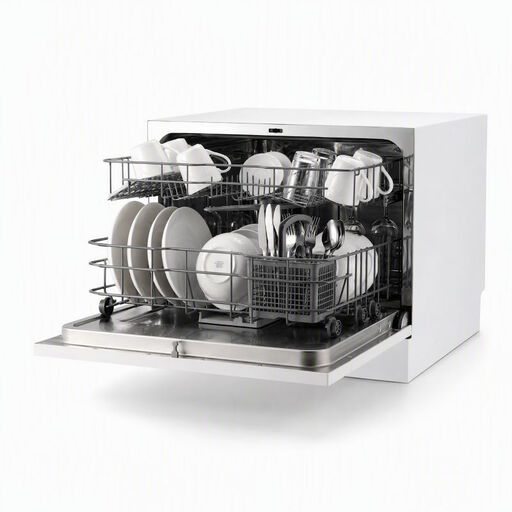
This six-place-setting tabletop option is relevant if breakfast bowls usually go in with other crockery. Check bowl fit and the required water and drainage setup for your kitchen before choosing it.
 No image available
Consider this model if you plan to combine breakfast bowls with mugs, plates and cutlery rather than wash only a few items at once.
The Joybuy listing states six standard place settings and a 30-minute quick wash. Check the programme guidance for your usual soil level, as well as bowl clearance, appliance dimensions, water supply and drainage requirements.
A tank does not guarantee that your bowls will fit. HAVA lists dishes up to 26 cm for the R09, and Appliances Direct gives the same dish-size figure for the electriQ EQDWTTGF, but bowl depth, rim shape and rack layout also matter. Measure your largest regular bowl and check the exact model’s loading guidance.
Yes. Manual filling can avoid a permanent water connection, but you still need a suitable drainage route, a nearby mains socket and enough room to open the door. Follow the exact model’s placement and hose instructions.
Use it when your model’s instructions say it suits the usual load and soil level. The rapid programmes described for the electriQ EQDWTTGF and HAVA R09 are aimed at lightly soiled dishes; check another programme for dried-on residue.
Ask your local council or retailer which electrical-appliance collection or recycling arrangements are available. GOV.UK’s waste electrical and electronic equipment guidance covers the broader framework, while the practical disposal route depends on the services offered where you live.