
24/7 Customer Support

Free returns

Same-day & Next-day Delivery

Quality Guaranteed

Unlock Your Welcome Offers: FREE Delivery | Up to 80% OFF | Free 30-day JoyPlus trial
Download the APP
A countertop ice maker can be useful when your freezer cannot keep up with a barbecue, family gathering, home bar or motorhome trip. Unlike a freezer ice tray, an ice maker machine can produce bullet-shaped ice in minutes and does not need a permanent water connection.
However, headline figures can be misleading. Before buying a portable ice maker, check how much ice it stores, how it should be cleaned and whether its footprint suits your worktop. The following guide highlights common buying pitfalls, practical specifications and suitable options for different UK households.
A listing may advertise 12 kg of ice in 24 hours, but this does not mean the basket stores 12 kg at once. Compact models often have a much smaller removable basket, so you may need to transfer finished ice to a freezer or insulated container during extended use.
For parties, check both the stated daily output and the ice basket capacity. A 12 kg ice maker is more suitable for repeated batches than a machine with a larger storage compartment but slower production.
“Produces ice in six minutes” normally refers to the first batch under suitable conditions. Later cycles can vary according to water temperature, room temperature and whether the machine needs to pause when the basket is full.
A fast ice maker is useful for spontaneous drinks, but it is not the same as a freezer. Ice can begin to melt inside a non-freezing storage basket, so transfer it when practical.
A self-cleaning ice maker can circulate water through an automatic cleaning programme, but it does not remove the need for basic care. Users should still empty the tank, drain residual water, wipe accessible surfaces and follow the manufacturer’s instructions.
Look for a drain point, removable basket and clear cleaning guidance. These details are particularly important if the machine is used in an office, caravan or motorhome where it may be stored between trips.
Most compact units make hollow, bullet-shaped ice rather than solid cubes. Bullet ice is practical for soft drinks, iced coffee and mixed drinks because it is produced quickly and has a smooth, rounded shape.
Compare:
A larger water tank means fewer refills, but it can also increase the machine’s footprint. For a kitchen worktop or office, measure the available space carefully, allowing room around vents and access to the controls.
For example, the Comfee’ model has a 1.3-litre water tank, while the CONOPU model has a 1.5-litre tank. Neither figure should be treated as a direct measure of ice storage capacity.
A compact ice maker should fit securely on a stable, dry surface. Check the stated dimensions, weight and noise information before placing it beside a television, in a bedroom or inside a motorhome.
The CONOPU model is listed at 35 × 23 × 30 cm, weighs 6.9 kg and has a stated operating noise level below 50 dB. The Comfee’ model measures approximately 295.7 × 213 × 295 mm. These figures make both relevant for smaller kitchens, offices, camping trips and motorhome use, subject to available power and ventilation.
For UK use, read the supplied instructions and check the product’s electrical information, plug compatibility and required markings before installation. Keep water away from electrical connections and do not operate the machine outdoors in wet conditions unless the instructions specifically allow it.
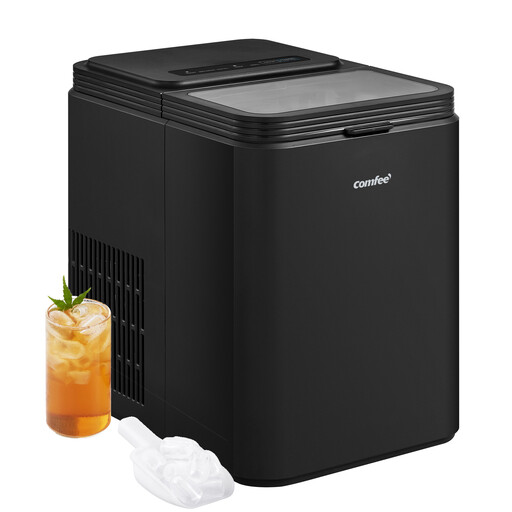
Why This Fits Their Persona: A practical ice maker for UK kitchens, offices and occasional entertaining where quick batches and straightforward controls matter.
Its listing separates the stated 12 kg daily output from the 0.4 kg removable ice container, helping buyers set realistic expectations about storage.
Produces 8 ice bullets in approximately 6–9 minutes, offers two ice sizes and includes an ice scoop and basket.
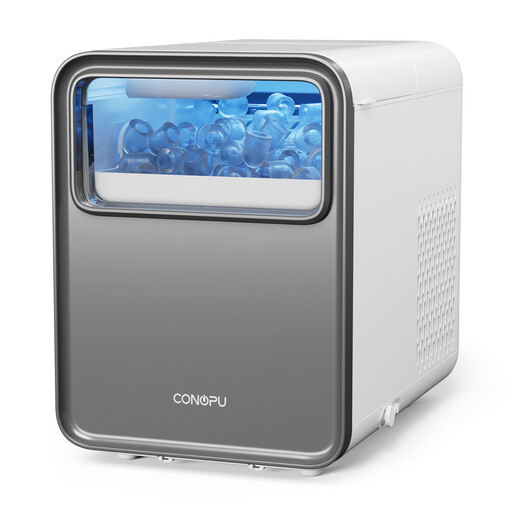
Why This Fits Their Persona: Suitable for buyers prioritising visible operation, cleaning assistance and flexible placement for drinks, parties or regular household use.
The controls include an automatic cleaning mode, water-shortage indicator and ice-full indicator, rather than relying only on a production-speed claim.
Makes 9 ice bullets in approximately 6–8 minutes, provides two sizes, a 1.5-litre tank and a stated noise level below 50 dB.
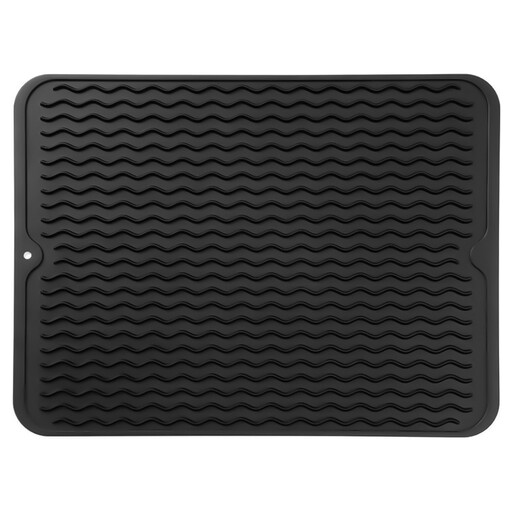
Why This Fits Their Persona: A useful companion for buyers placing a compact ice maker near a sink or serving area and wanting to manage drips during refilling and draining.
It addresses the overlooked water-management issue: a countertop ice maker still needs careful draining and should not be left with standing water.
The large black drain mat is designed to collect countertop drips and can help protect the surrounding work surface during use.
We have compiled a complete, real-time list of products that fully satisfy these strict selection criteria and UK safety regulations.
Place the machine on a level, dry worktop with clearance around its ventilation area. Fill the tank with clean drinking water to the indicated level, select the preferred ice size and remove finished ice promptly.
For camping and motorhome use, confirm that the appliance’s power requirements match the available hook-up or inverter. Avoid carrying a water-filled unit, as movement can cause spills. After use, drain the tank and allow accessible surfaces to dry before storage.
A countertop machine is designed to supplement, rather than replace, a freezer. If you need ice to remain frozen for several hours, move it to an insulated cooler or freezer as soon as possible.
Running cost depends on the appliance’s power rating, local electricity tariff, room temperature and how often it operates. To estimate the electricity cost, multiply the machine’s kilowatt rating by the hours used, then multiply by your tariff per kWh. Water, cleaning supplies and replacement parts may add a small amount over time.
Lifespan varies according to build quality, frequency of use, water quality, cleaning and storage. Empty and dry the unit between periods of use, follow the cleaning instructions and avoid exceeding the stated fill levels. A product with a drain system and accessible basket can make routine care more manageable.
Yes, provided the dimensions, electrical specification and operating instructions are suitable for your home. Measure the worktop first and allow space for ventilation, refilling and drainage. For a small flat, office or motorhome, a compact ice maker with two ice sizes and automatic indicators can be more convenient than a larger appliance.