Occasional iced-coffee users
If the cottage needs ice for a few drinks at a time, a quick first batch and a machine that is easy to store may matter more than a large ice bin.


For occasional iced coffees in a holiday cottage, start with a compact manual-fill ice maker: it needs no water connection, but a small basket limits how much ice is ready at once. A larger bin becomes more useful when several guests draw ice repeatedly; consider a plumbed-in machine only if sustained demand justifies installation. Whichever route you choose, allow for ventilation and manual cleaning, especially when guests are served ice.
If the cottage needs ice for a few drinks at a time, a quick first batch and a machine that is easy to store may matter more than a large ice bin.
When several guests may want ice throughout the day, compare the amount the basket holds with the stated daily output. Refilling and hygienic serving also become part of the routine.
If guests can use the appliance, leave room for ventilation and access to its removable parts. Coventry City Council's ice-handling advice also distinguishes a self-clean cycle from cleaning the ice-storage and handling surfaces.
Decide how much ice needs to be ready during a busy spell before comparing daily-output figures. Then check whether the worktop and cleaning routine can accommodate the machine you have in mind.
| Concern | What to check | Who this matters to |
|---|---|---|
| Ice ready at busy times | Compare first-batch time and basket capacity separately from stated 24-hour output. Check where you would put ice needed for later drinks. | When several guests make drinks close together, I need enough ice ready without waiting through repeated batches; around 31% of consumers put busy-time capacity first. |
| Guest-facing hygiene | Look for accessible parts and check the manual's cleaning instructions. Plan a clean scoop and responsibility for cleaning between stays. | If guests serve themselves, I need a routine that covers the basket, lid and scoop as well as the ice-making surface; hygiene comes first for around 31% of consumers. |
| Worktop fit and filling | Measure the available space with the lid open and the model's ventilation clearance allowed. Decide whether filling a reservoir suits the cottage better than arranging plumbing. | In a small kitchen, I want to fill and clean the machine without crowding the worktop; roughly 23% of consumers make practical fit and manual filling their primary concern. |
| Noise and placement | Check any stated noise figure for the exact model, then follow its instructions on airflow, room temperature and distance from heat. | In an open-plan cottage, I would notice a running appliance near the seating area; noise and suitable placement lead the decision for around 15% of consumers. |
Cookology states output of up to 12 kg per day for the CKICE12KGB, but its basket holds 0.45 kg. A daily figure does not tell you how many guests can take ice at the same time.
Compare basket capacity and batch timing separately. If drinks will be made in several rounds, plan when ice will be used or transferred to suitable storage.
Coventry City Council advises that self-clean cycles clean the surface where ice is made, not every storage and handling surface. Water, containers and scoops need hygienic handling too.
Check how to reach and clean the basket, lid and other accessible surfaces, and provide a dedicated clean scoop rather than using hands or drinking glasses.
Manual cleaning and sanitising still take time and supplies between stays.
The Cookology CKICE12KGB manual calls for freestanding indoor placement and ventilation clearance; a tight cabinet is not an equivalent installation.
Measure the intended position with the lid open and follow the exact model's clearance and heat-source instructions before buying.
Nisbets lists the Polar T316 as an auto-fill machine requiring a mains-water connection and specialist installation. Its larger bin only addresses a need if ice demand is sustained.
For intermittent use, assess manual-fill models first. Consider auto-fill only after checking demand, the proposed water connection, space and cleaning arrangements.
Plumbing and specialist installation add work before the machine can be used.
The CKICE12KGB represents a compact, manual-fill approach for modest batches of cottage drinks.
Polar offers distinct catering models: manual-fill C-Series machines and the plumbed-in, auto-fill G-Series T316.
The manual-fill HEA653 is another catering-oriented countertop option to assess where reservoir and basket capacity matter.
These manual-fill countertop choices suit a cottage where ice is made for drinks in small batches without installing a water line. Compare their ready-ice capacity and placement requirements before deciding whether one can serve repeated guest demand.
 No image available
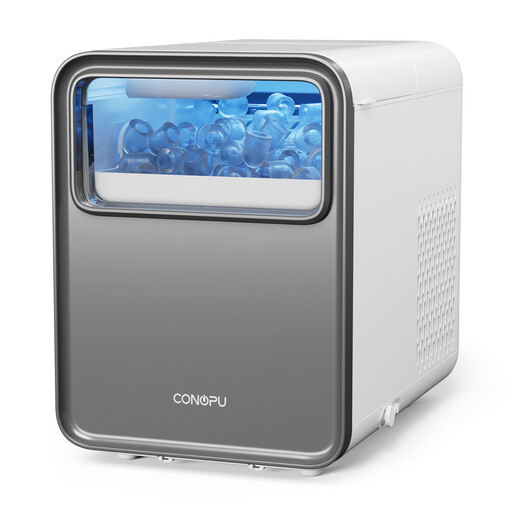
For a small round of iced coffees made shortly before serving, the listing describes nine cubes per batch in 6–8 minutes.
It lists a 1.5 L tank, two ice sizes, stated output of up to 12 kg per day and dimensions of 35 × 23 × 30 cm. Check how much its basket holds, the required ventilation clearance and the plug and electrical requirements for the cottage.
Its self-clean programme does not replace cleaning accessible ice-contact and handling surfaces.
 No image available
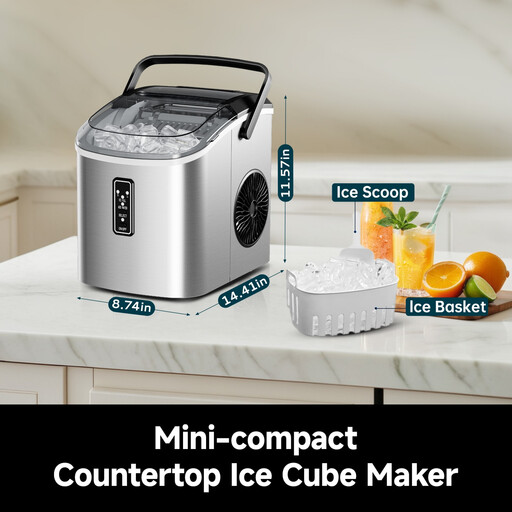
For drinks prepared in small rounds, the listing describes nine cubes in 6–12 minutes, with a basket and scoop included.
It lists two ice sizes, stated output of up to 12 kg per day, dimensions of 22.2 × 36.6 × 29.39 cm and 15 cm ventilation clearance on all sides. Check the tank and basket capacities before relying on it for several guests, and confirm the plug and electrical requirements.
The self-clean function still leaves accessible parts and serving tools to be cleaned.
 No image available
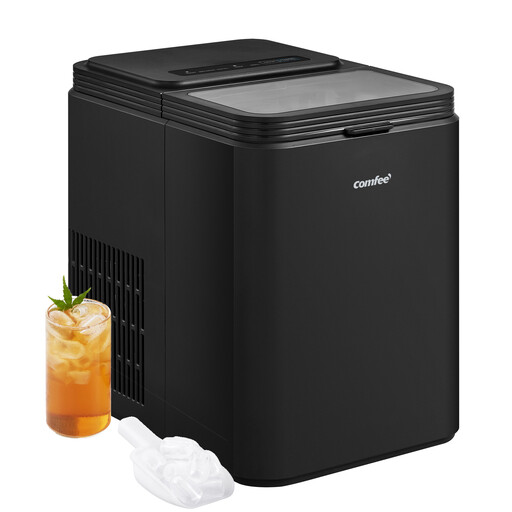
For repeated small batches of iced coffee, the listing describes eight ice bullets in 6–9 minutes and two ice sizes.
It lists a 1.3 L tank, 0.4 kg basket and stated output of up to 12 kg in 24 hours. The basket figure, rather than daily output, indicates how much ice can be held ready; check the machine's dimensions, ventilation instructions and plug and electrical requirements for the intended position.
A self-clean cycle does not replace manual cleaning of accessible parts and the scoop.
 No image available
For ice made shortly before drinks are served, the listing describes nine cubes in 6–9 minutes and includes a basket and scoop.
It lists stated output of up to 12 kg per day, a weight of 6.2 kg and at least 15 cm ventilation clearance on all sides. Check the tank and basket capacities, overall dimensions and plug and electrical requirements before choosing its place in the cottage.
The self-clean function does not remove the need to clean accessible ice-contact surfaces and serving tools.
Not for occasional iced coffees or modest guest use: a manual-fill machine avoids a permanent water connection. Nisbets lists the Polar CH478 and CH479 as manual-fill options, while the auto-fill T316 needs mains-water plumbing and specialist installation for sustained demand.
Look at basket or bin capacity, not the stated daily output, to judge how much ice can be ready in the machine. For example, Cookology lists a 0.45 kg basket alongside up to 12 kg per day for the CKICE12KGB; plan separate suitable storage if several drinks need ice together.
No. Coventry City Council's ice-handling guidance says self-clean cycles clean the ice-making surface rather than every storage surface. Follow the model's instructions for cleaning accessible parts and keep the scoop clean and stored hygienically.
Use potable water and a clean scoop, and establish who empties and cleans the machine between stays. If the accommodation operation is a food business, GOV.UK's food-hygiene guidance calls for effective cleaning arrangements; ask the relevant local authority how those requirements apply to the particular cottage.