
24/7 Customer Support

Free returns

Same-day & Next-day Delivery

Quality Guaranteed

Unlock Your Welcome Offers: FREE Delivery | Up to 80% OFF | Free 30-day JoyPlus trial
Download the APP
There's nothing quite like the clink of ice in a glass on a warm day, but the frustration of finding an empty ice tray in the freezer is a familiar one. Whether you're hosting a garden party, managing an office break room or simply enjoy perfectly chilled drinks at home, a countertop ice maker can seem like the ideal solution. However, the market is filled with models that promise much but often under-deliver.
As a Joybuy Product Recommendation Officer, my role is to help you navigate these choices. Many shoppers are caught out by a few common pitfalls that lead to disappointment. Before you buy, let's look at the key issues to be aware of.
To avoid these traps, focus on a few non-negotiable specifications. Understanding these will help you select a reliable and practical home ice machine.
These two factors work together.
The type of ice a machine produces affects how quickly it melts and how well it suits certain drinks.
Always measure your available counter space before buying. Consider not just the footprint but also the height, especially if you have low-hanging cabinets. For those in motorhomes or who plan to move the unit, check the weight. Finally, a self-cleaning function is a significant quality-of-life feature that automates the internal rinsing process, saving you time and ensuring better hygiene.
Instead of a generic list, we've matched specific models to different user needs.
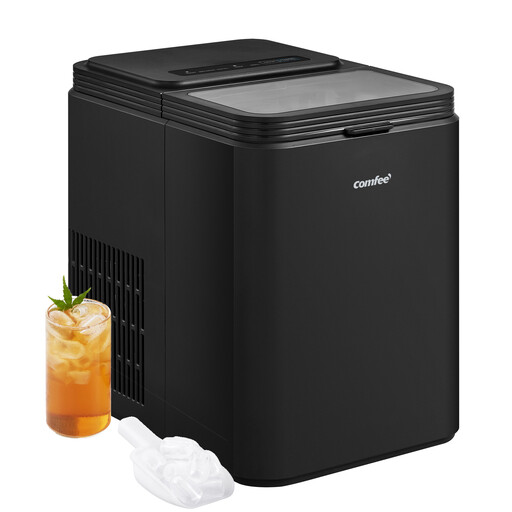
Why This Fits Their Persona: For those who often host gatherings, the ability to produce fresh ice in under 10 minutes is a game-changer. It eliminates the need for last-minute trips for bags of ice and keeps drinks flowing for guests.
It directly addresses the cleaning pitfall with a dedicated self-cleaning function, simplifying maintenance. Its clear cycle time of 6-9 minutes provides a realistic expectation of performance, avoiding the vague "kg per day" trap.
Produces the first batch of ice in as little as 6 minutes. Offers two different sizes of bullet ice, making it versatile for both soft drinks and cocktails.
Why This Fits Their Persona: Space is a premium in a motorhome, small flat or office kitchen. This machine's compact dimensions (29.6 x 21.3 x 29.5 cm) allow it to fit on a crowded worktop without sacrificing performance, providing the convenience of fresh ice on the road or in a tight space.
Its specified compact size ensures it won't become a bulky, unusable appliance. As a portable ice maker, it's designed for convenience rather than industrial output, setting realistic expectations for its capacity.
The small footprint makes it one of the more practical options for limited spaces. It includes a removable ice basket and scoop for easy serving.
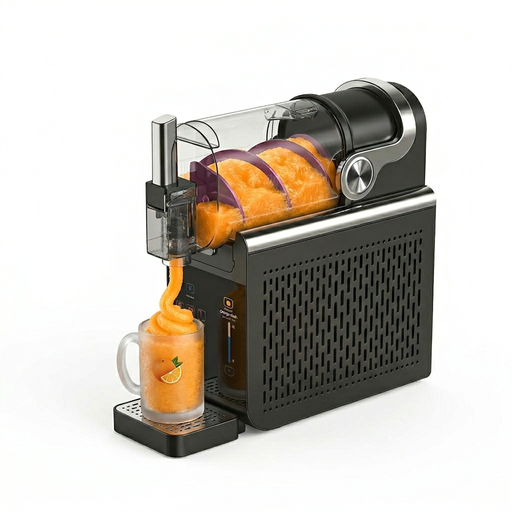
Why This Fits Their Persona: This is for someone who wants more than just ice cubes. It's a specialised machine for creating slushies, frappés and frozen cocktails at home, offering a bar-quality experience without needing a separate blender and ice maker.
By being a multi-functional beverage maker, it sets a clear expectation of its purpose. It also features a one-touch operation and is described as easy to clean, addressing the maintenance pitfall for a more complex machine.
It's an all-in-one solution for frozen drinks, eliminating the need for separate appliances. The high-efficiency cooling spiral ensures rapid freezing for a smooth texture.
We have compiled a complete, real-time list of products that fully satisfy these strict selection criteria and UK safety regulations.
The running cost is generally modest. A typical countertop ice maker uses between 100 to 150 watts of power when actively cooling and making ice. Based on current UK electricity rates, this would translate to roughly 3-5 pence per hour of operation. The machine only runs its cooling cycle when producing ice, so the overall daily cost is minimal for most households.
Even with a self-cleaning function, good hygiene is important. It is advisable to run the cleaning cycle at least once every two weeks or more frequently if you have hard water. This cycle flushes the internal pipes. You should also manually wipe down the ice basket and any accessible interior surfaces with a soft cloth and a suitable cleaning solution weekly to prevent any build-up.