
24/7 Customer Support

Free returns

Same-day & Next-day Delivery

Quality Guaranteed

Unlock Your Welcome Offers: FREE Delivery | Up to 80% OFF | Free 30-day JoyPlus trial
Download the APP
A constant supply of fresh ice can transform your daily routine, from elevating your morning iced coffee to ensuring your garden party cocktails are perfectly chilled. A countertop ice maker promises just that—convenience in a compact package. However, the market is filled with bold claims and technical jargon that can lead to a disappointing purchase. Many machines fail to live up to their advertised promises, leaving you with slow, noisy or high-maintenance appliances.
As the Joybuy Product Recommendation Officer, my role is to help you navigate these choices. Before you buy, be aware of these common pitfalls:
To ensure your new ice machine for home meets your expectations, focus on these practical specifications rather than just the headline marketing claims.
Instead of focusing on the time it takes to produce the first few cubes, look for the machine's 24-hour production capacity (e.g., 12kg/24h) and the water tank size. A larger tank (1.5 litres or more) means less frequent refilling. This combination gives a much clearer picture of how much ice you can realistically expect during a party or a busy family day. The speed of an ice cube maker machine is only useful if it can sustain its output.
A noisy appliance can quickly become an irritation in an open-plan living space, office or quiet caravan park. Look for a quiet ice maker with a specified noise level.
If you need a portable ice maker for camping, your motorhome or simply to store away when not in use, its physical attributes are critical. Check the weight (many good models are under 8kg) and dimensions. Also, ensure you account for the manufacturer's recommended ventilation clearance—usually around 15cm on all sides—to prevent the machine from overheating and ensure efficient operation. A small ice maker is only practical if it fits the space you have available.
Based on these practical criteria, here are a few models matched to different user needs.
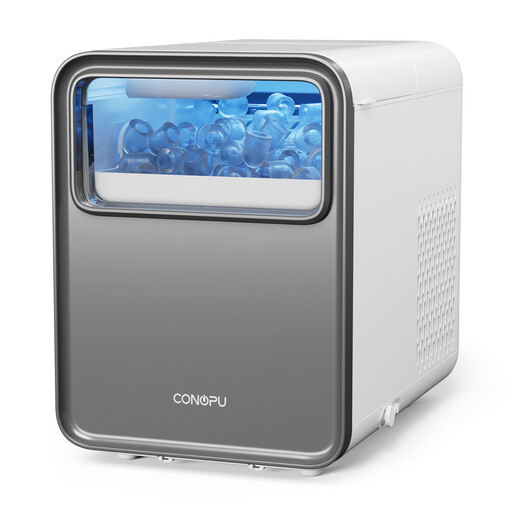
Why This Fits Their Persona: Ideal for those who regularly entertain, this machine's 12kg daily output and 1.5-litre water tank ensure a steady supply of ice for multiple guests. The option of two different ice cube sizes is practical for preparing everything from soft drinks to cocktails.
It moves beyond the "fast first batch" claim by offering a substantial 12kg daily capacity and a large water tank, providing a reliable, continuous flow of ice needed for a party.
Features two ice cube sizes for versatility and a transparent window to monitor ice levels without opening the lid, which helps maintain internal temperature and efficiency.

Why This Fits Their Persona: This model is exceptionally light at just 6.2kg and includes a built-in handle, making it genuinely portable. Its compact footprint and very low noise level (under 45dB) are perfect for small kitchens, offices or for taking on a camping trip.
It directly addresses the often-overlooked issue of noise. By operating at under 45dB, it avoids the trap of being too loud for the small, quiet spaces it is designed for.
Its combination of a lightweight design, integrated handle and quiet operation makes it one of the more truly portable options available.

Why This Fits Their Persona: For those who value simplicity and ease of maintenance, this machine's intuitive control panel and dedicated self-cleaning button are ideal. The clear 'ICE FULL' and 'ADD WATER' indicators remove any guesswork from daily operation.
It provides a practical solution to the "self-cleaning" promise. The straightforward 5-minute automated cycle makes regular flushing simple, helping to maintain hygiene with minimal effort.
The one-touch operation and simple indicator lights make it extremely user-friendly, perfect for users who want fresh ice without a complicated setup or maintenance schedule.
We have compiled a complete, real-time list of products that fully satisfy these strict selection criteria and UK safety regulations.
No, this is a common misunderstanding. A countertop ice maker is not a freezer. The ice basket is typically insulated, which slows down melting, but it is not refrigerated. Any ice that melts will drain back into the water reservoir to be recycled into new ice cubes. For long-term storage, you should transfer the ice to your freezer.
The self-cleaning function is great for a quick flush of the system's internal pipes. It is advisable to run this cycle at least once a week. However, to prevent mineral scale (limescale) and potential mould growth, a more thorough manual clean is recommended every 3-6 months or more frequently if you live in a hard water area. This usually involves wiping down the interior and using a dedicated descaling solution.
Most modern countertop ice makers are relatively energy-efficient, typically using between 100 to 150 watts of power while actively making ice. When the ice basket is full, the machine enters a standby mode that consumes very little energy. While running costs will depend on your electricity tariff and usage, it is generally not considered a high-consumption appliance for the convenience it offers.