Use the shared oven if you can depend on having access to it. A countertop fan-assisted oven is worth considering when you need independent oven access, have permission and safe space for it, and can confirm that your lidded casserole dish fits. A stated 30-litre capacity offers a different size option from a compact 19-litre model, but neither figure establishes dish clearance; whichever oven you use, check that the sausage casserole is cooked through rather than relying on its colour or the timer.
Who this suits
Shared-kitchen cooks needing independent oven access
If the communal oven is often occupied, a countertop oven could give you another way to make a one-dish meal. Before using one, agree where it can stand and how it will be powered without overloading a socket or taking over someone else’s worktop.
Small-batch cooks with limited counter space
For one or two portions, a compact convection oven may be easier to accommodate on the worktop. Measure the casserole dish, including its handles and lid, against the oven’s internal dimensions before deciding.
Batch cooks considering a larger mini oven
If you want room for a larger dish or leftovers, compare documented capacity, internal clearance and temperature controls. A long list of cooking functions does not tell you whether your dish will fit.
What matters when choosing
If you can reliably use the shared oven, you may not need another appliance. Otherwise, settle permission, placement and power access before choosing a countertop oven by dish fit and cooking controls.
Existing shared oven
Choose it when: You have dependable access and want to use your usual casserole dish without storing another appliance.
Trade-off: Cooking time and cleaning arrangements still depend on how the kitchen is shared.
Larger fan-assisted mini oven
Choose it when: You need independent access and have space for both the appliance and the dish you intend to use.
Trade-off: A larger oven occupies more shared worktop; its stated capacity still does not prove dish fit.
Compact convection mini oven
Choose it when: Worktop space is the stronger constraint and you cook small portions in a compact dish.
Trade-off: Check lid, handle and rack clearance particularly carefully before committing to a smaller cavity.
| Concern |
What to check |
Who this matters to |
| Shared-kitchen safety |
Confirm permission and a clear, ventilated position. Check the oven’s power rating and the marked limit of any extension lead. |
If other appliances already use the available sockets, I need to know where the oven can run without overloading them. Around 33% of consumers put safe placement and power access first. |
| Dish fit and capacity |
Measure the dish with its lid and handles; compare it with internal cavity, rack and door clearances, not just litres. |
I want my usual casserole dish to fit with room to close the door, especially if I cook extra portions. Dish fit is the primary concern for around 27% of consumers. |
| Cooking control |
Check for suitable temperature settings and a fan-assisted mode. Use cooking instructions and a clean probe to check the centre of the food. |
When cooking sausage in a deep casserole, I need to check that the centre is cooked through rather than trust a browned top or finished timer. Around 27% of consumers put cooking control first. |
| Cleaning and other uses |
Check the supplied trays and racks, their storage needs and how everyone will handle cleaning after use. |
If several people will use the oven, I want accessories that have somewhere to go and a clear cleaning arrangement. Upkeep and other uses come first for around 13% of consumers. |
Mistakes to avoid
-
Assuming the litre rating proves your dish will fit
A deep dish can be too wide at the handles or too tall with its lid, even when the oven’s stated capacity sounds sufficient.
Measure the complete dish and check the model’s internal cavity and rack clearances before buying.
If your existing dish does not fit, you may need a smaller ovenproof dish.
-
Plugging the oven into a crowded extension lead
Electrical Safety First warns that exceeding an extension lead’s current rating can cause overheating and create a fire risk.
Use a suitable wall socket where possible. If an extension is necessary, check its marked rating against the total connected load and do not daisy-chain leads.
-
Judging the sausage casserole by its browned surface
A browned top or completed timer does not show whether sausage pieces and the centre of the casserole are cooked through.
Follow the sausage-pack and recipe instructions, then check the centre with a clean probe. GOV.UK food-hygiene guidance gives 70°C for two minutes as a standard core-temperature benchmark.
-
Leaving grease or clutter around a shared appliance
Electrical Safety First identifies built-up fat and grease in ovens and grills as a fire risk. Objects around a countertop oven can also obstruct ventilation.
Agree who cleans the oven after use, keep its ventilation clear and do not leave it operating unattended.
Brands to consider for these oven types
Russell Hobbs
The Russell Hobbs UK 22780 Mini Kitchen illustrates the larger, fan-assisted countertop route, with a stated 30-litre capacity and a 60°C–230°C thermostat.
- Russell Hobbs lists an oven tray and grill rack and says fan assistance distributes heat evenly.
- Confirm the internal dimensions and lid clearance for your casserole dish; capacity alone cannot establish fit.
Tefal
The Tefal UK Optimo OF445840 illustrates a compact, 19-litre convection-oven route for smaller portions.
- Tefal lists a maximum temperature of 240°C, a 120-minute timer and several cooking modes.
- Check internal dimensions and required ventilation space, particularly if your casserole dish is deep or lidded.
Ninja
The Ninja DT200UK is presented by Ninja as a 10-in-1 large countertop oven, offering a multifunction alternative to a basic mini oven.
- Ninja lists modes including roasting and baking that may be relevant to meals beyond casserole.
- Check the current model instructions for dish clearance, supplied accessories, power rating and placement requirements before choosing it for a shared kitchen.
Joybuy product choices
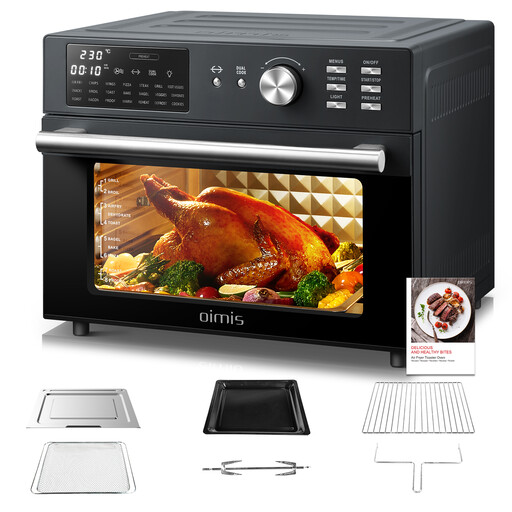
This countertop oven choice has a stated 30-litre capacity. For a shared-kitchen casserole, confirm dish clearance, cooking controls and a suitable place to use it before purchasing.
 No image available
OIMIS 30L Air Fryer Toaster Oven with 21 Presets, Gray
Consider this countertop model if you want room for a casserole dish, but measure the dish, lid and handles against the oven’s internal and door clearances before deciding.
Its product name lists rotisserie and dehydrator functions, room for a 13-inch pizza and an 1800 W rating. Check its temperature controls and whether it has the cooking mode your recipe needs; also confirm a safe power arrangement and placement in the shared kitchen.
View on Joybuy
Questions about cooking and shared use
How can I tell whether sausage casserole is cooked through?
Check the centre with a clean probe rather than relying on colour or the timer. Follow the recipe and sausage-pack instructions; GOV.UK food-hygiene guidance gives 70°C for two minutes as a standard core-temperature benchmark and notes that other safe time-and-temperature combinations are available.
Can I use a shared extension lead for a countertop oven?
Only if the extension’s marked rating can accommodate the total load of everything connected to it; a suitable wall socket is preferable where available. Electrical Safety First advises against overloading or daisy-chaining extension leads and gives about 3,000 W (13 A) as the maximum load for a single wall socket; an extension may have a lower rating.
Will a 19-litre or 30-litre oven fit my casserole dish?
Neither capacity figure guarantees that a particular dish will fit. Measure its width, depth and height with the handles and lid in place, then compare those measurements with the oven’s internal cavity, rack and door clearances.
What upkeep does a shared countertop oven need?
Clean spills and grease once the appliance has cooled, following its cleaning instructions, and agree who is responsible after each use. Electrical Safety First identifies built-up fat and grease in ovens and grills as a fire risk and advises against leaving electrical appliances operating unattended.


