Cooks with limited cottage worktop space
Before choosing an extra oven, you need to know where it can stand, how much clearance it requires and how it will be powered in an unfamiliar kitchen.


Use the holiday cottage’s installed oven if its tray fits the batch and its temperature controls work; consider a countertop convection oven when you need another cooking station or more usable tray space. Before bringing one, check the host’s rules, the model’s worktop clearance and the electrical setup. Cavity capacity alone will not tell you how widely squash wedges can be spread.
Before choosing an extra oven, you need to know where it can stand, how much clearance it requires and how it will be powered in an unfamiliar kitchen.
If several people are eating, or squash must cook alongside another dish, usable tray space and rack layout matter more than the cavity figure alone.
Convection controls and a roast setting may matter to you, but leave enough space around the wedges and check their progress in the oven you actually use.
Start with the cottage oven: if its tray and controls suit the meal, you need not bring another appliance. If it does not, compare countertop models by safe placement and usable cooking area before considering extra programmes.
Choose it when: It works, its roasting tray fits the squash and the host permits normal use.
Check first: You may need to assess its tray space and temperature controls on arrival.
Consider it when: The installed oven cannot accommodate the meal or you need a separate cooking station.
Allow for: A heat-suitable worktop, model-specific clearance, a suitable power connection and the host’s appliance rules.
| Concern | What to check | Who this matters to |
|---|---|---|
| Safe placement and power | Check the model’s worktop and clearance instructions, the host’s rules and the socket or extension rating. | In an unfamiliar kitchen, I need somewhere suitable to put an extra hot appliance without overloading its power connection; around 36% of consumers would put safe placement and power first. |
| Browning and control | Look for suitable temperature controls and a roast or air-fry setting, plus a tray that leaves room around the wedges. | If browned edges are my priority, I want to manage the heat and watch how my batch cooks; roughly 36% of consumers would make browning and control their primary concern. |
| Usable tray space | Check the supplied tray dimensions and rack layout against the amount you intend to cook. | For a shared meal, I would rather spread the wedges out than rely on a large cavity figure that still means repeated batches; around 28% of consumers would prioritise usable tray space. |
Litres do not show the shape of the supplied tray or whether squash wedges can be spread out for the quantity you plan to cook.
Compare tray dimensions, rack positions and the appliance’s external size, particularly for a shared meal.
Electrical Safety First warns that overloading an extension lead, reel or adaptor can cause overheating and fire. London Fire Brigade also cautions against putting power-hungry kitchen appliances on the same extension.
Use a suitable wall socket where possible. If an extension is necessary, check its marked rating, avoid daisy-chaining and do not run several high-load appliances from it together.
A countertop oven needs the surface and clearance specified for its model. The Russell Hobbs 22780 manual, for example, calls for a stable, level, heat-resistant surface and at least 50mm clearance all round.
Follow the exact manual and keep the appliance away from combustible materials. Do not use it where those placement requirements cannot be met.
Manufacturers’ claims for different ovens use product-specific conditions; they do not establish how each model will perform with your squash wedges.
Base the choice on the tray space, controls and safe fit you need, rather than assuming a headline claim will apply to this meal.
The DT200UK is a large countertop-oven option for cooks who need Roast mode and two-level cooking.
The SOV860BSS4GUK1 is a countertop option for cooks interested in convection settings and digital controls.
The 22780 Mini Kitchen combines a fan-assisted mini oven with hotplates where a cottage needs more cooking facilities.
The Vortex Plus 13L Air Fryer Oven offers a multi-tier format for cooks planning smaller batches.
These air-fryer options may suit smaller or flexible portions of squash wedges. They are not substitutes for checking whether a cottage’s installed oven already has enough tray space, or whether an additional appliance can be placed and powered safely.
 No image available
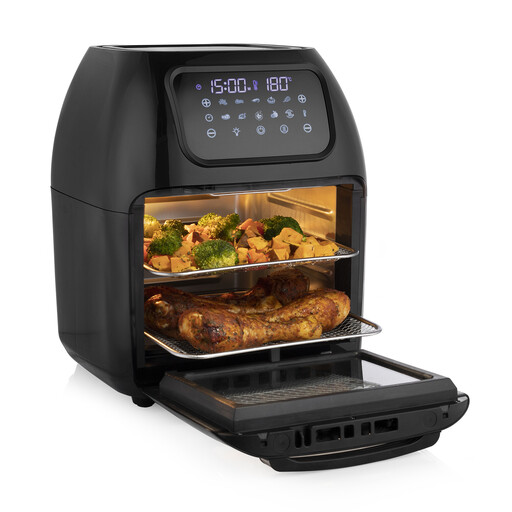
Consider this oven-style air fryer if its supplied racks can spread your intended squash batch without crowding.
The listed configuration includes a 10L capacity, 1800W rating, touch screen and 10 programmes. Check the rack dimensions, external footprint and required clearance before taking it to a cottage.
 No image available
This portable air fryer is worth considering for smaller portions when a container format suits the meal better than a wide roasting tray.
Its listed configuration includes 3.8L and 1.4L removable glass containers, a 1700W rating and a Roast function. Check the usable container area and placement instructions before choosing it for wedges.
 No image available
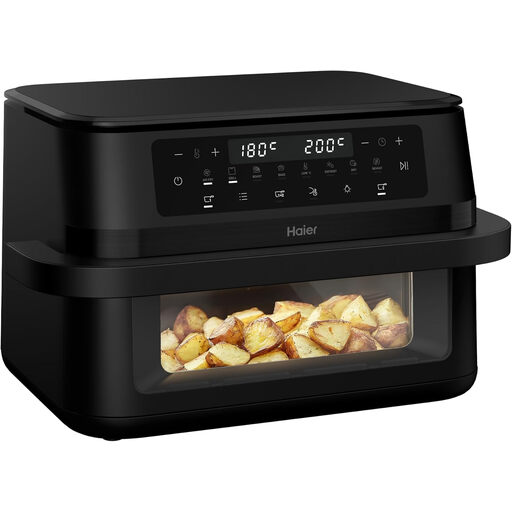
Consider this basket-style air fryer if you want a Roast setting and a divider for separate portions, rather than a conventional oven tray.
The listed configuration includes an 11L capacity, viewing window and Sync function. Check the basket’s usable area for wedges; its placement instructions call for at least 10cm clearance at the back and sides and an earthed wall socket.
Only use an extension if it is suitable for the connected load and that load stays within its marked rating. Electrical Safety First advises against overloading or daisy-chaining extension devices; avoid sharing one with other high-power kitchen appliances.
Follow the clearance instructions for the exact model, not a universal figure. The Russell Hobbs 22780 Mini Kitchen manual specifies at least 50mm all round, a stable, level, heat-resistant surface and separation from combustible materials.
No single format guarantees that result. Compare the space available to spread your batch, the tray shape and the controls you need; a compact container or multi-tier format may require a different batch plan from a wider oven tray.