What matters when choosing?
Decide whether filtration meets a taste or convenience need, then check cooking-water capacity and upkeep before paying attention to optional temperature functions.
| Concern |
What to check |
Who this matters to |
| Water for a larger rice batch |
Check feed-tank capacity and the maximum amount dispensed in one pour. Waterdrop lists a 5 L feed tank for its K19-H; Philips lists a 6 L tap-water tank for its ADD6921DG/10. Neither figure alone establishes the usable volume of another model. |
When I cook for several friends, I want to measure water into the pot without stopping repeatedly to refill or dispense. Around 33% of consumers put batch capacity first. |
| No plumbing changes |
Confirm whether the exact model needs a supply or drain connection and how its tanks are filled and emptied. |
In a rented or temporary kitchen, I need an appliance I can use without altering the sink area. For around 27% of consumers, avoiding plumbing work is the primary concern. |
| Taste preference |
Distinguish a preference about taste from an unusual smell or cloudiness that should be reported to the water supplier. |
I am content to cook with my supplied water, but would prefer a different taste in rice or drinks. Taste is the main consideration for around 20% of consumers. |
| Filter and cleaning demands |
Identify the compatible replacement cartridge and its stated change interval; check how the feed and reject-water tanks are cleaned. |
Because I may use the machine only between occasional visits, I want filter changes and tank cleaning to remain manageable. Around 20% of consumers make upkeep their first priority. |
Countertop purifiers on Joybuy
These countertop reverse-osmosis models offer temperature options alongside cooking-water use. Compare their usable dispensing capacity with your rice pot before choosing one for a guest meal.
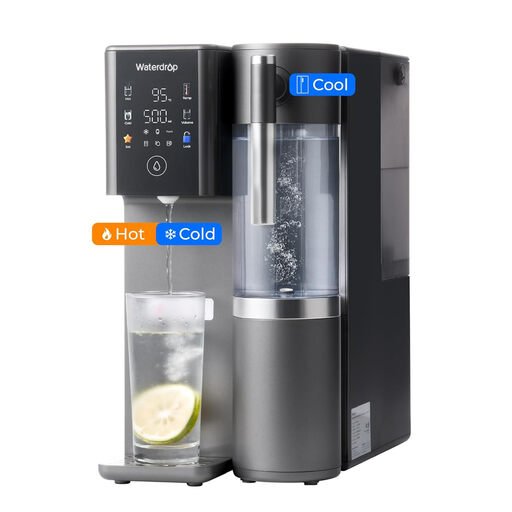 Image unavailable
Waterdrop WD-A2 Countertop Reverse Osmosis System
Consider this countertop model if you want reverse-osmosis water without changing your kitchen plumbing, but confirm that its feed tank and dispense amounts suit your rice pot. Its title lists six temperature settings and a 3:1 pure-to-drain ratio; check the exact settings and the conditions behind the wastewater claim for this variant.
View on Joybuy
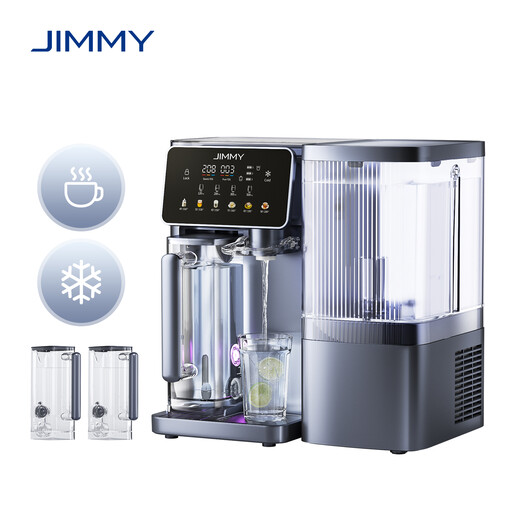 Image unavailable
JIMMY R9 Pro Countertop RO Purifier, 5.5 L Tank and Two 1 L Pitchers
This hot-and-cold countertop model may suit a kitchen that also serves drinks to guests. The named 5.5 L tank and two 1 L pitchers do not by themselves establish how much filtered water is ready to dispense; confirm usable capacity and the maximum pour for your cooking batch. Take care around hot-water dispensing, particularly when children are present.
View on Joybuy
Common questions
Do I need a purifier to cook rice with public tap water?
Not normally for a public supply in England and Wales: the Drinking Water Inspectorate says water companies must provide water suitable for cooking. Filtration can still be a choice for taste or convenience, or part of a response to a confirmed household water issue.
What if the water smells unusual or looks cloudy before guests arrive?
Contact the water company rather than assuming a countertop purifier will resolve the problem. GOV.UK says tap water should be clear and should not smell; for a private supply, contact the relevant council.
Is instant-hot water necessary for cooking rice?
No. Ambient filtered water can be measured into a rice pot and heated during cooking. If you also want hot drinks, check the exact model's temperature and dispense options, and take appropriate care around its hot-water outlet.
How should I plan filter replacement?
Identify the cartridge compatible with the exact appliance and follow its stated replacement conditions. For example, Waterdrop quotes up to 12 months or 1,100 gallons for its K19RF filter; that figure should not be applied to other cartridges or models.
Will a countertop purifier need a plumber?
Some manually filled models do not: Waterdrop describes the K19-H as requiring no plumbing, and Osmio describes its portable Zero as not requiring a plumber. Check the requirements of the model you choose, particularly if it connects to a water supply or drain; for a connected unit, confirm its applicable installation and compliance documentation.


