Holiday-cottage cooks who cannot alter the plumbing
A removable-tank unit may suit you if you want filtered cooking water without drilling or a permanent fitting. Check that the available counter space, refilling and carrying suit a temporary stay.


A plug-in countertop reverse-osmosis (RO) purifier is worth considering if you want filtered water for repeated rice cooking without changing the cottage’s plumbing, and can manage tank refills, reject water and filter changes. For a cottage on a public water-company supply in England or Wales, the Drinking Water Inspectorate says extra home treatment is not needed for health protection; for a private supply, check its testing and treatment arrangements before relying on an appliance. Choose ambient output if you can prepare and heat water separately, or hot dispensing if it removes a useful step from your cooking routine.
A removable-tank unit may suit you if you want filtered cooking water without drilling or a permanent fitting. Check that the available counter space, refilling and carrying suit a temporary stay.
You may value a larger feed tank or hot-water dispensing, but the water ready to use for a meal matters more than feed-tank size alone. Allow for RO reject water as well as refills.
Establish whether the property uses a public water-company supply or a private source before deciding what a purifier should do. A domestic countertop appliance cannot replace the testing and treatment arrangements needed for a private supply.
Start with the cottage’s water source, then decide whether a removable appliance fits the kitchen and how much prepared water your rice-cooking routine needs.
| Concern | What to check | Who this matters to |
|---|---|---|
| Water source and filtration purpose | Ask whether the cottage uses public mains or a private source. For a private supply, ask about its current testing and treatment arrangements. | When the water source is unfamiliar, I need to know whether filtering is a preference or whether the supply itself needs attention. Around 40% of consumers put water-source assurance first. |
| No-plumbing fit | Measure the counter and storage space, check socket access and consider how you will carry and empty the unit. | I cannot make permanent changes to the cottage, so a removable appliance must be manageable during and after the stay. For around 30% of consumers, a no-plumbing setup is the primary need. |
| Cooking-water workflow | Compare usable purified output with water needed for cooking and rinsing rice. Check dispensing, heating, filter upkeep and reject-water handling. | If I cook several portions, I want enough water ready without repeated pauses to refill or heat it. Cooking convenience and upkeep come first for around 30% of consumers. |
Public mains water and private supplies call for different decisions. In its private-supply guidance for England and Wales, the Drinking Water Inspectorate says membrane processes should not be relied on as the sole means of disinfection.
Ask the cottage owner what supplies the property and, if it is a private source, request current testing and treatment information before choosing an appliance.
An ambient-water batch unit requires a different routine from one that dispenses hot water. Feed-tank size also does not, on its own, tell you how much purified water is ready for a meal.
Work out the water needed for rice and rinsing, then compare purified capacity, preparation time and any dispensing increments or temperature settings you would use.
RO produces a treated-water stream and a reject-water stream. The Drinking Water Inspectorate also warns that neglected domestic filters can accumulate deposits and bacterial growth.
Check how the chosen model handles reject water, how its filters are replaced and how to clean and dry it between cottage stays.
Its UK countertop RO range includes plug-in models for buyers interested in larger feed tanks and optional hot-water dispensing.
A countertop RO option for cooks willing to prepare filtered water before heating it separately.
Its WB99-H combines countertop RO with hot-water settings and a portable pitcher.
Its countertop RO range includes a glass-carafe design with a total dissolved solids display and filter-life monitoring.
These countertop RO models suit cooks considering filtered water with hot-water dispensing and no plumbing changes. Compare the water available for each rice meal, as well as the space needed to use and store the appliance.
 No image available
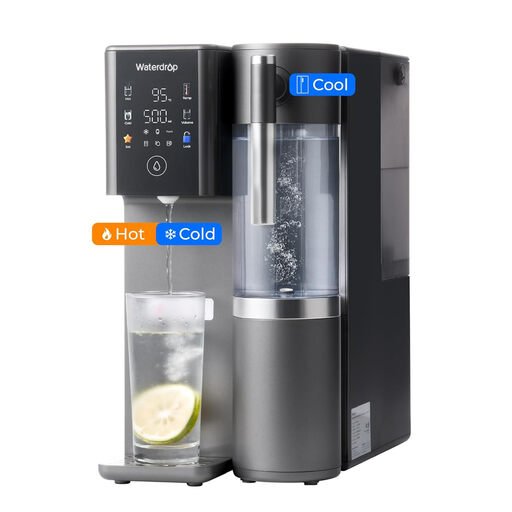
Consider this no-plumbing model if selectable water temperatures would help with your cooking routine.
Its product title lists six temperature settings and a portable pure-water tank. Check the usable purified volume and the actual settings needed for your rice portions; the tank description alone does not establish how much water is ready to use.
 No image available
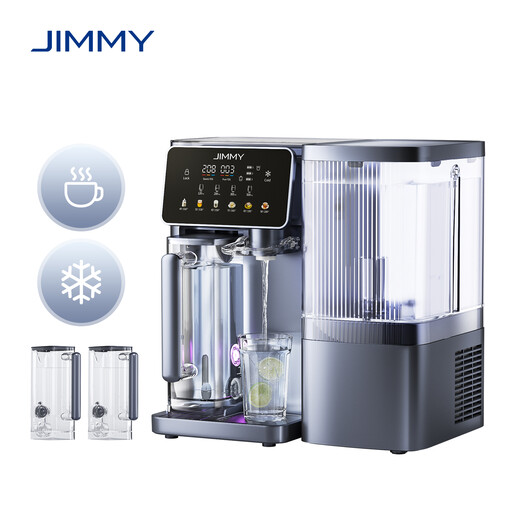
Consider this model if separate pitchers and hot or cold dispensing fit the way you prepare cooking water.
Its product title lists a 5.5 L tank, two 1 L pitchers and instant hot and cold dispensing. Confirm how much purified water is ready per cycle and whether the unit fits the cottage counter; tank size alone is not the ready-to-use output.
Not for health protection solely because the cottage is on a public water-company supply in England or Wales: the Drinking Water Inspectorate says that supply is suitable for drinking and cooking. You may still prefer filtered water for taste or convenience. If the property uses a private supply, check its testing and treatment arrangements first.
Do not rely on a countertop RO unit as the sole safeguard for a private supply. In its England-and-Wales private-supply guidance, the Drinking Water Inspectorate says membrane processes should not be the sole means of disinfection because membrane breakthrough cannot be simply monitored. Ask the owner about the supply’s risk assessment, monitoring and treatment.
Compare the purified water available when you need it, not just the feed-tank size, and include water for rinsing and other cooking. AquaTru lists a 2.7 L purified-water capacity for the Classic, while Waterdrop lists a 5 L feed tank for the K19-H; those figures describe different things and apply only to those models.
Follow the exact model’s instructions for cartridge replacement, cleaning, emptying and storage. The Drinking Water Inspectorate warns that poor filter maintenance can allow deposits and bacterial growth, so check the upkeep routine before choosing a unit you may leave unused between visits.