Hosts cooking several kebab batches
If guests need to eat at roughly the same time, start with the number of assembled skewers that fit on a tray. Check rack positions and clearance above the vegetables as well as the stated cavity capacity.


Choose a countertop convection oven for occasional dinner-party kebabs only if its tray fits your loaded skewers and you have a suitable worktop and power supply. If you regularly cook several dishes or need a permanent main oven, compare built-in fan ovens by usable shelf space, heat distribution, installation requirements and cleaning rather than capacity in litres alone.
If guests need to eat at roughly the same time, start with the number of assembled skewers that fit on a tray. Check rack positions and clearance above the vegetables as well as the stated cavity capacity.
A countertop oven may help when the main oven is occupied, provided there is a suitable place to use it. Compare its exterior footprint and door clearance with the available worktop, then check whether its supplied tray fits your skewers.
If the oven will serve as a permanent cooking appliance, look beyond portability. Usable shelf space, model-specific evidence on heat distribution and temperature control, cleaning and installation requirements all matter when cooking kebabs alongside other dishes.
Decide whether you need an occasional extra oven or a permanent main oven, then measure the skewers and cooking space before comparing capacities.
Consider it when: You need occasional extra cooking space and can confirm that its rack or tray holds the intended batch.
Trade-off: It needs suitable worktop space and power; a larger cavity does not establish skewer fit or even cooking across two loaded trays.
Consider it when: You are choosing a permanent main oven for regular dinner parties and other dishes.
Trade-off: Cabinet fit and the required power supply need checking, while fan assistance alone does not guarantee even heat.
Consider it when: Your kebab batch is small or you need an overflow appliance rather than an oven for the whole meal.
Trade-off: Limited tray space may mean more batches; De'Longhi UK lists a maximum 26 cm round-plate dimension for its compact EO12012.
| Concern | What to check | Who this matters to |
|---|---|---|
| Usable batch space | Compare assembled skewer length with tray width and depth; check clearance above loaded skewers. | If several servings need to be ready together, I need enough room to cook a useful batch without crowding the tray. Around 36% of consumers put usable kebab space first. |
| Worktop space | Check exterior dimensions, door-opening clearance and a suitable place for the appliance. | When the kitchen is already busy, I need an occasional extra oven that has somewhere practical to sit. Worktop flexibility comes first for roughly 29% of consumers. |
| Cooking consistency | Look for model-specific evidence on heat distribution and temperature control, particularly if using multiple shelves. | If kebabs are split between trays, I want them ready without one batch browning much sooner than the other. About 21% of consumers prioritise consistent cooking. |
| Power and cleaning | Check the model's connection requirements and whether trays and racks can be cleaned as its manual directs. | With other appliances running during meal preparation, I need a suitable power setup and a manageable clean-up afterwards. These practicalities are the primary concern for around 14% of consumers. |
Volume does not give you the usable tray dimensions or clearance above the vegetables. De'Longhi UK lists its EO12012 at 12 litres but specifies a maximum 26 cm round-plate dimension.
Measure your longest assembled skewer and the number needed per batch, then compare them with the exact oven's rack or tray dimensions.
Which? tests built-in ovens for heat distribution and control accuracy because results vary between models. A fan setting on its own cannot tell you how a loaded second shelf will cook.
Seek model-specific test evidence where available. Before serving guests, try a batch and follow the manufacturer's guidance if you need to move trays.
A countertop oven adds an electrical load to a kitchen where other appliances may already be running. Electrical Safety First warns against exceeding an extension lead's current rating.
Check the oven's rating and manual, the socket arrangement and every appliance connected to any extension lead. Do not daisy-chain leads.
Oil and marinade can collect on trays, racks and oven surfaces. Electrical Safety First identifies built-up fat and grease in ovens and grills as a major fire cause.
Choose removable parts you can clean, and follow the model's instructions once the appliance has cooled.
Its countertop range includes compact and larger formats, so the exact model matters more than the brand name when judging skewer fit.
The Optimo OF445840 is a compact countertop option with several cooking modes.
The T14045 represents a larger countertop format for hosts who have room for an extra appliance.
The Foodi DT200UK is a countertop multifunction model to consider if the oven will be used for dishes beyond kebabs.
These built-in fan ovens are options for a permanent cooking appliance: the Simfer FO60S is electric, while the CDA SG121SS is gas. For either model, confirm installation compatibility and measure the cooking space against your skewers before choosing.
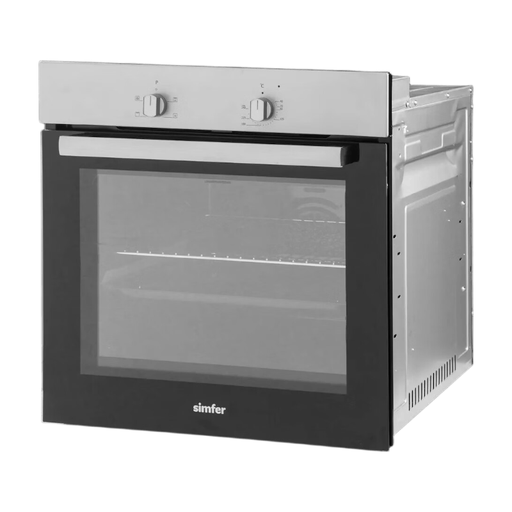 No image available
Consider this electric fan oven if you want a permanent appliance for dinner-party cooking. Check cabinet fit and measure its usable shelf or tray space against your assembled skewers; a fan function alone does not establish even results across multiple shelves.
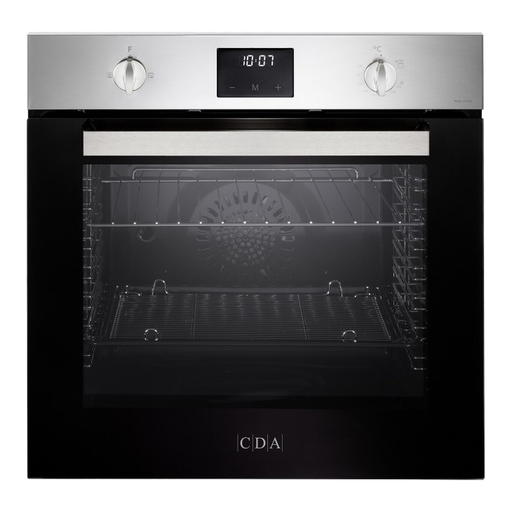 No image available
Consider this built-in gas fan oven only if your kitchen has a compatible gas supply and installation arrangement. Its stated 70L capacity does not tell you whether your skewers fit: check the shelf and tray dimensions and the space between shelves before planning several batches.
It may serve a small batch or provide overflow space, but capacity alone cannot establish skewer fit. De'Longhi UK lists a maximum 26 cm round-plate dimension for its 12-litre EO12012; compare the exact model's rack dimensions with your assembled skewers and the number you need to cook.
Yes, if you need a permanent main oven and have a compatible installation space. Compare usable shelf capacity and model-specific cooking results rather than assuming every fan oven performs alike; Which? tests built-in models for heat distribution and temperature-control accuracy.
Only use an electrical arrangement permitted by the oven's instructions and within the rating of every socket and lead involved. Electrical Safety First warns against overloading extension leads or daisy-chaining them; check the oven's rating alongside anything else connected.
Check the exact model's installation instructions against your existing supply before ordering. An oven buying guide distinguishes ovens with an electrical connection below 3 kW, which need a standard 13-amp fused socket, from those above 3 kW, which need a higher-rated connection.
Once the oven has cooled, clean its trays, racks and interior as the model's manual directs. Electrical Safety First identifies built-up fat and grease in ovens and grills as a major fire cause.