Picnic batch bakers
If you plan to bake more than one tray of lemon biscuits, usable shelf space and the oven’s fan-baking instructions matter more than a long list of cooking modes.


Choose a countertop convection oven if you need a worktop appliance for smaller batches; choose a built-in fan oven if you have suitable housing and want more room for multi-tray baking. Check that your trays fit, rather than relying on cavity capacity or a multi-level claim alone. A built-in model also calls for a careful check of its dimensions and electrical or gas connection before purchase.
If you plan to bake more than one tray of lemon biscuits, usable shelf space and the oven’s fan-baking instructions matter more than a long list of cooking modes.
A countertop oven avoids the need for fitted cabinetry, but you still need worktop and ventilation space and room inside for your baking trays.
If you are fitting a built-in appliance, weigh batch space against cabinet dimensions, connection requirements and the installation arrangements for the exact model.
For picnic biscuits, decide where the oven can go and how many trays you need to bake before comparing controls or cleaning features.
Choose it when: You need a separate worktop appliance and expect to bake smaller batches.
Allow for: Its worktop footprint and internal tray space, which may limit how many biscuits you can bake at once.
Choose it when: You have compatible housing and want to make regular, multi-tray batches.
Allow for: Model-specific cabinet and connection requirements; it is not a worktop appliance you can simply put in place.
| Concern | What to check | Who this matters to |
|---|---|---|
| Even baking and tray space | Look for a stated fan-baking function, then check usable shelf levels and the fit of your trays. | If I am filling several trays for a picnic, I want enough space for the batch without assuming every shelf will bake identically. Around 45% of consumers put this baking-and-capacity need first. |
| Format and installation | Measure the worktop or housing and check the exact model’s connection and installation instructions. | When my kitchen has no suitable built-in housing, I need an oven that can fit safely on the worktop; with fitted housing, the connection matters just as much. For around 33% of consumers, format and installation come first. |
| Controls and cleanup | Check the timer and control layout, along with the stated cleaning system and its care instructions. | After baking buttery biscuits, I want straightforward timing and a cleaning routine I can keep up with. That ease of use is the primary need for around 22% of consumers. |
A countertop oven and a built-in oven can differ substantially in the space available for trays, even when both have fan cooking.
Choose the format first, then check your tray dimensions against the oven’s internal rack space and the number of trays you intend to use.
Connection arrangements differ between models. Bosch lists a GB plug for the HHF113BR0B, while Neff specifies electrician connection without a plug for the B1GCC0AN0B; the Bosch Joybuy description also calls its connection hardwired.
Read the installation documents for the exact appliance and arrange qualified fitting where required. Electrical Safety First advises having ovens fitted by a qualified electrician.
A manufacturer’s stated cooking levels describe a capability, not a result for your lemon-biscuit recipe. Tray size, spacing and oven settings still affect how you use it.
Start with a small test tray, follow the recipe’s fan setting where given and leave the airflow space specified in the appliance instructions.
Cleaning features and care routines vary between ovens, so a cleaning-system name alone does not tell you what upkeep involves.
Read the model’s care instructions, let the appliance cool before cleaning and keep tea towels and oven gloves clear while it is hot.
The HHF113BR0B is a Series 2 built-in single oven for kitchens with suitable housing.
The B1GCC0AN0B is a built-in oven aimed at bakers considering multi-level hot-air cooking.
Its built-in ovens include fan-cooking models for shoppers also weighing timing and cleaning features.
The DT200UK is a countertop option for kitchens without built-in oven housing.
These built-in fan ovens are options if your kitchen has suitable housing. The CDA model uses gas; the Bosch and Simfer models are electric. Check the connection and tray space of the exact appliance before choosing one for your biscuit batches.
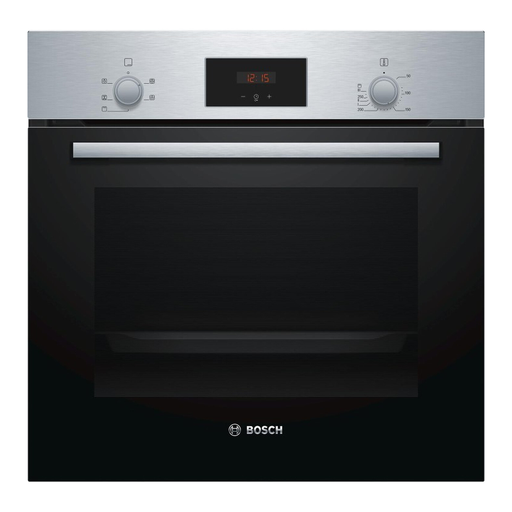 Image unavailable
Consider this model if you have built-in housing and want to bake across more than one shelf.
Bosch lists 3D Hotair cooking on up to three levels, and the model has a stated 66 L capacity. Check your trays and housing dimensions. Bosch and the Joybuy description give conflicting connection details, so confirm the installation instructions for the appliance supplied.
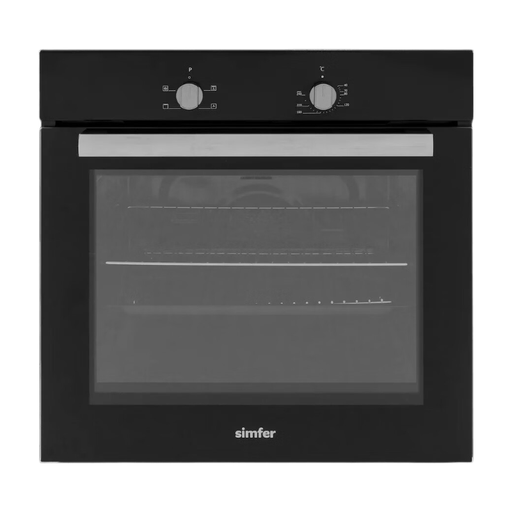 Image unavailable
Consider this built-in fan oven if you are fitting an electric appliance into suitable cabinetry.
Before planning a multi-tray biscuit batch, check how many usable shelf levels it has, whether your trays fit and what its installation instructions require.
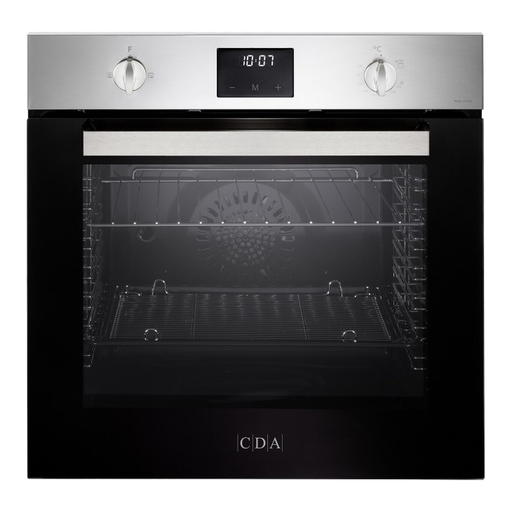 Image unavailable
Consider this option only if a built-in gas oven suits your kitchen and installation plans.
Its stated capacity is 70 L. Confirm the required gas connection, housing fit and usable tray space before relying on it for a multi-tray batch; do not treat it as an electric-oven alternative with the same connection requirements.
Use the recipe’s fan-oven temperature if it provides one. Otherwise, follow your oven manual’s conversion guidance and test a small tray first. AEG says its SurroundCook/True Fan Cooking function can use a temperature 20°C lower, but that is guidance for that function, not a rule for every oven.
Check the exact model’s installation instructions before ordering. Bosch lists a GB plug for the HHF113BR0B, while Neff specifies electrician connection without a plug for the B1GCC0AN0B; the Bosch Joybuy description also calls its connection hardwired. Resolve any discrepancy for the appliance you will receive and arrange qualified fitting where required.
Do not assume an extension lead is suitable. Electrical Safety First warns that ovens use substantial power and that an extension lead used with other large appliances may overload; follow the oven’s connection instructions and ask a qualified electrician if you are unsure.
Register it with the manufacturer and keep your proof of purchase. Electrical Safety First says registration helps the manufacturer contact you about a safety recall.