Worktop-space maximisers
If you have no dedicated dishwasher bay, a countertop model may fit your plan. You still need a stable worktop position and water and drainage arrangements that suit the exact appliance.


Choose a countertop dishwasher if you have usable worktop space but no appliance bay, and can meet the model’s water and drainage requirements. A 45 cm freestanding model suits a kitchen with floor space and a need for more everyday loading capacity; choose an integrated model only if its cabinet niche, door panel and opening clearance can be accommodated. For regular cutlery loads, check how pieces are separated as well as how much else fits alongside them.
If you have no dedicated dishwasher bay, a countertop model may fit your plan. You still need a stable worktop position and water and drainage arrangements that suit the exact appliance.
If cutlery and everyday dishes build up regularly, compare a 45 cm freestanding model with a smaller countertop machine. The extra loading room matters only if you can spare its floor position and door-opening space.
If you want the dishwasher concealed behind cabinetry, check the niche, matching door panel and unobstructed door movement before choosing an integrated model.
Choose when: You have worktop space but no suitable floor-standing appliance bay.
Allow for: Less loading capacity than the cited slimline examples, plus model-specific water and drainage requirements.
Choose when: You can provide a floor position and want room for cutlery alongside more everyday dishes.
Allow for: Floor depth and space in front of the open door, not just the stated width.
Choose when: A compatible cabinet niche and door panel are part of your kitchen plan.
Allow for: Model-specific fitting requirements and less flexibility to move the appliance later.
| Concern | What to check | Who this matters to |
|---|---|---|
| Space and connections | Measure the usable width, depth and height; check the exact model’s water inlet and drainage route. | If I have no dishwasher bay, the machine must fit a usable position and connect to water and drainage. Around 42% of consumers would put that feasibility first. |
| Cutlery and daily loads | Look at the tray or basket layout and the space left for the dishes you wash with cutlery. | When cutlery and dishes need washing together regularly, I want to load both without an awkward compromise; around 33% of consumers would make loading capacity their primary concern. |
| Built-in fit and running information | For integrated models, check the niche, panel and door path; compare exact-model noise figures and Eco-programme label information. | With cabinetry already planned, I need the door to open properly and want to compare stated operating information before committing. That would be the leading concern for around 25% of consumers. |
A matching width does not establish that the appliance has enough height, depth or room for its door to open. A plinth or lower drawer can obstruct an integrated door.
Measure the full space against the exact installation manual. Bosch advises a 5–10 mm gap beneath the worktop in its installation guidance; check the requirements for the model you choose.
Countertop placement avoids a standard dishwasher bay, not necessarily a water supply or drainage route.
Check the chosen model’s connections. For instance, Cookology specifies a cold-water supply with a ¾-inch threaded connection and suitable drainage for its CTTD8WH; another model may differ.
A capacity figure does not show how cutlery sits beside plates, glasses and other items in your usual load.
Inspect the cutlery tray or basket and any adjustable racks. Check whether you can separate the cutlery while leaving room for the dishes you regularly wash.
Programme claims can apply to specific load sizes and soil levels. Hotpoint describes the Rapid Wash on its HP2FE10CS90SUK for a small, lightly soiled load.
Read the model’s programme instructions for your usual load, and compare energy-label figures on the same Eco-programme basis rather than against rapid-cycle claims.
Its countertop models are relevant when there is no floor-standing dishwasher bay.
Its HP2FE10CS90SUK is a freestanding slimline example for a kitchen with a suitable floor position.
Bosch offers 45 cm freestanding dishwashers and installation guidance useful when planning a fitted kitchen.
Its G 5790 SCVi SL is a 45 cm fully integrated example for a compatible cabinet installation.
These choices cover countertop, 45 cm freestanding and 45 cm integrated formats. Start with the space and installation you can accommodate, then check whether each model’s cutlery layout works for your usual load.
 No image available
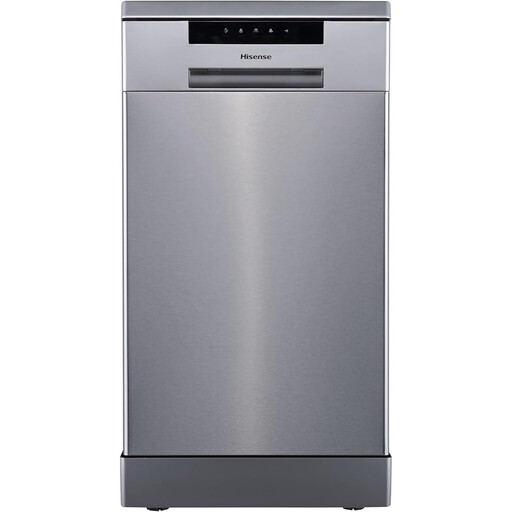
Consider this freestanding model if you can make room for a slimline floor-standing appliance and regularly wash cutlery with other dishes.
The product name specifies nine place settings. Check the cutlery arrangement and the installation and connection requirements against your kitchen.
 No image available
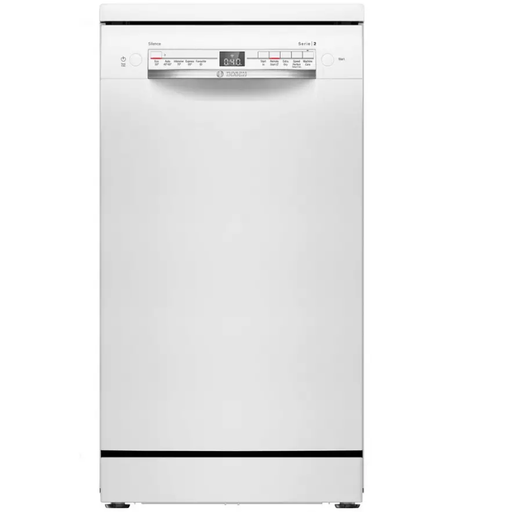
This freestanding format is an option if a 45 cm floor position suits your kitchen and you want to wash cutlery alongside everyday dishes.
The product name specifies nine place settings. Check the cutlery layout, connections and exact UK energy label before buying.
 No image available
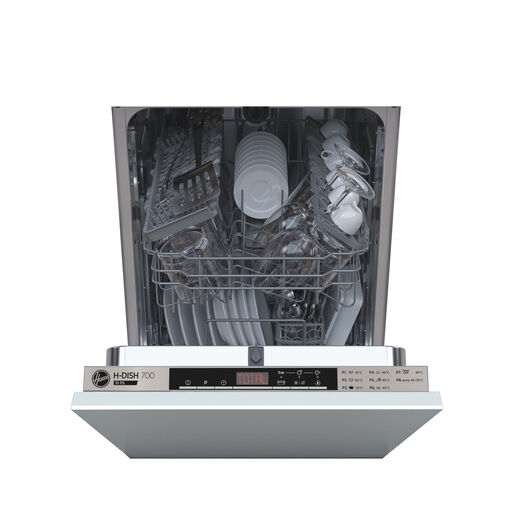
Consider this model if your kitchen plan includes a compatible integrated-dishwasher niche rather than a freestanding position.
The product name specifies 10 place settings. Check the cutlery layout, panel compatibility, door movement and installation requirements for this model.
 No image available
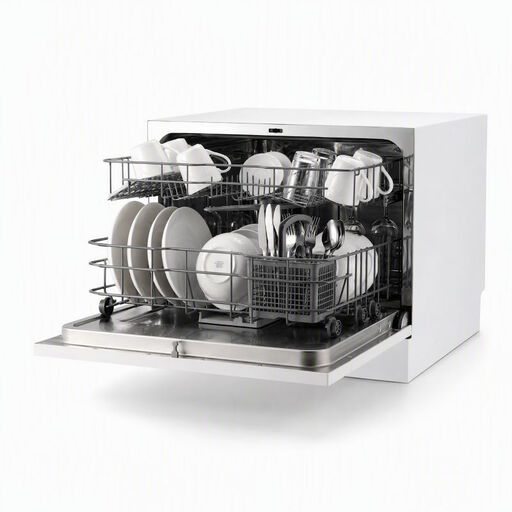
This countertop format is worth considering if you have worktop space but no standard dishwasher bay.
The product name specifies six place settings. Measure the available worktop and check the model’s water, drainage and cutlery-loading arrangements before choosing it.
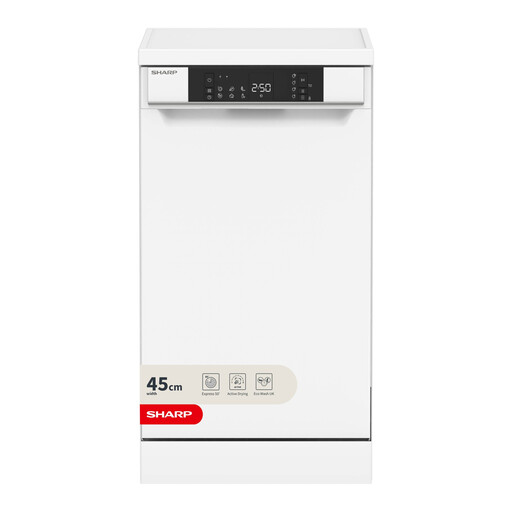 No image available
This slimline option is relevant if you have a floor position for a 45 cm dishwasher and need room for a regular mixed load.
The product name states a 49 dB noise level. Check the cutlery layout, connections and programme instructions against the loads you expect to wash.
No: countertop placement removes the need for a standard appliance bay, but water and drainage still need checking for the exact model. Cookology, for example, specifies a cold-water supply with a ¾-inch threaded connection and suitable drainage for its CTTD8WH.
Measure the full niche and check the appliance manual for panel compatibility, top clearance and the door’s opening path. Bosch’s installation guidance advises a 5–10 mm gap beneath the worktop and an unobstructed door, but follow the requirements for your chosen model.
No; match the programme to the load conditions in the model’s instructions. Hotpoint describes the Rapid Wash on its HP2FE10CS90SUK as a 30-minute programme for a small, lightly soiled load.
Compare the energy label and product information sheet for each exact model, using figures on the same Eco-programme basis rather than comparing a rapid-cycle claim with an Eco figure. Check the information applicable to your delivery location, as Great Britain and Northern Ireland have different energy-information requirements.
Load only items confirmed as dishwasher-safe. Keep pieces separated where the basket or tray design permits, rather than letting them nest together; check that the arrangement also leaves room for your other dishes. Do not put wooden utensils in the dishwasher, as heat and moisture can warp, crack or break them.