What matters when choosing
Limescale-reducing cartridge dispenser
Choose it when: Taste preference or scale around hot drinks is the main problem, and you want filtered hot water without choosing RO.
Bear in mind: Cartridge treatment varies by model and is not equivalent to an RO membrane; cartridges still need replacing.
Countertop RO dispenser
Choose it when: You deliberately want membrane filtration in a non-plumbed countertop format.
Bear in mind: Waterdrop states that countertop RO produces wastewater. Filter upkeep and any change to the water’s mineral profile also matter when making coffee.
Once you have chosen a filtration route, work through the breakfast routine: the water you want to treat, the number of drinks made together and the controls you will use.
| Concern |
What to check |
Who this matters to |
| Coffee water and limescale |
Check your water supplier’s hardness information and the exact model’s filtration method and treatment scope. |
If scale collects in my coffee equipment, I want to address that problem without assuming I need RO. Around 33% of consumers put scale and coffee-water flavour first. |
| Refills during breakfast |
Check whether the quoted capacity is for feed water, filtered water or the whole system, and whether dispense volumes suit your cups. |
When several people want a drink at once, I would rather not interrupt preparation to refill the tank; around 27% of consumers put breakfast throughput first. |
| Hot-water control and worktop fit |
Compare the available temperatures and dispense settings with your coffee method, then check dimensions and cup clearance. |
If I use the dispenser instead of some kettle steps, the settings and space it takes up need to suit my routine. For around 20% of consumers, dispensing convenience is the primary concern. |
| RO upkeep and wastewater |
Check the reason for choosing RO, replacement-filter requirements, cleaning instructions and how reject water is handled. |
I want membrane filtration, but I need to be comfortable with its ongoing upkeep and wastewater; around 20% of consumers put that treatment decision first. |
Countertop dispensers on Joybuy
These product choices cover filter-equipped hot-water dispensers and countertop RO dispensers for making coffee at home. Check each model’s filtration method before deciding which of the two routes suits your water and breakfast routine.
 No image available
Caso Design HW 770 Turbo Ambient, 2.7 L, 01889
A filter-equipped hot-water dispenser to consider if adjustable water temperature is important for your coffee routine.
The product name states a 2.7 L tank, 13 temperature settings and a memory function. Check the filter’s treatment scope and replacement requirements against your water concerns.
View on Joybuy
 No image available
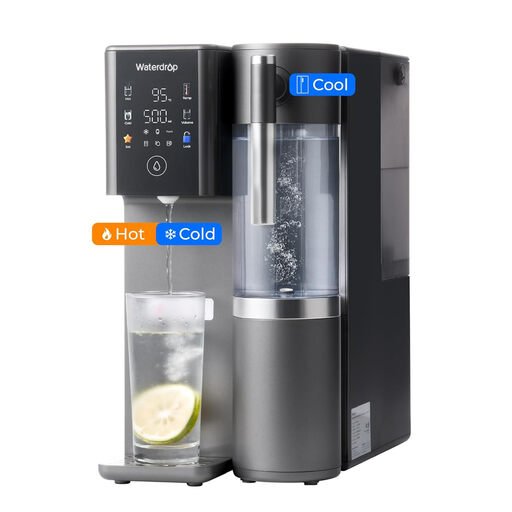
Waterdrop WD-A2 Countertop RO System
This is an RO option for a household deliberately choosing membrane filtration alongside temperature control.
The product name states six temperature settings. Confirm the feed-water capacity, replacement-filter routine and handling of reject water before judging how it will fit a busy breakfast.
View on Joybuy
 No image available
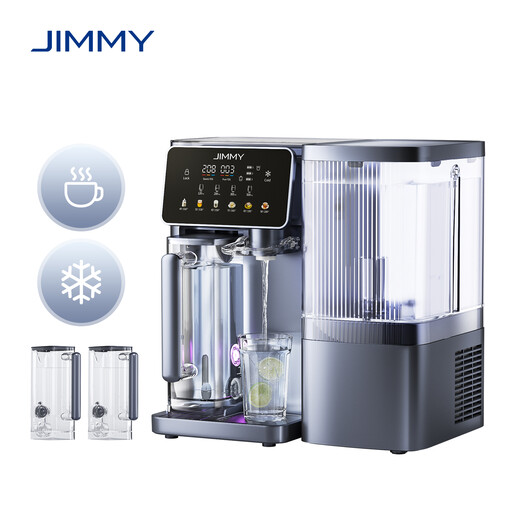
JIMMY R9 Pro RO Purifier, 5.5 L, two 1 L pitchers
Consider this countertop RO format if separate pitchers would suit the way your household prepares drinks.
The product name states a 5.5 L tank, two 1 L pitchers and hot and cold dispensing. Those figures do not establish how much filtered water is ready at once; check the dispensing settings, filter changes and cleaning instructions for the R9 Pro.
View on Joybuy
 No image available
Caso Design HW 1660 Turbo XL, 4 L, 1884
This filter-equipped hot-water dispenser is worth comparing if stated tank capacity is a priority for several morning drinks.
The product name states 4 L capacity. Check what the filter treats, the available temperature and volume settings, and the worktop dimensions; tank capacity alone does not tell you the usable filtered output.
View on Joybuy
Common questions
Do I need a countertop purifier to make public tap water safe to drink?
Not generally for public supplies in England and Wales: the Drinking Water Inspectorate says they are regularly tested and safe to drink. Taste or scale may still influence your choice. If you suspect a local supply or internal-pipe problem, contact your water supplier or a plumber rather than treating a domestic filter as a repair. This guidance does not establish the position for Scotland or Northern Ireland.
Will RO automatically make better coffee than a limescale-reducing cartridge?
No single filtration route guarantees the coffee result you prefer. Coffee-water guidance identifies hardness and alkalinity as relevant, while RO changes the water’s mineral profile and some models add mineralisation afterwards. Choose RO for a specific treatment objective, then check your coffee-machine guidance and assess the resulting water with your usual coffee.
How should I maintain a countertop filtration dispenser?
Follow the cleaning and filter-change instructions for your exact model. The Drinking Water Inspectorate warns that poorly maintained cartridges can accumulate deposits and allow bacterial growth. BRITA’s Cube manual also says to keep filtered water cool and use it within 24 hours.
Can I use filtered water instead of following a boil-water notice?
No: follow the current instructions from your local water supplier rather than treating a domestic filter as a substitute. BRITA’s Cube manual says that when official advice requires tap water to be boiled, its water should be filtered first and then boiled.
What tank capacity should I look for when making family breakfasts?
Start with the water your household uses in one breakfast, then check what each manufacturer’s capacity figure measures. BRITA states a 4 L tank for Cube, Waterdrop a 5 L feed-water tank for K19-H and Philips a 6 L tap-water tank for ADD6921DG/10. These figures are useful for planning refills, but they are not equivalent measures of ready-to-dispense filtered water.


